
A Guide to Creating a High-Engagement Post in Linden
Struggling to get noticed? Learn how to create a post in Linden that drives real engagement. Discover actionable strategies for hooks, content, and AI.
We’ve all been there. You spend time crafting what you think is a brilliant LinkedIn post, hit ‘publish’, and then… crickets. It’s a deflating feeling, and it’s incredibly common.
More often than not, the culprit is a lack of authentic voice. When we try too hard to sound ‘professional’, we often sound robotic. The real challenge is finding topics that actually connect with our network, not just broadcast our own thoughts.
So, What’s Really Going on With LinkedIn Engagement?

There’s this myth that every LinkedIn post needs to be a groundbreaking, industry-shattering insight. That pressure is immense, and it often leads to safe, generic content that just gets scrolled past. Let me tell you a secret from years of experience: consistency and authenticity will beat a once-a-month ‘thought leadership’ piece every single time.
The real trick is learning how to bridge that gap between your professional persona and your genuine personality. When a post feels too polished or reads like a corporate press release, it fails to make a human connection. And at the end of the day, people connect with people, not faceless brand statements.
The Hurdles We All Face
A few key obstacles seem to trip everyone up, leading to that frustrating cycle of posting with minimal return. If you can spot these, you’re already halfway to fixing the problem.
- Walking the Authenticity Tightrope: This is the big one. How do you sound like a relatable human being while still maintaining a polished, professional image? It’s a tough balance. Most people play it too safe, and their content ends up feeling impersonal and sterile.
- The Audience Mismatch: It’s so easy to get caught up in what we find interesting. But does your network care? If your content doesn’t solve a problem, answer a question, or spark curiosity for them, it’s going to fall flat.
- Time, the Ultimate Scarcity: Let’s be real. Crafting thoughtful content takes time and energy, two things most of us don’t have in abundance. This pressure to post frequently often results in rushed, low-value updates that don’t do your personal brand any favours.
The problem usually isn’t a lack of ideas—it’s a lack of a clear strategy. A post that gets real traction doesn’t happen by accident. It’s a direct result of knowing your audience, finding your voice, and using the right tools to work smarter.
To get past these hurdles, you need to shift your mindset. Stop thinking about broadcasting your achievements and start thinking about starting conversations and offering genuine value. For a much deeper dive, our guide on how to increase LinkedIn engagement is packed with practical steps you can take today.
Deconstructing the Perfect LinkedIn Post
A LinkedIn post that truly connects with people isn’t a happy accident—it’s carefully constructed. Think of it like a recipe. Each ingredient plays a crucial part, and when you combine them in the right way, you create something that people actually want to engage with. Getting this formula right is the key to moving from shouting into the digital void to sparking real conversations.
Every single great post starts with a powerful hook. It’s your first line, your scroll-stopper. In a feed that’s overflowing with content, you have maybe two seconds to grab someone’s attention. If your opening is weak, all the brilliant insights that follow will simply get scrolled past.
Nailing the All-Important Hook
The best hooks are sharp and immediately spark curiosity, a feeling, or a sense of “that’s me!” You’re not just writing an opening sentence; you’re throwing down a gauntlet or opening a story loop that your reader just has to see closed.
Here are a few ways I’ve seen this work brilliantly:
- Ask a challenging question: “What if we’ve been measuring productivity all wrong?” This gets the reader thinking and prompts them to consider a different viewpoint.
- Lead with a bold, counter-intuitive statement: “My biggest career failure taught me more than any success.” People are naturally drawn to ideas that challenge the status quo.
- Tell a relatable mini-story: “I stared at the blank document for an hour this morning, and it hit me…” This immediately humanises your content and makes the reader feel like you get it.
Delivering Real Value in the Body
Okay, you’ve got their attention. Now you have to deliver on the promise of your hook. This is where you bring the substance, the “why” behind your opening gambit. Whatever you do, avoid walls of text. People on LinkedIn are scanners, so your job is to make your main points easy to absorb at a glance.
Use storytelling to drive a point home, share a compelling statistic (posts that include data often get a nice engagement bump), or break down a process into actionable tips. The trick is to keep your sentences snappy and use plenty of white space. Breaking up your text makes it far less daunting and helps guide the reader’s eye down the page. To dig deeper into structuring valuable content, check out our detailed guide on what makes a good LinkedIn post.
Guiding the Conversation With a Strong CTA
You’ve hooked them and given them something valuable. Now what? A post without a Call-to-Action (CTA) is like telling a great story that just… stops. You need to explicitly tell your audience what you want them to do next.
A solid CTA is clear, simple, and asks for very little effort. Instead of a passive “Let me know your thoughts,” try something more direct, like, “What’s one tool you can’t live without? Share it in the comments.” This gives people a specific prompt, making it much easier for them to join the conversation and signal to the algorithm that your content is worth showing to more people.
A great post doesn’t just inform; it invites interaction. Your CTA is the bridge between broadcasting a message and starting a genuine conversation with your network.
Choosing the Right LinkedIn Post Format
Not all content is created equal, and the format you choose can make or break your post’s performance. The key is to match the format to your message and your goal. A quick text post is great for a thought-provoking question, while a complex idea might land better as a short video or a well-structured article.
Here’s a quick breakdown to help you decide which format to use for your next post.
| Post Format | Best For | Pro Tip |
|---|---|---|
| Text-Only | Asking questions, sharing quick insights, and starting conversations. | Use short paragraphs and emojis to add personality and improve readability. |
| Image/Carousel | Visual storytelling, sharing data (infographics), and showcasing work. | For carousels, make sure the first slide has a strong hook to encourage people to swipe through the rest. |
| Video | Demonstrations, tutorials, personal stories, and expert interviews. | Keep it short (under 90 seconds is the sweet spot) and add captions, as most users watch with the sound off. |
| Article | In-depth analysis, thought leadership, and detailed case studies. | Promote your article with a separate, engaging post that summarises the key takeaways and links to the full piece. |
| Poll | Gathering quick feedback, market research, and sparking easy engagement. | Keep the question simple and the options clear. Follow up in the comments with your own take on the results. |
Thinking strategically about the format beforehand can dramatically increase the chances that your message will not only be seen but also resonate with your audience.
Using Hashtags to Amplify Your Reach
Finally, let’s talk about hashtags. Think of them as the distribution engine for your post. They help LinkedIn understand what your content is about and show it to people interested in those topics. But here’s where many people go wrong: they either skip them entirely or stuff their post with a dozen generic tags.
A much better strategy is to use a focused mix of three to five relevant hashtags.
-
Broad Tags: Use one or two popular, high-volume tags like
#PersonalDevelopmentor#MarketingStrategyto get your post into wider conversations. -
Niche Tags: Then, add two or three more specific tags like
#B2BSaaSor#LeadershipCoaching. These connect you with a smaller but far more engaged and relevant community.
This balanced approach gives your post the best of both worlds—broad visibility and deep relevance with the right audience. Tools like Postline.ai’s LinkedIn Formatter can be a real help in finding that perfect mix.
Using AI to Enhance Your Content Workflow
Let’s be honest: consistently creating high-quality posts for LinkedIn takes a serious amount of time and mental energy. For busy professionals, this is often the single biggest hurdle to building a strong personal brand. This is where modern tools can completely change the game, turning a daunting task into an efficient—and even creative—part of your week.
Platforms like Postline.ai are built to handle the heavy lifting. Instead of staring at a blinking cursor, you can start with a rough idea and let an AI assistant help you build it into something polished and ready to publish. It’s all about working smarter, not harder.
From Rough Idea to Polished Draft
How many times has a great post idea died on the vine because you didn’t know where to start? An AI Post Generator can act as your creative sparring partner. You give it a simple prompt—say, “a post about the importance of mentorship”—and it instantly drafts a structured piece of content.
What you get back is a solid foundation: a compelling hook, a value-packed body, and a clear call-to-action. This completely sidesteps the initial friction of writing from scratch, giving you the momentum to focus on what matters most: refining the message and adding your unique perspective.
Maintaining Your Authentic Voice
I get it. A common worry with AI content is that it will sound generic or robotic. It’s a valid concern, because authenticity is everything when you’re trying to build trust with your network. The good news is that advanced platforms are designed to solve this very problem.
Postline.ai’s ‘Learns Your Voice’ feature is a perfect example. It analyses your past content to get a feel for your tone, typical phrasing, and even how you structure your posts. The result? Content that actually sounds like you. It’s like having an assistant who has studied your communication style and can draft posts that don’t lose that personal touch.
Adding Authority with Real-Time Research
Want to give your posts more weight? Back up your insights with fresh data and credible sources. Of course, manually hunting for relevant stats or recent articles is another time-sucking task. This is where an integrated Online Research feature comes in handy, pulling real-time information directly into your draft.
Imagine you’re writing about remote work trends. The tool can find and cite a recent industry report, instantly adding a layer of authority to your perspective. This not only makes your content more valuable but also saves you from the tedious process of toggling between a dozen browser tabs.
The most impactful content combines personal insight with credible, external validation. AI research tools make it incredibly simple to blend your expertise with timely data, elevating the quality and authority of your posts.
The anatomy of a great post really comes down to three key parts, flowing from capturing attention to driving action.
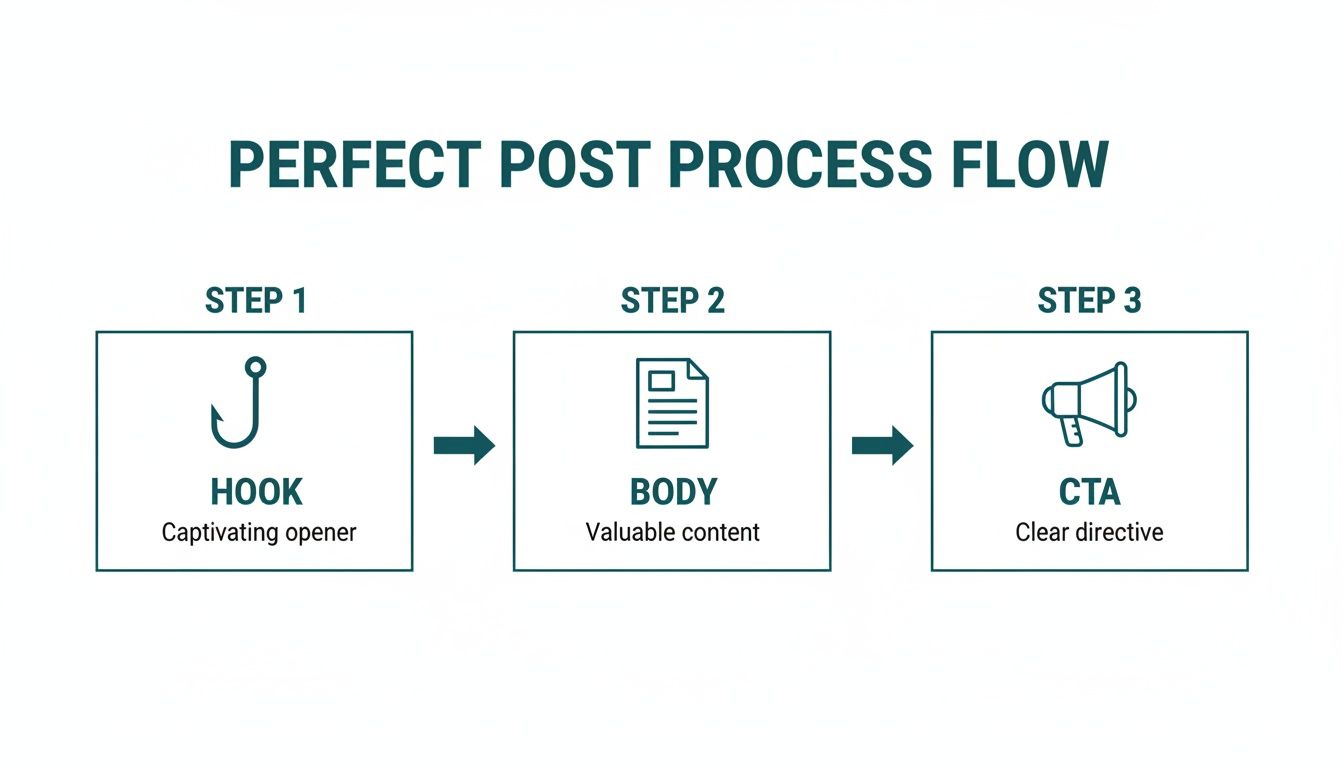
This visual is a great reminder that a successful post is a strategic sequence. The hook earns you the reader’s attention, the body delivers real value, and the CTA converts that attention into meaningful engagement.
Overcoming Writer’s Block for Good
So, what happens on those days when you don’t even have a rough idea to start with? The Audience Explorer is designed for exactly this scenario. It helps you discover what topics and questions your network is genuinely interested in, giving you a constant stream of relevant content ideas.
By understanding what your audience actually wants to learn about, you can create posts that are practically guaranteed to resonate. For a deeper look at how these tools work, check out our guide on finding the best LinkedIn post generator for your specific needs.
Advanced Tactics for Driving Maximum Engagement
So, you’ve mastered the art of putting together a solid post. What’s next? This is where we move beyond the basics and start thinking less like a content creator and more like a community builder. It’s all about understanding the platform’s subtle rhythms and using every tool at your disposal to spark real conversations.
A huge part of this comes down to timing. Posting when your audience is actually online and scrolling can give your content a massive initial boost. That early traction signals to the LinkedIn algorithm that your post is worth showing to more people. While you’ll find plenty of general advice on “the best time to post,” your optimal window really depends on your industry and where your audience is based.
This is where a scheduler, like the one built into Postline.ai, becomes your best friend. It lets you map out your content ahead of time and have it go live at just the right moment, freeing you from being glued to your screen. Consistency is what builds momentum, and scheduling makes it achievable.
The Power of Visuals and a Balanced Content Mix
Let’s be honest, even the most profound insight can get lost in a wall of text. That’s why pairing your words with a strong visual is one of the quickest ways to stop someone’s scroll. A good image, a simple infographic, or a short video can make people pause and absorb your message.
But don’t just throw in a stock photo for the sake of it. A powerful visual should add to your story. If you’re sharing a key business lesson, why not use a real photo from that project? It adds a human touch that stock imagery just can’t match.
It’s also crucial to keep your content varied. A balanced mix keeps your feed from feeling repetitive and appeals to different people in your network. I’ve found this framework works wonders:
- Personal Stories: Talk about a challenge you’ve overcome or a lesson you’ve learned the hard way. This is how you build trust and relatability.
- Industry Insights: Share your unique take on a new trend or pull out a compelling stat from a report. This cements your reputation as an expert.
- Company News: Celebrate a team win or highlight a company milestone. It puts a human face on your organisation.
Building a Thriving Community Around Your Content
True engagement is never a one-way street. Posting and walking away is a massive missed opportunity. The real magic happens in the comments.
Make it a habit to reply to every single comment, and do it thoughtfully. Instead of just a “thanks,” ask a follow-up question to keep the conversation flowing. This not only makes your current audience feel valued but also shows others that you’re actively engaged.
The goal isn’t just to make a great post; it’s to use that post as a catalyst for conversation. Every comment and reply deepens your connection with your network and amplifies your reach.
And don’t forget to venture beyond your own feed. Actively engage with other people’s posts. Comment on content from others in your industry, share articles you find valuable, and jump into relevant discussions. This is how you build genuine relationships and become known as an active, helpful member of the community.
For those of us in Europe, one report found that users in the 40+ age group show 44% higher engagement on industry reports. This points to a clear opportunity for anyone sharing data-driven content. You can dig into more regional engagement trends on Contentin.io.
Finally, don’t sleep on polls. They’re a fantastic, low-effort way for your audience to weigh in, and they can give you incredible insights into what people are thinking. They are absolute conversation starters.
Crafting Your Weekly LinkedIn Content Blueprint
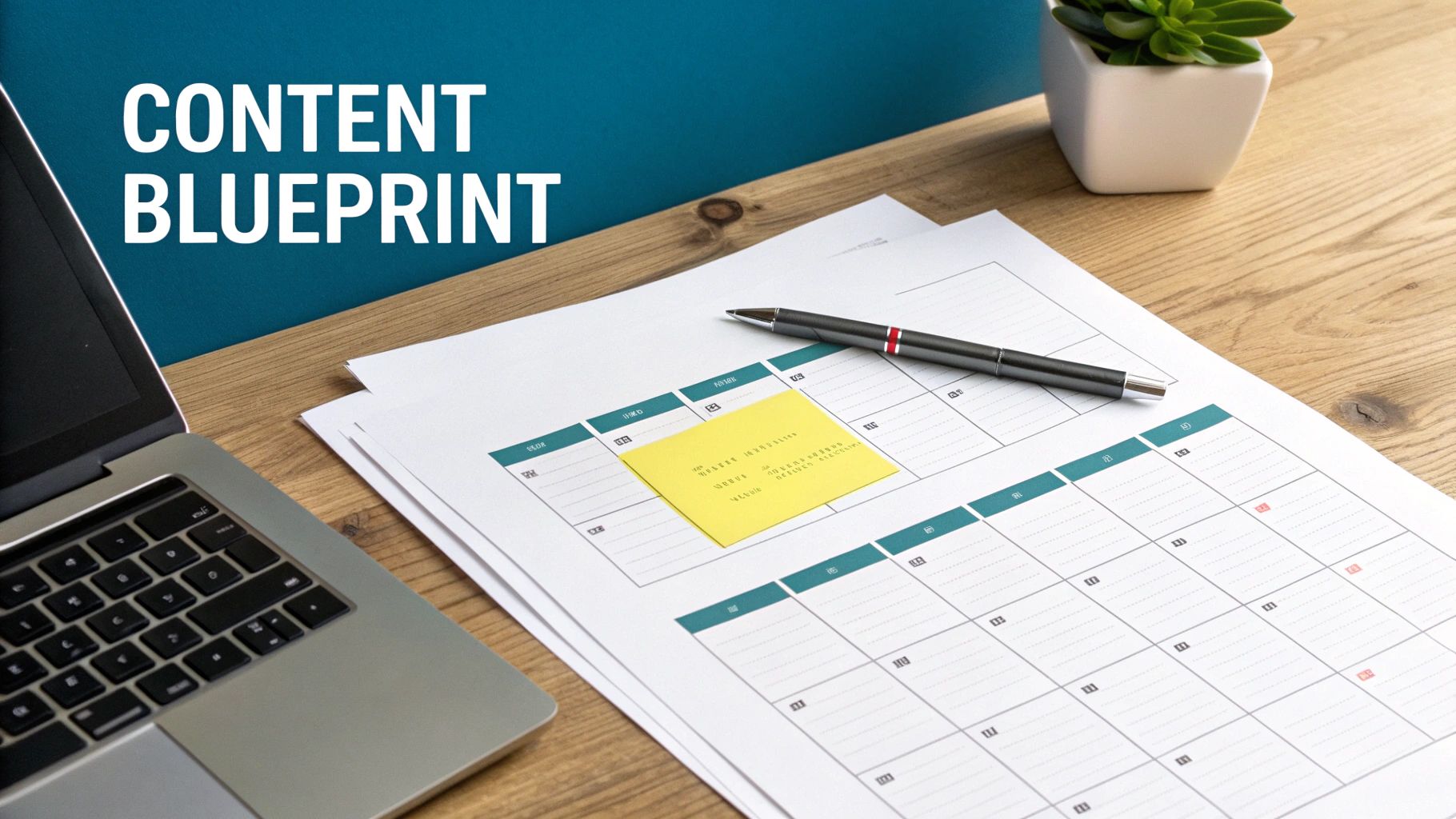
We all know consistency is the secret sauce for growing on LinkedIn, but let’s be honest, it’s also the biggest hurdle. Staring at a blank screen and wondering, “What on earth do I post today?” is a real momentum killer.
That’s where having a simple plan comes in. Think of it as a weekly blueprint—a practical framework that gives every post in Linden a clear purpose. This isn’t about being rigid; it’s about building momentum and removing the daily guesswork.
The goal here is to create a well-rounded feed that showcases who you are as a professional, from your personal stories to your hard-earned expertise. Following a simple structure keeps your content fresh and engaging, and the best part? You can knock out a whole week’s worth of posts in one sitting.
Monday: Share a Personal Story
Kick off the week with a human touch. This is the perfect time to share a quick story about a challenge you’ve navigated, a lesson you’ve learned the hard way, or a pivotal moment in your career. It’s not about boasting; it’s about being real and building a genuine connection.
- Goal: Build that all-important authenticity and trust.
- Postline.ai Assist: Jump into the AI Post Generator and try a prompt like, “Draft a short, reflective post about a time a project didn’t go to plan and what I learned from it.” The AI is great for helping you structure your story with a solid hook and a clear takeaway.
Tuesday: Drop Some Industry Insight
Now, switch gears and show what you know. This is your day to share a valuable piece of industry knowledge, an interesting statistic (with your own analysis, of course), or a simplified breakdown of a complex topic. This is how you build your reputation as a go-to authority in your space.
A marketing manager, for example, could post a quick take on a new analytics tool, highlighting its best features and what it means for the industry. That’s immediate value for your professional network.
A well-researched insight does more than just inform—it proves you are actively engaged with your industry’s evolution. It’s a powerful way to build professional credibility with every post.
Wednesday: Offer a Quick Tip or a Poll
Mid-week is all about light, high-engagement content. Post a single, actionable tip that someone in your network can use right away. Or, even better, create a simple poll. Polls are absolute gold for sparking quick conversations and getting a read on what your audience is thinking.
Thursday: Shine a Light on Your Team
Time to showcase the people around you. Celebrate a team win, give a public shout-out to a colleague who has gone above and beyond, or share something positive about your company culture. This highlights your collaborative side and puts a real human face on your organisation.
- Goal: Demonstrate teamwork and bring your company values to life.
- Postline.ai Assist: Use the scheduler to push this post live at a prime time for company-related content, like mid-morning when people are settled in and scrolling.
Friday: A Moment of Reflection
End the week by looking back. You could share a quick summary of your key learnings or simply ask your audience a question about their own week. It’s a fantastic way to recap the value you’ve shared and invite a few final comments before everyone signs off for the weekend.
If you want to plan even further out, exploring a full LinkedIn content calendar template can give you more structured ideas. Ultimately, this weekly rhythm turns consistency from a chore into your strategic advantage.
Frequently Asked Questions About Posting on LinkedIn
Even the most seasoned professionals have questions when it comes to getting their LinkedIn strategy right. It’s a platform that’s always evolving. Let’s dig into some of the most common questions I hear and get you some practical, no-fluff answers.
How Often Should I Post?
This is the big one, isn’t it? The truth is, there’s no magic number. It’s all about sustainable quality.
Think of it this way: posting genuinely valuable content twice a week will do infinitely more for you than sharing low-effort updates every single day. The LinkedIn algorithm is smart; it rewards consistent engagement and quality, not just the sheer volume of posts you pump out.
My advice? Start with what feels manageable. Maybe that’s two or three solid posts a week. Once you get into a good rhythm and figure out a content system that works for you, then you can think about ramping things up. The golden rule is to never let the quality of your post slip just to hit a self-imposed quota.
What if I Don’t Have Anything ‘Important’ to Say?
I hear this all the time, and it’s a mental roadblock that stops so many people before they even start. There’s this common misconception that every single post needs to be some earth-shattering piece of thought leadership. Thankfully, that’s just not true.
Your best, most engaging content often springs from your daily grind. A small lesson you learned from a recent project, a reaction to an interesting industry article, or even a simple, open-ended question for your network—these are all fantastic conversation starters.
Try thinking smaller. Your goal isn’t to rewrite the rulebook with every post. It’s about sharing a helpful perspective, connecting with others in your field, and simply staying on their radar.
Does Tagging People Help My Post’s Reach?
Tagging can be a game-changer for your post’s visibility, but you have to use it with care. It’s powerful when done right, and a bit cringey when done wrong.
Only tag someone if they are directly relevant to what you’re posting. Maybe you’re giving a shout-out to their work, they were involved in the event you’re talking about, or you’re genuinely asking for their specific take on a topic.
Here’s what you absolutely want to avoid:
- Mass tagging: Spraying your post with tags of a dozen influencers hoping for a like is transparent and often seen as spam. It can actually damage your credibility.
- Irrelevant tagging: Don’t tag someone just because they have a massive following. If your content has nothing to do with them, you’re just creating annoying noise in their notifications.
When you use it thoughtfully, tagging sparks real conversations and pulls the right people into your discussion. When used carelessly, it just looks desperate. Remember, a single, highly relevant tag is always more powerful than ten random ones.
Ready to transform your content workflow and create standout LinkedIn posts in minutes? Postline.ai combines powerful AI writing with real-time research and deep personalisation to help you grow your audience, generate leads, and build your brand. Start your free trial today!

Run every client pipeline in one place
Give each LinkedIn profile its own voice, calendar, approval flow, and analytics. Start in minutes.
Start free trial