A Practical Guide to Personal Online Reputation Management
Take control of your digital identity with this guide to personal online reputation management. Learn how to audit, clean, and build a powerful online presence.
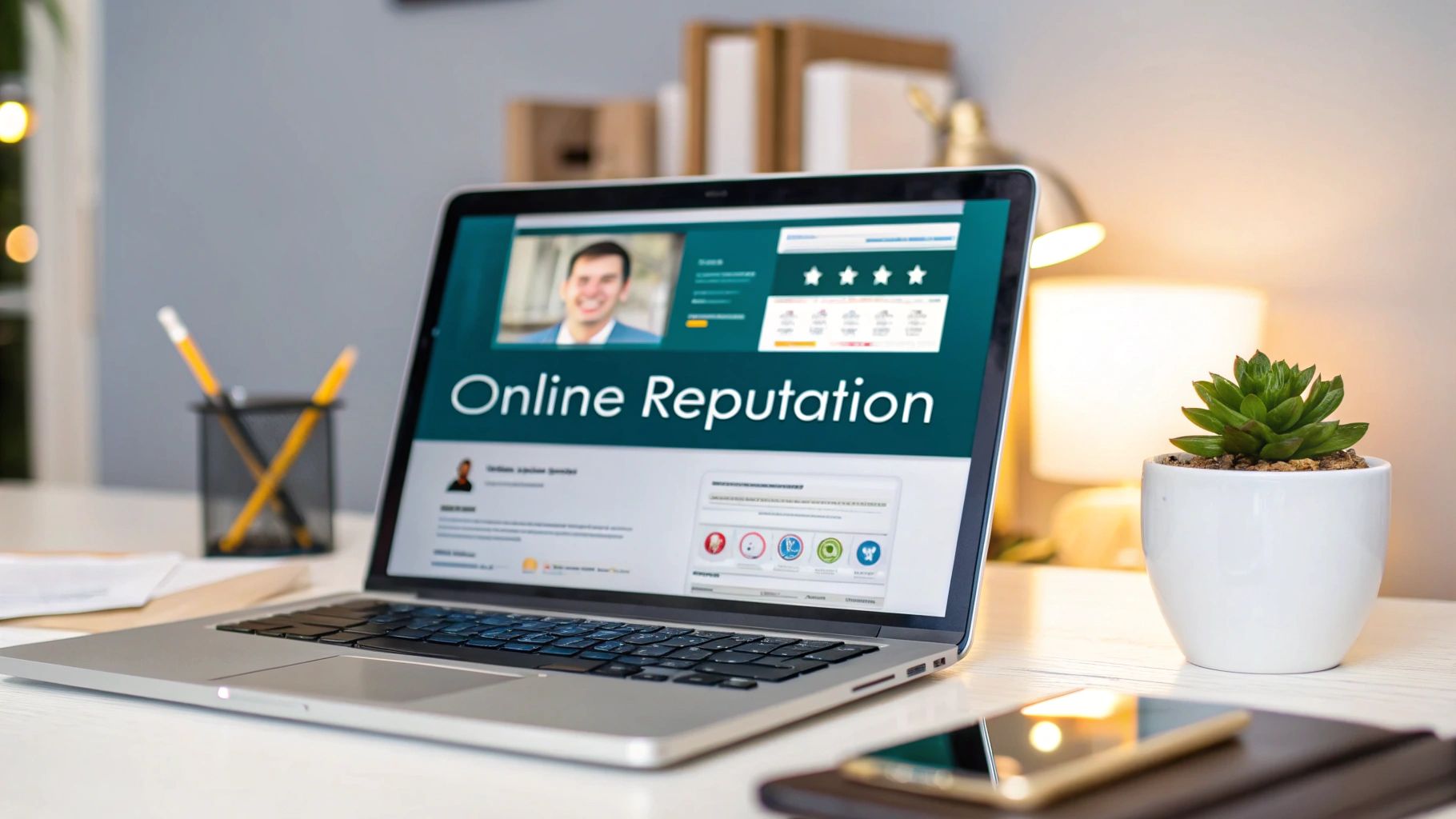
Personal online reputation management is all about taking control of your digital story. It’s the hands-on process of watching, guiding, and shaping your online footprint so that it reflects who you are professionally. This means actively building a positive narrative on platforms you own, like LinkedIn, while cleaning up or pushing down any negative stuff that pops up in search results. The whole point is to make sure that when someone Googles you, what they find is accurate, positive, and in line with your career goals.
Why Your Digital First Impression Is Your New Resume

Let’s be honest: that first page of Google results is your new handshake. Long before anyone lays eyes on your CV or shakes your hand in an interview, they’ve almost certainly typed your name into a search bar. This digital background check is now standard practice for recruiters, potential clients, and even future colleagues.
What they find creates an instant, powerful, and often permanent first impression. If there’s barely anything about you online, it can make you seem less credible. On the other hand, a single unprofessional social media post from a decade ago could silently sabotage a huge opportunity, and you’d never even know why. This isn’t about damage control anymore; it’s about proactively building the narrative you want people to see.
The Modern Professional Vetting Process
These days, people are looking for more than just red flags online. They’re sizing you up for cultural fit and checking if your values align with their company’s. Research shows that nearly 46% of buyers have a hard time telling brands apart based on their online experience alone—and the same is true for professionals. You have to stand out.
Think about these real-world situations:
- The Job Candidate: A hiring manager finds a promising candidate’s LinkedIn. But a quick search also uncovers an old forum where they made some inflammatory comments. Just like that, the offer goes to someone else.
- The Freelancer: A potential client is considering a consultant. They search their name and find a polished website, a few positive articles, and glowing testimonials. The decision to hire them becomes a no-brainer.
- The Executive: A board is vetting a new leader. Their search turns up a history of insightful industry articles and a well-curated professional network, solidifying their reputation as an expert.
These examples show a massive shift. Managing your online presence isn’t just about dodging bullets. It’s about strategically showcasing your expertise to create opportunities out of thin air.
Personal online reputation management is about taking control. It’s the difference between letting the internet define you by accident and intentionally crafting a digital presence that reflects your true professional value and opens doors.
Building Your Digital Asset Portfolio
You should think of your online presence as a portfolio of digital assets. Every piece—your LinkedIn profile, a personal website, guest articles you’ve written, your professional social media activity—comes together to paint a picture of who you are. A weak or negative portfolio is a major red flag. A strong one, however, is a powerful testament to your credibility and authority.
To make sure your first impression is a great one, especially on paper, you need to nail the introduction. It’s a good idea to look at some top-tier professional summary examples for your CV to learn how a sharp, compelling opening can set the perfect tone. This guide will give you the framework to audit, polish, and build on these assets, putting you squarely in the driver’s seat of your digital reputation.
How to Do a Proper Digital Reputation Audit
Before you can build a stellar online reputation, you have to know what you’re working with. That means seeing yourself exactly how a potential employer, client, or even a new colleague would. We’re not talking about a quick Google search of your name. We need to go deeper—a full-on digital audit to uncover everything that’s out there.
Think of it as creating a complete inventory of your digital self. The aim is to get an unvarnished look at your online presence, warts and all. Only then can you stop guessing and start building a real strategy based on facts.
First, Get an Unbiased View
Here’s something most people miss: Google knows you. It personalises your search results based on your browsing history, your location, and the accounts you’re logged into. What you see isn’t what a stranger sees.
To get around this, you absolutely have to use an incognito or private browsing window for your entire audit. This is non-negotiable. It strips away the personalisation and gives you a much cleaner, more accurate picture of your public footprint.
Think Like a Recruiter: Master Your Search Terms
Just typing your name into the search bar is only scratching the surface. You have to get a bit more creative and search the way other people would. This is how you’ll find things linked not just to your name, but to different parts of your professional and personal life.
Kick things off with these simple but powerful search variations:
-
Your Full Name in Quotes:
"[Your Full Name]"– This is the baseline. It forces an exact match and cuts out the noise from people with similar names. -
Name + Profession:
"[Your Full Name]" + [Profession](e.g.,"Anna Schmidt" + Marketing Manager) – This is gold. It’s exactly how most recruiters will start their search. -
Name + Location:
"[Your Full Name]" + [City](e.g.,"Anna Schmidt" + Berlin) – Perfect for finding local news mentions, community involvement, or city-specific directory listings. -
Name + Past Employers:
"[Your Full Name]" + [Previous Company Name]– This can dig up old press releases, forgotten team pages, or articles you were quoted in years ago.
Don’t just stick to Google. Your audit isn’t complete until you’ve run these searches on Bing, looked yourself up on major social media platforms (especially the ones you don’t use), and checked any forums or niche industry sites you’ve ever been active on.
And a pro tip: don’t forget to click over to the “Images” and “Videos” tabs. A picture is worth a thousand words, and sometimes an old, unprofessional tagged photo can show up right at the top. You need to know what visual content is tied to your name.
Get Organised: Categorise Everything You Find
As the results roll in, you need a system to make sense of them. A simple spreadsheet is your best friend here. This isn’t just about making a list; it’s about building the foundation for your entire personal online reputation management strategy. For every link, log the URL and then categorise it.
This simple act of organising turns a messy jumble of links into a clear, prioritised to-do list. You’ll immediately see what needs urgent attention, what’s neutral, and which positive assets you can start promoting.
To get you started, here is a simple checklist to guide you through the process. It will help you methodically review what’s out there and decide what to do next.
Digital Reputation Audit Checklist
| Platform / Search Method | What to Look For | Finding Category (Positive/Negative/Neutral) | Action Required |
|---|---|---|---|
| Google (Your Name) | First 3 pages of results. Any unexpected or outdated content? | e.g., Positive | e.g., Promote this on LinkedIn |
| Google Images | Professional headshots vs. old party photos. Tagged photos. | e.g., Negative | e.g., Untag or request removal |
| Name + Profession | How do you appear to recruiters? Are results relevant? | e.g., Neutral | e.g., No action needed |
| Name + “review” / “complaint” | Any negative reviews, forum posts, or news articles? | e.g., Negative | e.g., Draft a response plan |
| LinkedIn Profile | Is it complete, professional, and keyword-optimised? | e.g., Positive | e.g., Keep updated, share more content |
| Other Social Media (X, Facebook, Instagram) | Check privacy settings. Any public posts that could be misconstrued? | e.g., Negative | e.g., Change privacy to “Friends Only” |
| Old Forums / Blogs | Any comments or posts made under your name years ago? | e.g., Neutral | e.g., Monitor, but no action needed |
Once you’ve gone through this checklist for your various search queries, you’ll have a clear and comprehensive map of your entire digital footprint. The guesswork is gone. Now you have a prioritised roadmap telling you exactly where you stand and what you need to do next to clean up, build, and protect your reputation.
Cleaning Up Your Digital Footprint and Securing Your Privacy
Alright, with your audit done, you’ve got a clear map of your digital presence. Now for the hands-on part of personal online reputation management: cleaning up the liabilities and shoring up your privacy to build a much stronger foundation. This isn’t just about deleting a few old posts. It’s about systematically neutralising anything unflattering and taking back control over who sees your information.
The process of tidying up your digital footprint is a mix of direct action on your own profiles and, sometimes, strategic requests to others. This simple flow shows how the audit naturally leads into the action phase.
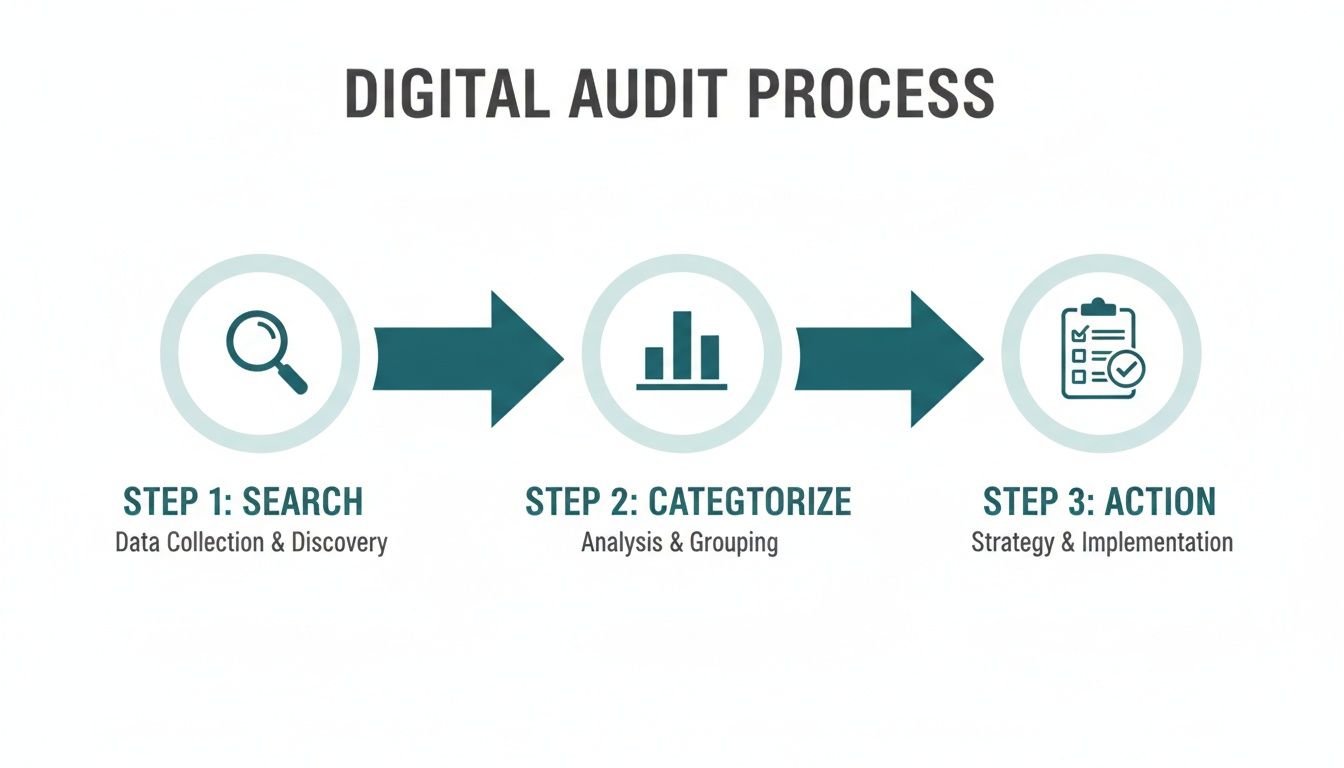
This straightforward search, categorise, and act framework breaks an overwhelming job down into manageable pieces, making sure nothing gets missed.
Prioritise and Remove What You Control
First things first, tackle the low-hanging fruit: all the content on profiles you actually own. It’s time to go through your social media accounts—Facebook, X (formerly Twitter), Instagram—with a sharp, critical eye.
Your main targets are anything that could be misinterpreted or simply doesn’t align with the professional you are today. That includes things like:
- Old Photos: Untag yourself from unprofessional photos that others have posted. You can usually do this right on the platform itself.
- Unprofessional Posts: Get rid of old status updates, comments, or shares that don’t reflect well on your current professional image.
- Outdated Information: Scrub any old bios, job titles, or links that are no longer relevant.
Honestly, this initial sweep is often the most powerful step. It delivers immediate results and cuts down the volume of negative or neutral content tied to your name.
Navigating Negative Content You Don’t Control
Dealing with negative content you can’t just delete—like a bad review, a misleading article, or a critical forum post—requires a bit more finesse. Your gut might tell you to jump in and defend yourself, but sometimes the smartest move is to say nothing at all.
Knowing when to engage and when to ignore is a critical skill. Jumping into the fray can sometimes just pour fuel on the fire, drawing more attention to the negative content. On the other hand, a thoughtful, professional response can show maturity and resolve the issue for everyone to see.
When responding to negative feedback, always take the high road. A calm, professional, and empathetic reply is for the benefit of every future person who will read it, not just for the person who wrote the comment.
In Europe, the stakes are even higher. Across key German markets, for example, the dynamics of online reviews are shifting fast. While Google review volumes shot up by 7.1% in a single year, the most telling stat is that review response rates jumped by 17.7%. This signals a clear move towards active engagement to build trust, a trend that’s only amplified by GDPR’s strict data rules. In that kind of environment, an unaddressed negative comment can have immediate consequences.
For a really deep dive on getting rid of unwanted information, check out this guide on how to erase your digital footprint and reclaim your privacy. It gets into more advanced tactics for situations where content removal is the goal.
Master Your Privacy Settings
The final—and arguably most crucial—step in this cleanup phase is to lock down your privacy. Every single social and professional platform has a suite of privacy settings that control who can see your stuff, find your profile, and interact with you. Mastering them is non-negotiable.
Start with LinkedIn, your professional home base. Review who can see your connections, your activity, and how your profile appears to people you’re not connected with. You might be shocked at how much is public by default. For a detailed walkthrough, have a look at our guide on how to look at LinkedIn profiles privately, which also covers the key privacy settings you need to know.
From there, move on to your other platforms like Facebook and X. The goal here is to build digital walls, making sure your personal life stays private while your professional persona is polished and public. That separation is absolutely key to managing your reputation for the long haul.
Crafting a Powerful Professional Narrative on LinkedIn
Once you’ve cleared away any digital cobwebs, the real work begins. It’s time to move from defence to offence, and your most powerful tool for this is LinkedIn. Forget thinking of your profile as just a static, online CV. It needs to be a living, breathing story that pulls people in—showcasing not just what you do, but who you are, what you stand for, and the journey you’re on.
This is where you build your professional fortress. By dialling in every detail of your profile and sticking to a smart content plan, you create an asset that works for you around the clock, drawing in the right kind of attention and cementing your expert status.
Optimising Your Profile for Impact
Before you even think about writing a post, your profile has to be rock-solid. Think of it as the foundation of your house; if it’s shaky, everything you build on top of it will feel unstable. You get mere seconds to make an impression on recruiters or potential clients. Make them count.
Here’s how to nail that first impression:
- Your Headline is Your Elevator Pitch: Ditch the generic job title. You have 220 characters to tell people the value you bring. Instead of “Marketing Manager at Company X,” try something like, “Marketing Manager Driving Growth for SaaS Startups | SEO & Content Strategy Expert.” See the difference?
- The ‘About’ Section is Your Story: This is your chance to be human. Don’t just spit out a list of skills. Weave them into a narrative. What’s your professional mission? What gets you out of bed in the morning? What incredible results have you driven? Tell that story.
- A Professional Headshot is Non-Negotiable: This isn’t the place for a holiday snap. Get a high-resolution photo with a clean background where you look confident and approachable. It’s the first thing people connect with.
This isn’t just about filling in fields for the sake of it. Each section is a piece of a larger puzzle. When they all fit together perfectly, they paint a compelling picture of you as a professional. For a much deeper dive, our full guide on how to build a personal brand on LinkedIn breaks down every single component.
Developing a Content Strategy that Builds Authority
A polished profile is great, but it’s passive. Your content strategy is what brings it to life. This is how you stop being just another name in the crowd and start becoming a voice people listen to. The aim here is to consistently share valuable insights that prove you know your stuff and connect with your network.
And don’t get paralysed by perfection. You don’t need a groundbreaking revelation in every post. Consistency and genuine value will always win.
The best content on LinkedIn doesn’t just report the news; it offers a perspective. It’s your unique take on an industry trend, a hard-won lesson from a recent project, or a practical solution to a common headache. That’s what makes people remember you.
Start with a simple, sustainable content mix:
- Break Down an Industry Trend: Read a new report and share your top three takeaways. What do you think it really means for your field?
- Share a Personal Career Lesson: Talk about a time you messed up and what you learned. Being open about your mistakes builds a surprising amount of trust and makes you far more relatable.
- Spotlight a Team Win: Celebrate a project’s success and make sure to give credit where it’s due. It shows you’re a leader and a team player.
The secret is finding a rhythm. Aiming for two to three quality posts a week is a fantastic start. It’s enough to build momentum without burning yourself out.
Leveraging AI to Create Authentic and Consistent Content
Let’s be real—maintaining that consistency is tough when you’re juggling a million other things. This is where modern tools can give you a serious edge in your personal online reputation management. An AI-powered assistant can be a brilliant partner for brainstorming ideas, digging up research, and drafting posts that still sound like you.

The goal isn’t to have a robot write for you. It’s to have a creative sidekick that helps structure your thoughts and ensures your content is polished and primed for impact.
You can’t afford to ignore this proactive approach, especially in a competitive landscape. In Germany alone, the market for enterprise internet reputation management sits at USD 50.3 million and is expected to skyrocket to USD 212.4 million in the next ten years. As businesses pour money into their online image, the pressure on individuals to manage their own narrative is only going to grow.
By combining a sharp, optimised profile with a steady stream of valuable content—and using smart tech to help you stay consistent—you turn your LinkedIn from a digital résumé into a powerful, reputation-building machine that’s constantly working to open new doors.
Expanding Your Positive Influence Beyond a Single Platform
Your LinkedIn profile is a fantastic fortress for your professional brand, no doubt. But a truly resilient online reputation can’t be built on a single piece of land. Think of it more like building a digital empire; your fortress is crucial, but you also need strategic outposts to secure the borders and expand your influence. The end game? To create a network of high-quality, professional assets that you control, effectively dominating the first page of Google when someone searches your name.
This expansion phase of personal online reputation management is all about creating a diverse portfolio of positive content. When someone looks you up, they shouldn’t just find your LinkedIn. Ideally, they’ll discover a collection of professional, credible results that all reinforce the story you’ve worked so hard to tell. This variety makes your reputation far less vulnerable if a single negative item ever pops up.
Secure Your Personal Domain
One of the most powerful outposts you can establish is a simple personal website. Snagging a domain like [YourName].com or [YourName][Profession].com is a non-negotiable first move. This website doesn’t need to be some complex, multi-page behemoth; often, a clean, one-page portfolio packs more than enough punch to make a serious impact.
Think of it as a central hub that you own outright. On this site, you can host:
- A professional biography that tells your story exactly on your terms.
- A portfolio showcasing your best work, key projects, or compelling case studies.
- Direct links to all your other professional social media profiles.
- Clear contact information for potential clients, partners, or employers.
Owning your name as a domain is one of the smartest long-term plays in reputation management. Search engines often give high authority to exact-match domains, meaning your personal site has a strong chance of ranking at the top of search results for your name.
Become a Voice in Your Industry
Guest blogging on respected industry publications is another killer way to build authority and create high-ranking positive content. It immediately positions you as an expert contributing to the broader conversation in your field, not just someone tooting their own horn.
Start by identifying three to five blogs or online magazines that your ideal audience actually reads. Get a feel for their style, check out their submission guidelines, and then pitch a topic that shows off your unique expertise. Once published, that article becomes a powerful, third-party endorsement of your knowledge that’s permanently linked to your name in search results.
This approach doesn’t just generate another positive search result; it also expands your professional network and can drive some really relevant traffic back to your LinkedIn profile or personal website. Getting your insights out there across multiple channels is the key to amplifying your influence. If you want to get more tactical on this, exploring different content distribution strategies can give you a solid plan for getting your voice heard.
Engage Thoughtfully in Niche Communities
Finally, don’t sleep on the power of engaging in relevant online communities. Places like Quora, industry-specific forums, or even professional subreddits can be absolute goldmines for showcasing your expertise in a more organic, conversational setting.
The key here is to be genuinely helpful, not self-promotional. Hunt down questions related to your field and provide thoughtful, insightful answers. A single well-written, detailed answer on Quora can rank on Google for years, continuously putting your knowledge in front of a huge audience.
To make this work without burning out, choose your platforms wisely. Don’t try to be everywhere at once. Just pick one or two communities where your ideal professional connections are already hanging out and go deep.
Platform Selection Framework:
| Platform Type | Best For | Time Commitment |
|---|---|---|
| Personal Website | Establishing your core brand identity and a central hub. | Low (after initial setup) |
| Guest Blogging | Building deep authority and credibility in your industry. | Medium (requires research and writing) |
| Niche Forums (e.g., Quora) | Demonstrating practical expertise and problem-solving skills. | Medium (requires consistent engagement) |
By strategically branching out across these different platforms, you create a digital footprint that’s both robust and diverse. This multi-platform approach is the best way to ensure that the professional narrative you’ve so carefully crafted is the first, and most prominent, thing people find.
Setting Up Your Ongoing Reputation Monitoring System
Think of all the work you’ve put in so far as planting a garden. You can’t just walk away and expect it to flourish. Your personal online reputation management needs consistent, ongoing attention to thrive, and that’s where a simple monitoring system comes in.
This isn’t about becoming paranoid or spending hours a day Googling yourself. The goal is to set up a simple early-warning network. It’ll ping you when your name pops up somewhere new, letting you react thoughtfully instead of being blindsided weeks or months later. This is what separates a reputation that’s actively managed from one that’s just left to chance.
Automating Your Watchtowers
The easiest win here is Google Alerts. It’s free, takes minutes to set up, and basically acts as your 24/7 scout on the web. Whenever new content mentioning your name gets indexed by Google, you get an email. Simple as that.
To get started, create alerts for a few key phrases:
-
"[Your Full Name]": Always use quotation marks to get an exact match, otherwise you’ll get alerts for anyone with a similar name. -
"[Your Name]" + [Your Profession]: For example,"Jane Doe" + Architect. This helps you see how you’re being mentioned in a professional context. -
"[Your Name]" + [Your Company]: This will catch mentions tied to your current or even previous employers.
This one small step automates the heavy lifting. Instead of you having to go out and look for information, the most important mentions come straight to your inbox. It’s the backbone of any good monitoring strategy.
Your online reputation is a living asset. Ongoing monitoring isn’t about paranoia; it’s about stewardship. It allows you to protect your investment and ensure the narrative about you remains accurate and positive.
Establishing a Routine and a Response Plan
Automation is great, but it’s not foolproof. That’s why you should also schedule a quick, 15-minute “self-audit” on your calendar once a month.
Pop open an incognito browser window and search your name on Google. Click over to the image results. Do a quick check on your key social media profiles. This manual check-in helps you spot subtle shifts or see the bigger picture that individual alerts might miss. While you’re at it, keeping an eye on how your positive content is doing is crucial. To get a better handle on this, take a look at our guide on how to measure content performance — it can help you refine what you’re putting out there.
Even more critical is having a basic plan for when something negative does appear. And sooner or later, it will. Having a few steps ready to go prevents a panicked, emotional reaction that almost always makes things worse.
Your Basic Crisis Response Checklist:
- Assess First, Act Second: Don’t do anything immediately. Take a breath and analyse the situation. How visible is this? Is it showing up on page one of Google or page ten? Is it legitimate criticism or just a random troll?
- Don’t Engage Emotionally: Firing off an angry reply is the worst thing you can do. It just adds fuel to the fire and creates a screenshot that can live on forever. Step away from the keyboard.
- Bury It With Positivity: Often, the best defence is a good offence. Instead of getting into a back-and-forth, focus your energy on pushing out more of your positive, professional content. This is your long-term strategy to push the negative result further down the search rankings where fewer people will see it.
This simple framework turns a potential crisis into a manageable task. It empowers you to protect the powerful, professional reputation you’ve worked so hard to build.
Got Questions About Your Online Reputation?
Lots of professionals run into the same hurdles when they first start taking control of their digital footprint. Once you get the lay of the land, the whole process feels a lot more manageable. Let’s tackle some of the most common questions.
How Long Does It Take to Fix a Damaged Online Reputation?
Honestly, it really depends on the severity of the damage.
For minor issues you control, like scrubbing old, unprofessional social media posts, you could see a big difference in just a few weeks. But if you’re dealing with something like a negative news article that’s ranking high on Google, you’re playing a different game entirely. That requires a suppression strategy, which means creating a steady stream of positive, authoritative content to push the negative result down. This isn’t a quick fix; it can easily take several months of focused work to see real progress.
The biggest mistake I see is people expecting an overnight solution for a complex problem. Managing your personal online reputation is a marathon, not a sprint—especially when you’re up against content you don’t own.
Can I Permanently Delete Negative Content from the Internet?
This is the million-dollar question, isn’t it? Getting content you don’t control taken down is incredibly tough. Unless it’s legally defamatory or a clear violation of a website’s terms of service, your chances are slim.
A much more realistic and effective approach is suppression. The idea is to create and promote so much high-quality, positive content about yourself that it simply outranks the negative stuff. Think personal websites, guest articles on respected blogs, and a strong professional profile. You essentially bury the unwanted result so deep in the search rankings that almost no one will ever stumble upon it.
Ready to build a powerful professional narrative on LinkedIn without the guesswork? Postline.ai uses AI to help you brainstorm ideas, write compelling posts in your unique voice, and schedule your content in minutes. Take control of your story and start creating content that builds your reputation today at https://postline.ai.
Run every client pipeline in one place
Give each LinkedIn profile its own voice, calendar, approval flow, and analytics. Start in minutes.
Start free trial