Elevate Your Profile: personal branding on linkedin for lasting impact
Discover how personal branding on linkedin can boost visibility, credibility, and opportunities with practical steps and proven strategies.
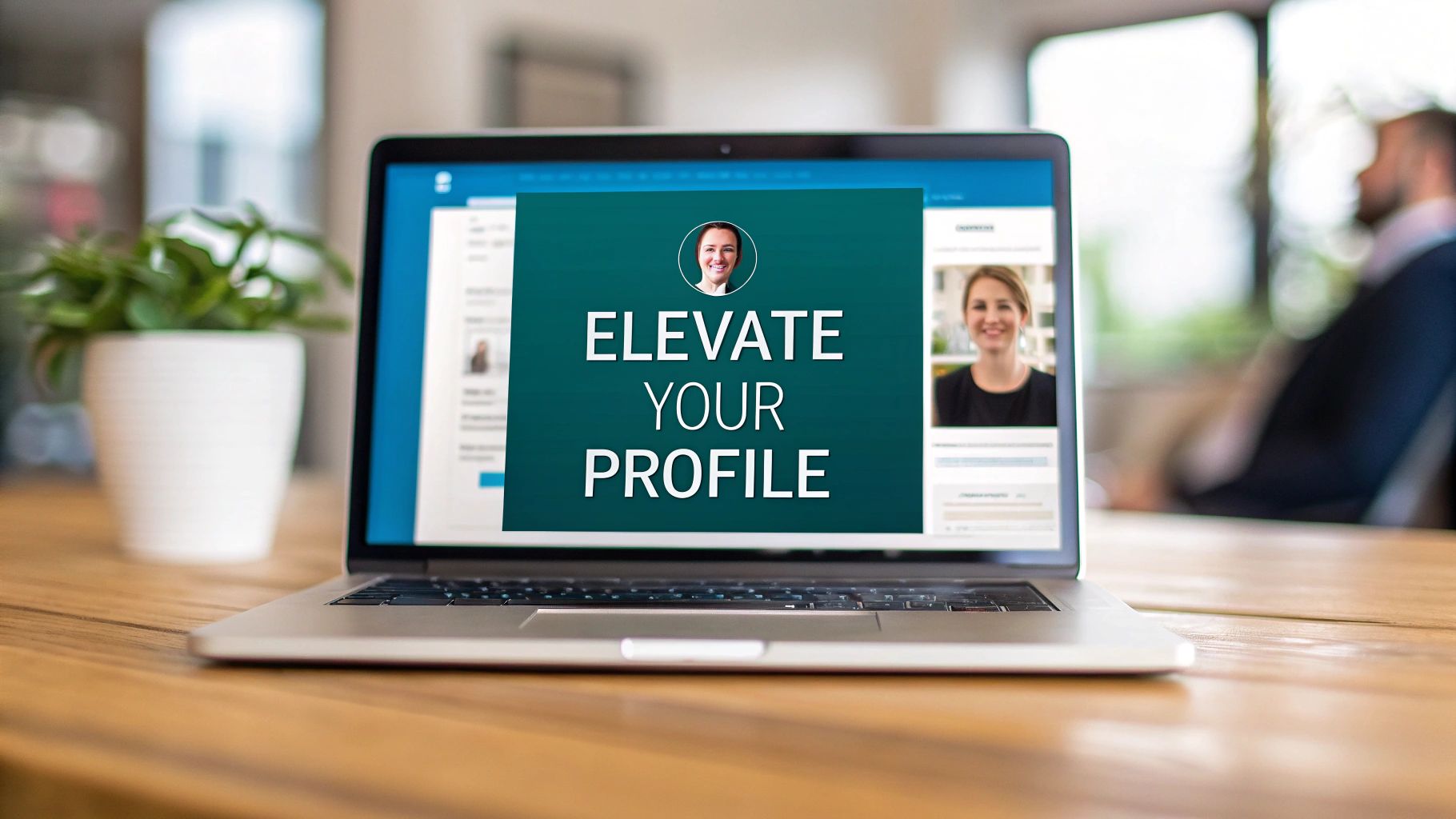
Personal branding on LinkedIn isn’t just a buzzword. It’s the art of shaping how the professional world sees you. This means actively managing your online identity by optimising your profile, sharing killer content, and actually talking to people in your network. Done right, you build real authority and pull in opportunities. Your profile stops being a dusty old CV and becomes your personal stage for career growth.
Crafting Your Profile for Maximum Impact
Think of your LinkedIn profile as your digital storefront. It’s the very foundation of your professional brand. Just filling in the blanks won’t cut it, especially in a competitive market like Germany. It’s the first impression you’ll make on recruiters, potential clients, and future collaborators, so make it count.

Getting this right is especially vital in places where the platform is exploding. In Germany alone, LinkedIn’s user base has climbed to a massive 23.1 million. That makes it a non-negotiable channel for professional visibility. The biggest slice of that pie is the 25–34 age group—people actively climbing the ladder and making big career moves. A sharp profile here can give you a serious edge.
Optimise Your First Impression Visuals
Before anyone reads a single word you’ve written, they see your picture and your banner. These two visuals set the entire tone. They need to scream “credible” and whisper “approachable” at the same time.
- Your Profile Picture: Get a high-quality, professional headshot. Look at the camera. Smile. No distracting backgrounds or holiday snaps. Your face should take up about 60% of the frame. Simple.
- Your Background Banner: Ditch the default blue banner. Seriously. This is prime real estate to show what you’re about. It could be your company logo, a powerful tagline, a shot of you speaking on stage, or even just keywords that define your expertise.
Write a Headline That Converts
Your headline is probably the single most important bit of text on your entire profile. It follows you everywhere on LinkedIn—comments, connection requests, search results. It has to instantly tell people who you are and what you do.
Forget generic job titles like “Marketing Manager.” You need a headline that screams value. A formula that works wonders is: [Your Role] | Helping [Your Target Audience] achieve [Their Goal] with [Your Skill/Method]. For a deeper dive, check out our guide on https://postline.ai/blog/2/linkedin-headline-tips.
A great headline is a mini-pitch. It doesn’t just state your job; it declares the problem you solve. This shift in mindset is the secret sauce to powerful personal branding on LinkedIn.
Transform Your About Section into a Story
Your ‘About’ section is where you get to be a human, not just a list of bullet points. This is your chance to tell your professional story. Make it scannable and interesting. Kick it off with a strong opening line that grabs the reader, then use short paragraphs and bullet points to break down your expertise, your mission, and the value you bring to the table.
Always end with a clear call-to-action. Tell people what you want them to do next. Invite them to connect, pop over to your website, or shoot you a message. If you want to nail the basics, it’s worth reading up on how to build a personal brand. This storytelling approach turns a passive summary into an active tool for building connections.
Developing a Content Strategy That Builds Authority
Content is the engine that drives your personal brand on LinkedIn. Your perfectly optimised profile is just a static billboard until you start publishing. A solid content strategy turns you from a passive observer into an active, respected voice in your field, proving your expertise and attracting opportunities.
Posting randomly when inspiration strikes just won’t cut it. You need a plan.
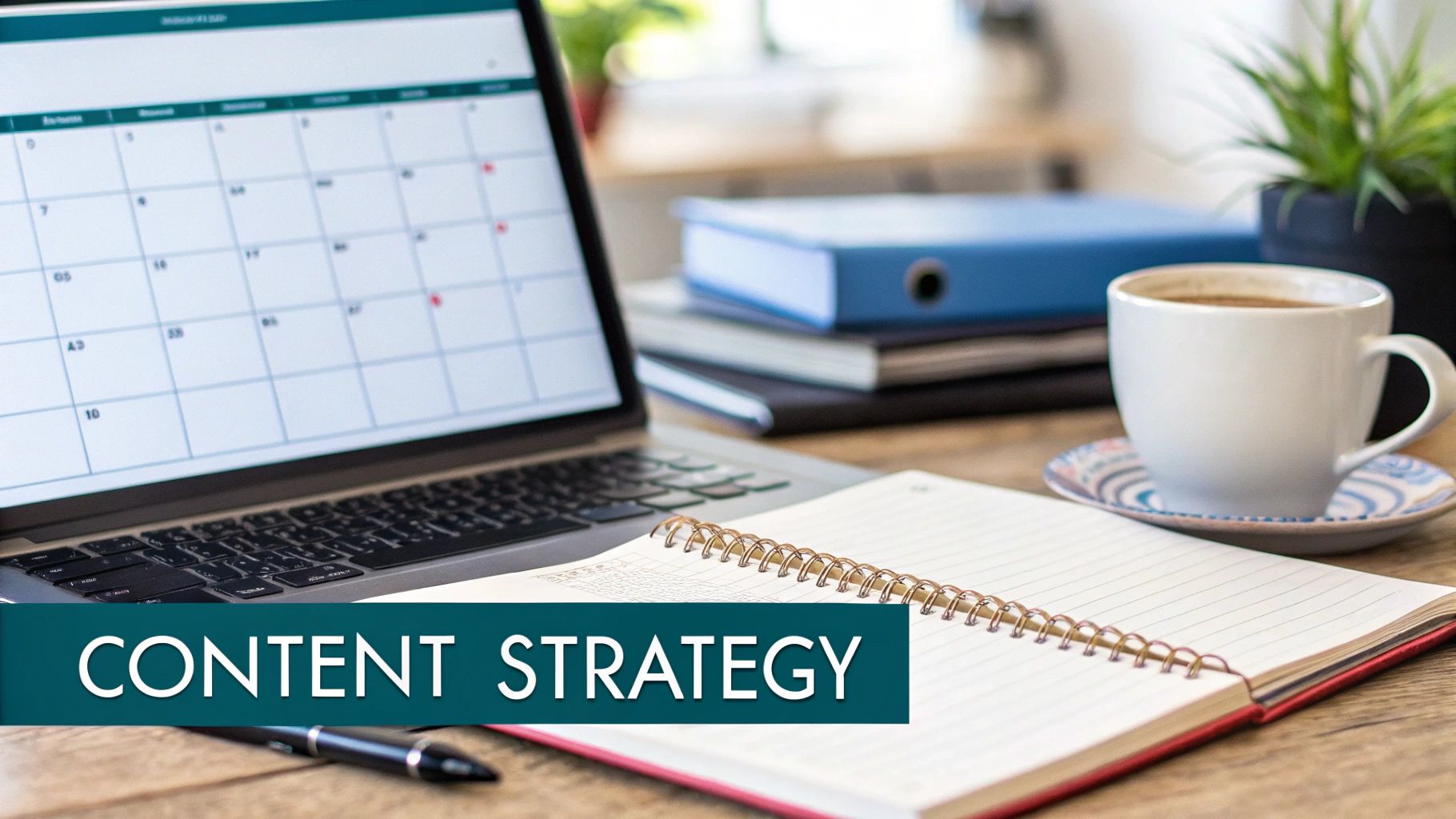
This doesn’t have to be some overly complicated document. Its real job is to give you structure, making sure you show up regularly with valuable insights. The aim is to shift from that daily panic of “what on earth should I post today?” to confidently executing a plan that builds your reputation over time.
Identify Your Core Content Pillars
The heart of any great content plan is focus. You can’t be an expert in everything, so don’t even try. Instead, pick two or three core content pillars—these are the key topics you want to own.
These pillars should be the sweet spot where your expertise, your audience’s pain points, and your professional goals all meet.
Think about the specific problems you solve day in, day out. Are you a sales leader who’s a master of cold outreach? Your pillars could be “Sales Prospecting Tactics” and “Team Motivation.” A software developer specialising in AI? Maybe “Practical AI Implementation” and “The Future of Machine Learning.”
Choosing these pillars does two crucial things. First, it signals to your audience exactly what to expect from you, training them to see you as the go-to person on those subjects. Second, it makes creating content a thousand times easier by giving you guardrails and killing creative paralysis.
Find Your Unique Voice and Tone
How you say something matters just as much as what you say. Your voice is your personality coming through in your writing, and it’s what helps people connect with you as a real person, not just a headline. There’s no single “correct” voice for LinkedIn, but it absolutely must be authentic to you.
Ask yourself what feels most natural:
- Instructional: Do you love breaking down complex ideas into simple, actionable steps?
- Analytical: Are you all about the data, sharing insights backed by numbers and trends?
- Inspirational: Do you thrive on sharing stories of overcoming hurdles to motivate others?
- Contrarian: Are you comfortable challenging industry norms with well-thought-out arguments?
The most powerful personal brands on LinkedIn sound like themselves in every post, comment, and message. That consistency and authenticity is what builds trust and makes people feel like they actually know you.
Once you find your voice, commit to it. This consistency reinforces your brand and makes your content instantly recognisable in a crowded feed.
Plan Your Content with a Simple Calendar
Consistency is the undisputed secret weapon for winning on LinkedIn. And a simple content calendar is your best friend for staying on track. This doesn’t need to be fancy software; a basic spreadsheet or even a simple document works perfectly.
Set it up with columns for the post date, your content pillar, a quick post idea or hook, the format (text, carousel, video), and its status (idea, drafting, scheduled). This simple act of planning lets you see your output at a glance, ensures you’re mixing up your topics, and puts an end to last-minute scrambling. For those wanting to dive deeper, exploring a full-blown LinkedIn content strategy can offer a more advanced framework.
Choose the Right Content Formats
Mixing up your content formats is key to keeping your feed fresh and appealing to how different people prefer to consume information. Not everyone wants to read a long text post, and not every idea works as a video. Each format has its own strengths for building your personal brand.
Here’s a quick guide to help you pick the right format for your message.
Choosing the Right LinkedIn Content Format
| Content Format | Best For | Key Strengths | Pro Tip for Engagement |
|---|---|---|---|
| Text-Only Posts | Storytelling, strong opinions, asking questions | Quick to create, easy to consume, sparks conversation | End with a direct question to your audience to encourage comments. |
| Image Posts | Illustrating data, sharing quotes, event highlights | Grabs attention in the feed, makes concepts visual | Use high-contrast colours and bold text in your graphics to stand out. |
| Carousels (PDFs) | Step-by-step guides, lists, breaking down complex topics | High engagement (dwell time), positions you as a teacher | Create a compelling “cover slide” that makes people want to swipe. |
| Short-Form Video | Showing personality, quick tips, behind-the-scenes content | Builds a strong personal connection, highly engaging | Add captions! Over 80% of social video is watched with the sound off. |
By experimenting with these formats, you’ll quickly learn what resonates most with your audience and what best showcases your unique expertise. A good mix is usually the most effective strategy.
When you thoughtfully choose your pillars, define your voice, and plan your posts, your content stops being a chore and starts being a strategic asset. It’s how you consistently deliver value, earn trust, and build the authority that defines a truly powerful personal brand.
Writing Posts That People Actually Want to Read
Knowing your content pillars is one half of the personal branding puzzle on LinkedIn. The other half? Turning those strategic ideas into posts that actually stop the scroll. It’s a skill. A great post isn’t just about dumping information; it’s about structuring it in a way that grabs your reader, holds their attention, and makes them want to chime in.
Think of every single LinkedIn post as having three crucial parts: a killer opening, a valuable middle, and a clear ending. Getting each of these right is what separates the posts that get scrolled past from the ones that build your brand and kickstart real conversations.
The Anatomy of a Scroll-Stopping Post
Honestly, every post that performs well follows a simple, yet incredibly powerful, structure. Once you get this framework down, your content will perform better and the whole writing process will feel a lot less daunting.
- The Hook: This is everything. It’s the first one or two lines people see before they have to click “…see more.” Its only job is to be so damn interesting they can’t help but click.
- The Body: Here’s where you deliver the goods—the story, the advice, the insight you promised in the hook. The key is making it super easy to read and digest.
- The Call-to-Action (CTA): This is where you tell your reader what to do next. It’s how you guide them from being a passive reader to an active participant in the conversation.
Let’s dig into how you can nail each of these parts.
Mastering the All-Important Hook
Your hook is basically the bouncer for your content. If it doesn’t do its job, the rest of your post might as well not exist. The goal here isn’t to write clickbait; it’s to create genuine curiosity and signal the value that’s coming.
Here are a few proven hook formulas you can steal and adapt:
- The Contrarian Take: Start by challenging a piece of conventional wisdom. For example, “Everyone tells you to build a massive LinkedIn network. They’re wrong.”
- The Story Starter: Drop the reader right into the middle of a story. “Last week, I made a mistake that cost a client €5,000. Here’s the lesson.”
- The Numbered List: Promise a clear, bite-sized takeaway. “3 daily habits that doubled my productivity (and can double yours, too).”
- The Direct Question: Get the reader thinking immediately. “What’s the single best piece of career advice you’ve ever received?”
The very best hooks create what’s known as an “information gap.” They present a puzzle or a promise that your reader feels a psychological need to solve by, you guessed it, reading the rest of your post. It’s a powerful little trick for grabbing attention in a noisy feed.
Structuring the Body for Skim Readers
Okay, so you’ve hooked them. Now you have to deliver on that promise with a body that is ridiculously easy to scan. Let’s be real: nobody on LinkedIn wants to tackle a dense wall of text. The secret is using formatting to create a bit of visual breathing room.
This is where short paragraphs become your best friend. I’m talking one to three sentences, maximum. This forces you to be concise and makes your writing way less intimidating, especially on a mobile screen where most people are reading.
You should also use bullet points or numbered lists to break up information and make your key points pop. This kind of formatting guides the reader’s eye right through your main arguments, making sure your message actually lands. For a much deeper dive into this, our guide on how to write engaging LinkedIn posts has even more tactical advice.
Crafting a Call-to-Action That Sparks Conversation
The end of your post is your chance to get the conversation started. A lazy CTA like “What do you think?” almost always falls flat. A strong CTA, on the other hand, gives people specific direction and makes it easy for them to jump in.
Instead of those generic questions, try something more effective:
- Ask for Specific Experiences: “What’s the one project management tool you can’t live without? Drop it in the comments!”
- Pose a Choice: “Are you Team A or Team B on this? Tell me why below.”
- Request Advice: “This is the approach that worked for me. What would you have done differently?”
This deliberate approach to engagement is fundamental to building a personal brand on LinkedIn. It shows you’re not just broadcasting; you’re actually here to build a community and learn from the people in your network.
Growing a Network That Actually Matters
A big follower count is just a vanity metric. The real power of a personal brand is forged in the quality of your relationships. Your network is the community that shares your ideas and opens doors you didn’t even know existed.
So, let’s stop passively accepting every connection request that lands in our inbox. It’s time to get strategic. Proactively building a network of relevant peers, industry leaders, and potential clients is the name of the game.
Think of yourself less like a collector hoarding connections and more like a curator. Every new person you add should bring genuine value to your professional circle. The goal here is to turn a static digital address book into a living, breathing community that fuels your brand’s growth.
How to Send Connection Requests People Actually Accept
That generic “I’d like to add you to my professional network” message? It’s a massive missed opportunity. It’s the professional equivalent of a limp, awkward handshake. A personalised request, on the other hand, shows you’ve put in a tiny bit of effort and have a real reason for reaching out.
Here’s a simple formula that works wonders:
- Find Common Ground: Kick things off by mentioning something you share. Maybe you saw them speak at an event, loved an article they wrote, or just admire a recent project their company launched.
- State Your “Why”: Briefly explain why you want to connect with them specifically. Are you keen to follow their insights on a certain topic? Do you both work in a similar niche within the German market? Be specific.
- Hint at Mutual Value: This doesn’t have to be a sales pitch. Something as simple as, “Looking forward to following your work in the renewable energy sector,” is perfect.
The best connection requests are never about what you can get. They’re about showing genuine interest and respect for the other person’s work. Just one sentence of personalisation can boost your acceptance rate by over 50%.
The 15-Minute Daily Engagement Habit
Consistency beats intensity, every single time. You don’t need to live on LinkedIn to build a powerful brand. A focused, 15-minute daily routine can create incredible momentum. The secret is to prioritise genuine interaction over mindless scrolling.
Here’s a simple way to break it down:
- First 5 Minutes (Connect): Find 2-3 new, relevant people to connect with. Use that personalised approach we just talked about to send your requests.
- Next 10 Minutes (Comment): This is where the magic happens. Scroll through your feed and leave 3-5 thoughtful comments on posts from others. Don’t just type “Great post!” Add an insight, ask a smart question, or share a related experience.
This little habit does more than just make you visible. It tells the LinkedIn algorithm you’re an active member of the community. More importantly, it puts your expertise on display in real-time conversations and builds real rapport with people in your network.
From Local Network to National Impact
Sometimes, focusing your networking on a specific city or region can have an outsized impact. Concentrated professional hubs often create powerful local ecosystems. Take German cities like Berlin, for example. Some reports have shown that localised activity there can actually surpass national trends.
One analysis pointed out that Berlin’s roughly 2.1 million LinkedIn users showed higher posting activity (47% vs. a national 34%) and stronger engagement rates (3.2% vs. 2.1%). This suggests that building deep connections within a specific city can seriously amplify your brand’s reach. You can dive deeper into the data on LinkedIn user trends in Germany.
At the end of the day, building your LinkedIn network is about quality, not quantity. Every personalised request and thoughtful comment is another brick in the foundation of your professional reputation. When you invest in real relationships, you create a powerful network effect where your community becomes your biggest champion—sharing your content, validating your expertise, and bringing opportunities right to your doorstep. That’s the true power of a well-tended network.
Tracking Your Progress and Refining Your Strategy
Building a powerful personal brand on LinkedIn isn’t a one-and-done job. It’s a living, breathing process of creating, engaging, and most importantly, learning from what you’ve done. If you really want to grow, you have to get a feel for what’s hitting the mark and what’s falling flat. And that means getting friendly with your analytics.
You can’t improve what you don’t measure. Diving into your data is how you stop guessing and start building a deliberate, effective strategy. It’s how you discover that your audience devours your case studies but scrolls right past your industry news updates. That’s gold—it tells you exactly where to double down.
Key Metrics That Actually Matter
LinkedIn gives you a whole dashboard of analytics, and it can look pretty intimidating at first. The trick is to ignore the noise and focus on a few core metrics that tell the real story. These numbers are direct feedback from your audience.
Here are the essentials I always keep an eye on:
- Post Impressions: This is simply the total number of times your content showed up in someone’s feed. It’s your first checkpoint for reach. Are people even seeing what you put out there?
- Engagement Rate: This one’s the biggie. You calculate it by adding up your likes, comments, and reposts, then dividing by your impressions. It shows what percentage of viewers actually cared enough to interact. A high engagement rate is a sign you’re onto something good.
- Profile Views: This tells you how many people clicked through to check you out. It’s a huge signal that your content or comments made someone curious enough to want to know more about the person behind the post.
To really get a grip on this, you’ll want to learn how to properly track analytics for personal LinkedIn accounts and pull out those deeper insights.
Conducting Your Monthly Performance Review
Block out 30 minutes at the end of each month just to review your progress. Seriously, put it in your calendar. This simple habit is your secret weapon for getting better over time. Don’t just glance at the numbers; hunt for the patterns.
During your review, ask yourself a few key questions:
- Which 2-3 posts got the most love this month? Look for the common denominator. Was it the topic? The format—maybe a carousel versus a simple text post? Or was it the hook you used in the first line?
- Which posts bombed? Be brutally honest here. Understanding what didn’t connect is just as valuable as knowing what did.
- Did my profile views go up or down? Try to connect the dots between your best content and any spikes in profile views.
- What kind of comments did my top posts get? Were they just simple “Great post!” comments, or did they actually spark a real conversation?
The point of a monthly review isn’t to beat yourself up. It’s about finding clues. Every single data point helps you create better content next month, letting you tweak your approach and sharpen your personal brand.
When you analyse this data, you can make smarter decisions. If you notice your short, story-driven posts get triple the engagement of your dense, data-heavy ones, that’s a blinking sign to tell more stories. For a more detailed framework, you can learn how to measure content performance in a structured way.
This diagram shows a simple flow for how network growth feeds into this whole process. More meaningful connections mean more reach and, ultimately, better data to analyse.
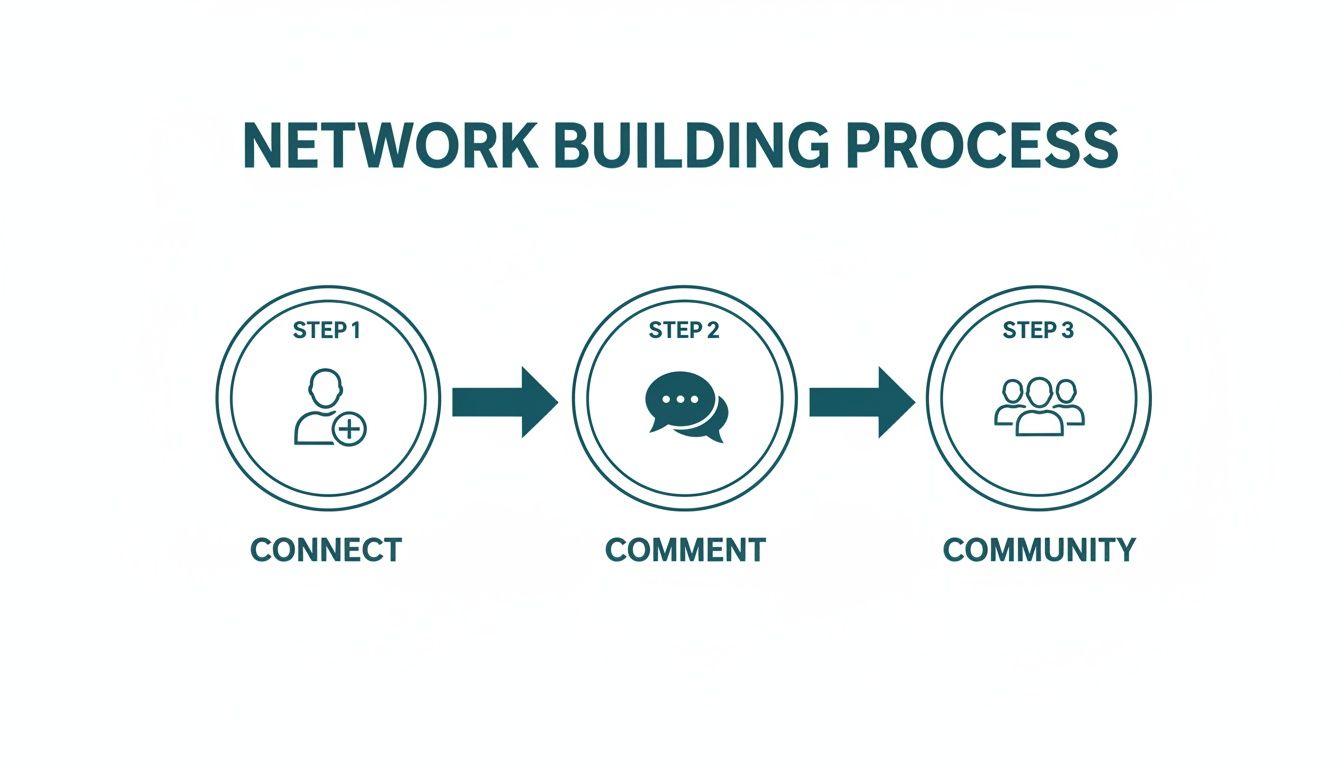
As you can see, proactively connecting and commenting helps build a community. That community then lifts up your content, giving you richer analytics and starting the cycle all over again.
Setting Realistic Timelines for Growth
Finally, and this is important, you have to be patient. Building a brand that people actually trust and follow takes time and consistency. You’re not going to become a thought leader overnight, and that’s okay. Knowing what to expect helps you stay motivated.
From my experience, and from what data suggests, a realistic timeline is key. You’ll likely see the first real shifts in profile views and engagement after about 3–4 months of consistent posting and interacting. The bigger wins, like people reaching out with opportunities or leads, usually start rolling in after 6–12 months of dedicated effort.
By tracking your progress and keeping these timelines in mind, you can stay the course, celebrate the small victories along the way, and build a brand that genuinely opens doors for you.
Your Top LinkedIn Personal Branding Questions, Answered
Jumping into personal branding on LinkedIn can feel a bit overwhelming. You know the goal—more visibility, better opportunities, a stellar reputation—but the path isn’t always clear. It’s like trying to navigate a new city without a map.
Let’s clear up some of that confusion. Here are the straight answers to the questions I hear most often from professionals ready to get serious about their LinkedIn presence. Think of this as your practical road map, helping you move from theory to confidently hitting ‘post’.
How Often Should I Post to See Real Growth?
This is the million-dollar question, isn’t it? But the answer isn’t “post five times a day.” The real key is sustainable consistency. Burning yourself out in two weeks with a frantic posting schedule is far worse than finding a steady, manageable rhythm.
For most professionals, aiming for 3-4 high-quality posts per week is the sweet spot. It’s frequent enough to stay on your audience’s radar and signal to the LinkedIn algorithm that you’re an active contributor, but it won’t completely take over your life. Always remember: one thoughtful, engaging post is worth ten generic ones.
The goal is to build a rhythm you can maintain for months, not just days. Consistency builds trust and trains your audience to look for your content. It’s the slow, steady drumbeat that builds momentum, not a single loud crash.
Focus on creating a small batch of content each week that you’re genuinely proud of. Quality over quantity will always win the long game.
How Do I Overcome the Fear of Posting?
The fear of judgement is real. What if I sound silly? What if I get something wrong? What if no one even engages? Trust me, this is completely normal and it’s often the biggest hurdle people face. But here’s the thing: your unique perspective is your greatest asset. The world doesn’t need another generic post.
Here are a few mindset shifts and practical steps that have helped me and many others push past that fear:
- Start with Comments: Before you even think about posting, spend a week just leaving thoughtful comments on other people’s content. This is a low-stakes way to get comfortable sharing your opinions and joining the conversation.
- Document, Don’t Create: You don’t always need a groundbreaking idea. Just share what’s happening. Talk about a lesson you learned from a recent project, a challenge you overcame, or an interesting conversation you had. Documenting your real-world experience feels more authentic and is way less intimidating.
- Embrace Imperfection: Your first ten posts probably won’t be your best. And that’s perfectly okay. The goal is just to start, learn from the feedback (or lack of it), and get better over time. Done is always better than perfect.
Every expert you admire on LinkedIn started from zero. They all had a first post that probably felt awkward. The only difference is they kept going.
Should I Use LinkedIn Articles or Newsletters?
While standard posts are your bread and butter for daily engagement, LinkedIn Articles and Newsletters serve a different, more powerful purpose: building deep authority. They’re your chance to go beyond the character limit, dive deep into a topic, and really position yourself as an expert.
So, which one should you choose? Here’s a quick breakdown:
| Feature | Best For | Key Advantage |
|---|---|---|
| LinkedIn Articles | Evergreen, foundational content. Think detailed case studies or deep dives into complex topics. | They live permanently on your profile, acting as a long-term portfolio of your expertise that people can find through search. |
| LinkedIn Newsletters | Building a loyal, subscribed audience. Perfect for sharing regular insights on a specific theme and creating a direct line of communication. | Notifies your subscribers every time you publish, driving repeat engagement and building a dedicated community around your brand. |
If you’re just starting out, a well-written Article is a fantastic way to create a cornerstone piece of content you can refer back to again and again. Once you’ve got a steady flow of ideas and a growing audience, launching a Newsletter can be an absolute game-changer for building a loyal following.
Ready to turn your ideas into scroll-stopping content without the stress? Postline.ai is your AI-powered assistant for writing, improving, and scheduling your LinkedIn posts. It helps you find your voice, research fresh topics, and stay consistent, so you can build your personal brand faster than ever. Start mastering your LinkedIn content today at https://postline.ai.

Run every client pipeline in one place
Give each LinkedIn profile its own voice, calendar, approval flow, and analytics. Start in minutes.
Start free trial