LinkedIn Leads Generation Convert Profile into Leads (linkedin leads generation)
Boost your LinkedIn game with proven tactics for linkedin leads generation, from content strategy to genuine connections that convert.

If you’re still blasting out hundreds of generic connection requests on LinkedIn, you’re playing a losing game. The spray-and-pray approach is dead. Effective LinkedIn leads generation today is all about building real relationships by providing value, long before you ever ask for anything in return.
It’s time to shift your mindset from being a ‘hunter’ to a ‘farmer’—cultivating trust and authority is what will consistently bring in high-quality leads.
Rethinking Your LinkedIn Leads Generation Strategy

Let’s get real for a moment. I see so many talented professionals spinning their wheels on LinkedIn. They send countless connection requests and DMs, only to be met with deafening silence. The problem isn’t their service; it’s their approach. They fail to turn connections into clients because they’re using tactics that are completely out of sync with how people buy today.
LinkedIn isn’t just a digital Rolodex anymore. It’s the epicentre of B2B networking and decision-making. Your potential clients are on the platform, vetting you and your competitors well before they even think about hopping on a sales call. If your first touchpoint is a cold, automated message, you’re immediately putting up a wall. People tune out because it feels transactional and all about you.
From Hunter to Farmer: A Fundamental Mindset Shift
The secret to unlocking a steady stream of leads is simple: stop hunting and start farming. A hunter is all about the quick kill, often sacrificing the relationship for a fast win. A farmer, on the other hand, understands the long game. They prepare the soil, plant seeds, nurture growth, and eventually reap a sustainable harvest.
Here’s what that looks like on LinkedIn:
- Provide value first: Don’t lead with a sales pitch. Share insights, comment thoughtfully on a prospect’s post, or offer helpful advice with no strings attached.
- Build genuine rapport: Get curious. Show a real interest in their work, their company, and the challenges they’re facing before you ever bring up your solution.
- Establish your authority: Consistently share high-quality content that solves problems for your target audience. This positions you as the go-to expert they trust.
This isn’t just about being nice; it’s a strategic system. When you consistently show up as a valuable resource, people will want to connect with you. Your profile transforms from a static resume into a dynamic hub of expertise.
The Rise of the DE Region and Smarter Outreach
This relationship-first model is particularly powerful in markets like the DE region. In Germany, for example, LinkedIn’s user base has exploded to over 22 million, officially overtaking the long-standing local favourite, Xing. This has cemented its place as the definitive B2B platform.
The numbers tell the story. Personalised outreach in this market sees response rates jump from a dismal 5% for cold spam to over 47% for thoughtful, relevant engagement. It’s a completely different ball game.
The biggest mistake in LinkedIn leads generation is focusing on the ‘lead’ instead of the ‘person’. When you prioritise building a genuine connection, the business opportunity follows naturally.
This is where smart tools can give you an edge. They can help you create and scale the kind of personalised, high-value content this modern approach requires. To really dig into this, you can explore the practical applications of lead generation AI for smarter, more sustainable growth. It’s about maintaining that crucial human touch while building an efficient system for content and outreach.
Building a Profile That Converts Visitors into Leads
Your LinkedIn profile isn’t just an online CV—it’s your digital storefront, your 24/7 salesperson. Think of it that way. Every single element, from the banner image you choose to the last word in your ‘About’ section, is a piece of your LinkedIn leads generation machine. It’s the very first place a potential client will go to check you out, so it needs to do more than just list where you’ve worked. It has to instantly scream, “I understand your problem, and I can solve it.”

An unoptimised profile is like a shop with no sign on the door. People might drift past, but they won’t know what you’re selling or why they should bother coming inside. A well-crafted profile, on the other hand, acts like a magnet for your ideal client, grabbing their attention and making them feel like they’ve finally found what they’ve been looking for.
To really nail this, you need to shift your mindset from a passive, resume-style approach to an active, lead-generating one. Here’s a quick breakdown of what that looks like in practice.
Profile Optimization From Passive to Powerful
| Profile Element | Passive Approach (What to Avoid) | Lead-Gen Approach (What to Do) |
|---|---|---|
| Headline | “Sales Director at Tech Solutions Inc.” | “Helping SaaS Founders Cut Customer Churn by 20% with Data-Driven Retention Strategies” |
| About Section | A third-person summary of job history. | A first-person narrative that speaks to client pain points and includes a clear Call to Action. |
| Featured Section | Left blank or filled with old posts. | A curated showcase of case studies, testimonials, and valuable lead magnets. |
| Banner Image | The default blue LinkedIn banner. | A custom graphic reinforcing your value proposition or showing a client success quote. |
| Profile Photo | A blurry, unprofessional, or outdated photo. | A clear, professional headshot where you look friendly and approachable. |
Let’s break down how to make these changes happen.
Your Headline Is Your Hook
Your headline is the most valuable piece of real estate on your entire profile. Seriously. It follows you everywhere on LinkedIn—in comments, connection requests, and search results. So many people just put their job title, like “Marketing Manager at ABC Company,” and call it a day. That’s a huge missed opportunity.
Your headline should be a mini-pitch that speaks directly to your target audience. It needs to be about them, not you. A simple but powerful framework I’ve seen work time and again is: “I help [Target Audience] achieve [Desired Outcome] through [Your Method].”
This small tweak immediately tells the right people you’re the right person to help them. It’s the first, and most important, step in turning a profile view into a real conversation.
Crafting a Compelling About Section
This is where you can let your personality shine and build a genuine connection. Please, don’t just list your accomplishments in the third person like you’re reading from a script. Your ‘About’ section is your chance to show empathy for your clients’ struggles and guide them on what to do next.
I always recommend starting with a hook that hits on a major challenge your audience is facing. From there, explain your approach and the results you get for people, but keep it brief. With 70% of LinkedIn users browsing on their phones, you need to use short paragraphs and bullet points to make it easy to skim.
Your “About” section should be less about your past and more about your prospect’s future. Frame your experience through the lens of how it benefits them, turning your history into a reason they should trust you to solve their problems.
And whatever you do, don’t forget to end with a clear call to action (CTA). Tell people exactly what you want them to do next.
Here are a few CTA examples you could try:
- “Send me a connection request to discuss your content strategy.”
- “Book a complimentary 15-minute consultation here: [Your Calendar Link]”
- “DM me with the word ‘Growth’ for my free guide on scaling your outreach.”
Showcasing Your Expertise with the Featured Section
Think of the “Featured” section as your personal portfolio. It’s a highly visual and interactive space right at the top of your profile to prove you know your stuff. Leaving it empty is a rookie mistake. Instead, you want to use it strategically to highlight your best assets for LinkedIn leads generation.
Some of the best things to feature include:
- Case Studies: Proof is in the pudding. Nothing builds trust like showing real results.
- Client Testimonials: A link to a short video or a graphic with a glowing review works wonders.
- Lead Magnets: Offer something valuable for free, like an eBook, a checklist, or a webinar recording.
- Your Best Content: Pin one of your highest-engagement LinkedIn posts or a killer article you’ve written.
This section is your chance to pull visitors deeper into your world, giving them value upfront and building your credibility with every single click.
First Impressions with Your Photo and Banner
Finally, let’s talk visuals. Your profile picture and banner are the first things anyone sees, and they’re critical for that initial gut-check of trust. Your profile photo needs to be a professional, high-quality headshot where you look like someone people would want to work with—friendly and approachable. No wedding photos or blurry holiday snaps, please.
Your banner is basically a free billboard. Use it to hammer home the message in your headline. You can add your value proposition, a powerful client quote, or simply your company’s branding. A custom banner instantly makes your profile look more polished and signals that you take your professional presence seriously. These small details are what separate an average profile from a powerful personal brand on LinkedIn that consistently brings in new leads.
Crafting a Content Strategy That Pulls Inbound Leads
Just showing up and posting on LinkedIn is a start, but it won’t get you very far. If you really want to generate inbound leads, you need a smart content strategy. The goal is to create high-value content that solves real problems for your audience and positions you as the go-to expert in your field.
When you get this right, your profile transforms from a simple resume into a hub of valuable resources. Ideal prospects start seeking you out, which means you can spend less time chasing leads and more time building meaningful relationships. It’s the difference between shouting into the void and becoming the first person your network thinks of when they need help.
Identifying Your Core Content Pillars
Before you even think about writing, you need to lock in your content pillars. These are the 2-4 core topics you’ll talk about, time and time again. Think of them as the main channels of your own personal media company. They should live at the sweet spot where your expertise, your audience’s biggest headaches, and your business goals all meet.
For instance, if you’re a marketing consultant trying to attract SaaS start-ups, your pillars might look something like this:
- Customer Acquisition: Actionable ways to find those crucial early adopters.
- Brand Storytelling: Simple frameworks for building a narrative that sticks.
- Marketing Analytics: How to track what’s actually working without getting lost in the data.
- Founder Mindset: Sharing real stories from the trenches of growing a business.
Sticking to your pillars helps build recognition. Your audience learns what to expect from you, and every post you share reinforces your expertise in those specific areas, making your value proposition impossible to ignore.
Generating Endless Content Ideas
“What on earth do I post about?” It’s the question that paralyses most professionals. But the answer is usually right in front of you. You just have to stop guessing and start listening. Your audience is giving you content ideas every single day.
Look for them here:
- Sales Calls: What are the top three questions prospects always ask? Each one is a post.
- Client Onboarding: Think about those “aha!” moments your new clients have. Share those breakthroughs.
- Industry Forums and Groups: What are people in your target market complaining about? Solve their problems publicly.
- Comments on Your Posts: Are people asking follow-up questions? Answer them in a new piece of content.
The best content doesn’t come from a sterile brainstorming session. It comes from documenting the solutions to problems you’re already solving for people. Treat every conversation as a potential goldmine.
This approach guarantees your content will hit the mark because it’s born from a real, documented need. It’s the most reliable way to create posts that truly resonate and get people talking.
Writing Posts That Stop the Scroll
You’ve got about two seconds to grab someone’s attention on a busy feed. This is where structure is your best friend. A great LinkedIn post isn’t just about what you say, but how you say it. A simple but powerful framework to follow is Hook, Body, and Call-to-Action (CTA).
1. The Hook (First 1-2 Lines)
Your hook is everything. Its only job is to be compelling enough to make someone click “…see more.” You can do this by sparking curiosity, challenging a common myth, or speaking directly to a known pain point.
- Bad Hook: “Today I want to talk about the importance of marketing.” (Generic and boring)
- Good Hook: “90% of marketing content fails for one simple reason.” (Specific, intriguing, and creates an information gap)
2. The Body (The Core Message)
Here, you need to deliver on the promise of your hook. Keep your paragraphs super short—one or two sentences, max. Use bullet points or numbered lists to make your content scannable, especially on mobile. Whether you’re telling a story, sharing a framework, or offering a step-by-step guide, make it easy to digest.
3. The Call-to-Action (The Next Step)
Every post should have a purpose. Your CTA tells your audience what to do next. But skip the hard sales pitch. Instead, focus on starting a conversation.
- Weak CTA: “Buy my product.”
- Strong CTA: “What’s one challenge you’re facing with [topic]? Drop it in the comments.”
This framework gives you a repeatable system for creating effective content. For a much deeper look, check out our guide on building a powerful LinkedIn content strategy that gets results.
The Power of Value in the DE Region
This value-first approach is particularly effective in Germany’s B2B landscape. In the DE region, LinkedIn is the undisputed king for professional networking. The numbers don’t lie: a staggering 62% of B2B leads come from the platform—that’s more than double any other social channel.
On top of that, over 40% of B2B marketers in Germany ranked LinkedIn as their number one source for high-quality leads that are actually likely to convert. This data paints a very clear picture: professionals here are actively using the platform to vet partners and find solutions. A strong, value-driven content presence isn’t just nice to have; it’s non-negotiable. You can find more insights on these B2B marketing trends on sopro.io.
Ultimately, your content is the foundation for your entire LinkedIn leads generation effort. It’s how you build trust at scale, prove your expertise without being pushy, and create a magnetic presence that pulls the right opportunities to you. And with tools like Postline.ai, you can streamline the entire process—from brainstorming ideas to writing and scheduling your posts—so you can stay consistent without burning out. It’s all about working smarter to turn your LinkedIn profile into a reliable source of inbound leads.
Crafting a Smart Outbound Outreach System
While great content pulls people in, a smart outbound strategy is how you go out and find your dream clients. When it comes to LinkedIn lead generation, we’re not talking about spamming inboxes. This is about building real rapport at scale. Think of this as your playbook for a multi-step outreach system that feels personal, adds value, and actually starts conversations.
Let’s be clear: the old way of sending a generic “I’d like to connect” message is dead and buried. Success today is all about personalisation and relevance. You have to show you’ve done your homework and have a good reason to get in touch—one that goes beyond just wanting to sell them something.
Every piece of outreach, just like content, starts with a solid idea before you ever type a word.
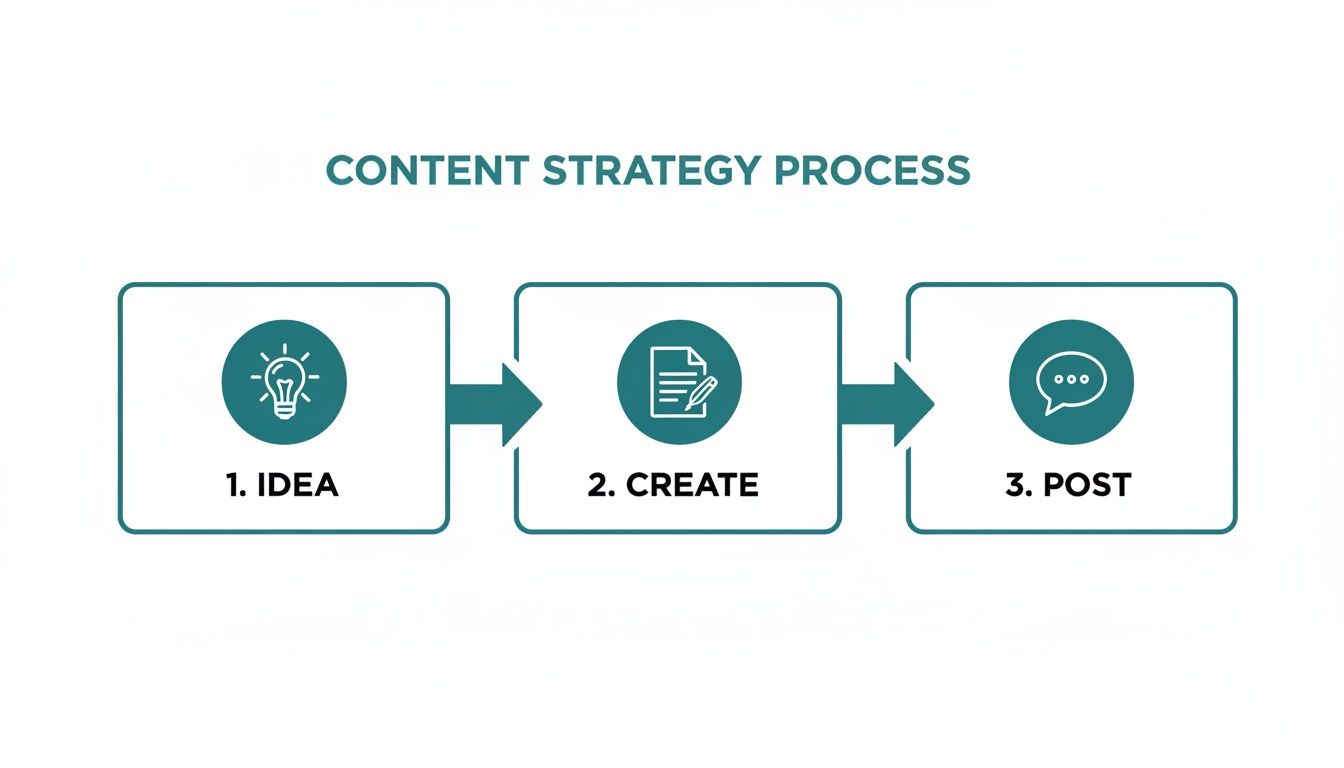
This simple flow reminds us that thoughtful planning is the foundation of any successful campaign, whether it’s a post or a direct message.
Building Your High-Value Prospect List
Before a single message goes out, you need absolute clarity on who you’re talking to. A spray-and-pray approach is a waste of time and can quickly damage your reputation. The real goal is to build a hyper-targeted list of people who are a perfect match for your Ideal Customer Profile (ICP).
This is where LinkedIn Sales Navigator becomes your best friend. It lets you slice and dice LinkedIn’s massive user base with incredible precision. Don’t just stop at job titles; get creative and layer on multiple criteria to zero in on the right people.
- Company Size: Are you targeting start-ups or enterprise-level businesses? Filter accordingly to ensure they have the right budget.
- Industry: Stick to the sectors where you’ve had the most success and can speak the language.
- Geography: For services in the DE region, this is non-negotiable. Pinpoint your prospects by location.
- Keywords in Profile: Hunt for terms that signal a specific need or tool, like “SaaS growth” or “e-commerce logistics.”
The more granular you get, the more your outreach will resonate. Trust me, a well-researched list of 100 prospects is infinitely more valuable than a generic list of 1,000.
The Art of the Connection Request
Your connection request is your first impression. The only goal here is to get them to accept. That’s it. Keep it short, personal, and make it about them. Reference something you have in common or mention something you genuinely admire about their work.
Here’s an example that gets accepted:
“Hi Alex, I saw your recent post on the challenges of scaling remote engineering teams and it really resonated. Your point about asynchronous communication was spot on. Would be great to connect and follow your insights.”
Why does this work? It’s not about you. It’s quick, it references their own content, and it offers a sincere compliment. You’re showing that you’re paying attention and value their perspective, which makes hitting ‘Accept’ a no-brainer. If you really want to level up, learning how to reach out to someone with a mutual connection on LinkedIn adds another powerful, trust-building layer to your requests.
Designing a Multi-Step Outreach Sequence
One message almost never cuts it. A successful outbound system relies on a thoughtful sequence of touchpoints over time. This approach builds familiarity and proves your value without ever feeling pushy. The trick is to vary your interactions.
The Rapport-Building Sequence:
- Initial Connection: Send that personalised request we just covered.
- The Value-First Follow-Up (Day 3): Once they connect, send a message that gives them something valuable with zero strings attached. Do not pitch. This could be a helpful article, an industry report, or a tool you think they’d find useful based on their profile.
- Engage with Their Content (Day 5): Drop a thoughtful, insightful comment on one of their recent posts. Don’t just say “Great post!” Add to the conversation.
- The Gentle Nudge (Day 10): Now you can send another message that references a specific pain point tied to their role. This is your moment to softly introduce how you can help.
That final “gentle nudge” message could look something like this:
“Hi Alex, hope you’re having a productive week. I was just speaking with another SaaS leader who was struggling with [common problem]. We’ve been helping companies like yours solve this by [your brief solution]. No pressure at all, but would you be open to a brief chat about it next week?”
There’s a reason this sequence works. With 80% of B2B leads coming from social media—and LinkedIn leading the pack—a structured, value-driven approach is what separates the pros from the spammers.
Scaling Your Outreach with Smart Tools
Trying to manage this process manually for hundreds of prospects is a recipe for burnout. This is where the right tools are essential for executing your LinkedIn lead generation strategy without losing your mind. A platform like Postline.ai can help you get your content and engagement strategy organised so you never miss a beat.
While some tools can help automate parts of the messaging sequence, you must always prioritise personalisation. Even when using automation, the most critical touchpoints—the initial connection request and the insightful comments—need a human touch. The goal is to use technology to scale your ability to build genuine relationships, not to replace them. Finding that balance is what turns an inbox conversation into a scheduled call.
Nurturing Your Leads and Measuring What Matters
Getting leads from LinkedIn is a great start, but it’s only half the job. The real trick is turning those initial chats and new connections into actual business. If your follow-up is chaotic, you’ll watch promising leads go cold, and all that effort you put in feels wasted. The final, critical piece of your LinkedIn leads generation strategy is a simple, effective workflow to manage, nurture, and ultimately convert these prospects.
This doesn’t mean you need a complicated CRM from day one. Honestly, you can get started with a basic spreadsheet or even a Trello board to keep track of your conversations. The goal is simple: know exactly where every prospect is in your pipeline, what you last talked about, and what the next move should be. Anything less is just guesswork.
From Conversation to Conversion
Learning when to take a conversation off LinkedIn is more of an art than a science. Jump the gun and ask for a call too soon, and you come across as pushy. But if you wait too long, you risk losing all the momentum you’ve built. The secret is to watch for clear buying signals or moments where their interest is obviously piqued.
For instance, if a prospect starts asking really specific questions about your process, mentions a big business problem they’re facing, or consistently likes and comments on your posts, those are all green lights. When you spot one, you can make a simple, low-pressure move to a call.
“Based on what you’ve mentioned about [their specific problem], I have a few ideas that might help. Would you be open to a quick 15-minute call next week to explore them? No pressure at all.”
Notice how this frames the call around their needs, not your sales pitch? It makes it a much easier “yes” for them to give.
Tracking the Right Performance Metrics
To get a real sense of whether your LinkedIn efforts are paying off, you have to measure your lead generation ROI. LinkedIn has its own analytics, of course, but looking into tools like call tracking software for measuring lead generation ROI can give you the full story of how your online activity leads to real-world phone calls.
Vanity metrics like likes and views are nice for the ego, but they don’t pay the bills. Instead, you need to laser-focus on the KPIs that directly link your actions to business results.
Here are the ones that truly matter:
- Connection Acceptance Rate: You should be aiming for over 30%. If you’re falling short, it’s a sign that either your targeting is off or your connection request message isn’t hitting the mark.
- Reply Rate to Follow-ups: This tells you if your initial messages are compelling. A healthy benchmark to shoot for is 20-25%.
- Lead-to-Meeting Ratio: This is the big one. Of all the qualified leads you’re generating, how many actually agree to a meeting? This metric shows you, in black and white, whether your nurturing process is working.
By keeping a close eye on these numbers, you can spot and fix problems in your sales funnel. A low acceptance rate points to a targeting problem, while a poor meeting ratio probably means your follow-up messaging needs a rethink. For a deeper dive, check out our guide on how to measure content performance.
Ultimately, having a system for nurturing and measuring turns your LinkedIn activity from a bunch of random tasks into a predictable sales engine. It gives you the clarity to fine-tune your strategy, prove your ROI, and consistently turn online connections into real business growth.
Got Questions About Generating Leads on LinkedIn?
If you’re trying to generate leads on LinkedIn, you’ve probably run into a few common roadblocks. It’s easy to wonder if you’re focusing your energy in the right places. Let’s tackle some of the most frequent questions I hear with some straightforward advice to help you sharpen your approach.
How Often Should I Be Posting to Actually Get Leads?
Look, consistency will always trump sheer frequency. For most of us, posting 3-5 times a week is a solid target. It keeps your name popping up in your network’s feed without becoming white noise.
But let’s be clear: the quality of what you share is everything. I’d rather see you post two genuinely insightful pieces that tackle a real-world problem for your audience than five generic updates. Your real goal is to find a rhythm you can stick with, making your presence both steady and valuable.
The point isn’t just to post; it’s to start conversations. A single post that gets people talking is worth more for lead generation than a full week of content that falls flat.
Are LinkedIn Ads Worth the Money for B2B Leads?
In a word, yes. LinkedIn Ads can be a game-changer, especially when you need to scale up fast or get in front of very specific decision-makers in certain industries. Their Lead Gen Forms are brilliant—they pre-fill a user’s information right from their profile, which makes a huge difference in conversion rates.
Sure, the cost-per-lead might seem higher compared to other platforms, but the quality of those leads is usually in another league entirely. The smartest play is to blend a solid organic strategy (which builds your authority and trust) with targeted ad campaigns to capture leads for your most compelling offers.
What’s the Best Way to Follow Up with a New Connection?
The golden rule here is simple: lead with value, not a sales pitch. After someone accepts your connection request, don’t pounce immediately. Give it a day or two before you reach out. And when you do, your message should have absolutely nothing to do with selling.
A great approach is to mention something specific from their profile or a piece of content they recently shared. For instance: “Hi [Name], great to connect. I saw your post on [Topic] and thought you might find this industry report on the latest trends interesting.” This immediately frames you as a helpful resource, not a salesperson, and opens the door for a real conversation. That’s how you build a foundation for a genuine business relationship.
Ready to turn your ideas into high-impact LinkedIn content without the guesswork? Postline.ai combines powerful AI writing with real-time research to help you create, schedule, and publish posts that generate leads. Start growing your presence on LinkedIn today.

Run every client pipeline in one place
Give each LinkedIn profile its own voice, calendar, approval flow, and analytics. Start in minutes.
Start free trial