Content planning strategies: LinkedIn in 2025
Discover practical content planning strategies to boost LinkedIn engagement in 2025.

Consistent, high-impact LinkedIn content doesn’t happen by chance; it’s the result of deliberate planning. While inspiration can strike at any moment, relying on it alone leads to burnout and inconsistent results. This is where effective content planning strategies become essential. They provide a framework to transform random ideas into a cohesive content engine that builds your authority, engages your audience, and achieves your professional goals on the platform.
Before diving into specific tactics, it’s helpful to understand how to create a comprehensive content strategy that aligns with your broader business objectives. This foundational knowledge ensures that every post serves a purpose beyond just filling a slot in your schedule. A well-organised plan is the difference between simply being active and being strategically influential.
In this guide, we’ll explore ten proven strategies that professionals use to streamline their workflow, maintain quality, and maximise their impact on LinkedIn. We’ll show you how to move from frantic, last-minute posting to a calm, organised approach. You’ll find actionable steps and real-world examples you can implement immediately, especially when paired with a tool like Postline.ai designed to bring these powerful strategies to life.
1. Master Your Workflow with Editorial Calendar Planning
An editorial calendar is the cornerstone of effective content planning strategies, providing a centralised, structured framework for your entire content operation. It’s a visual schedule that maps out what content you’ll publish, on which platforms, and when. This proactive approach transforms content creation from a reactive scramble into a deliberate, strategic process, ensuring every piece of content aligns with your overarching business goals and maintains a consistent publishing cadence.
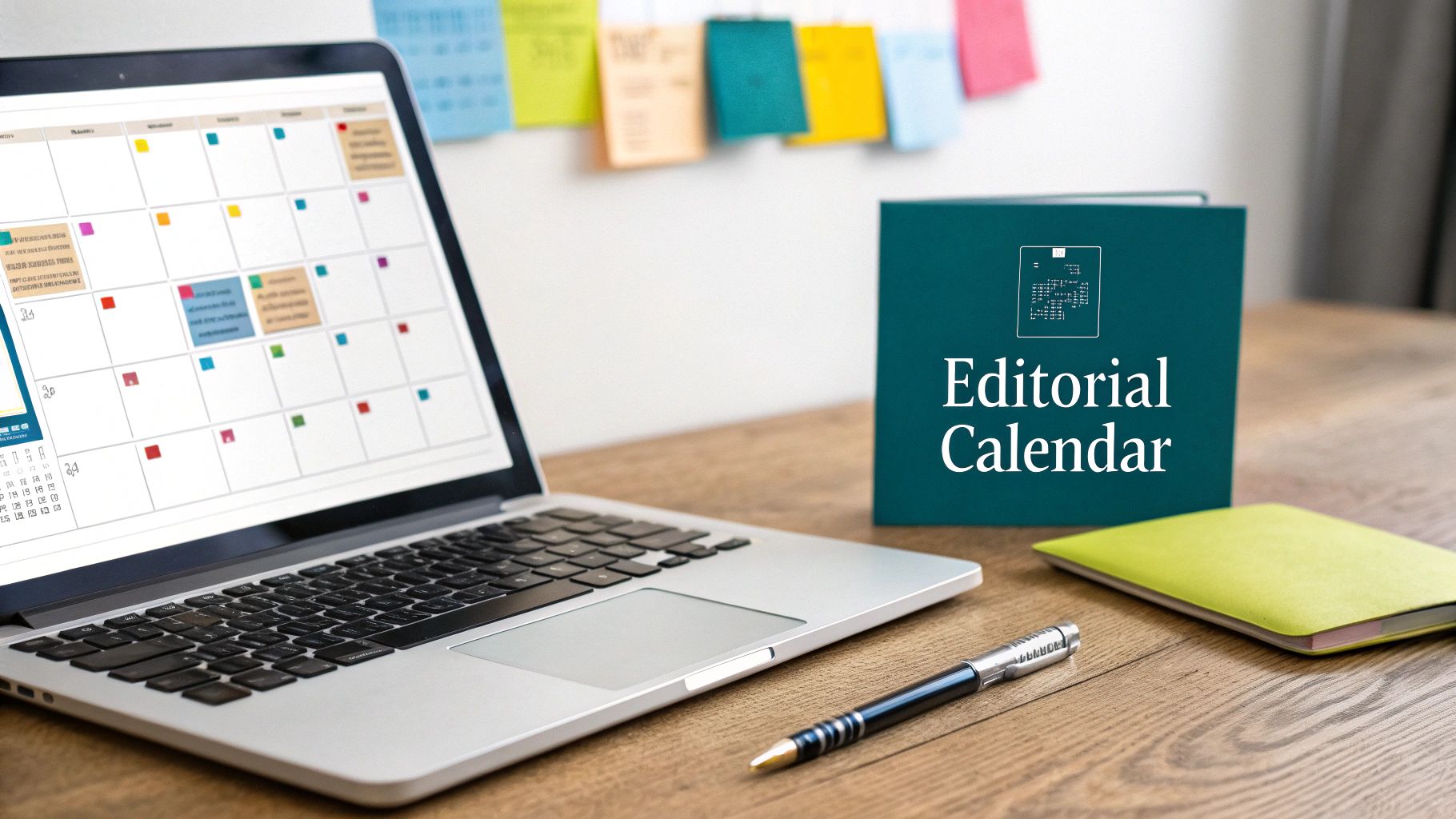
This method is crucial for teams needing to coordinate efforts, as seen in HubSpot’s integrated systems, and for individuals aiming to build a consistent personal brand on platforms like LinkedIn. Mastering your content workflow with an editorial calendar is also significantly enhanced by understanding core resource management principles, ensuring optimal allocation of your team and assets.
How to Implement This Strategy
To put this into practice, start by choosing a collaborative tool that fits your workflow, such as Google Sheets, Asana, or Monday.com. Map out your content for the upcoming month or quarter, assigning specific topics to dates.
- Colour-Code Your Content: Use different colours to categorise posts by theme (e.g., industry insights, personal stories), format (e.g., text-only, video, carousel), or campaign.
- Include Key Details: For each entry, specify the post copy, visual assets, target platform, author, and status (e.g., draft, scheduled).
- Build in Flexibility: Don’t schedule every single day. Leave 20-30% of your calendar open for spontaneous, timely content that addresses trending topics or urgent company news. This prevents your content from feeling rigid and out of touch.
For a deeper dive into setting one up, explore our guide on how to create a successful editorial calendar.
2. Establish Authority with a Content Pillar Strategy
A content pillar strategy provides a foundational framework for your content, focusing on 3-5 core themes that align directly with your brand expertise and audience interests. This strategic approach ensures every piece of content you produce supports a larger narrative, reinforcing your authority in specific areas. Rather than creating random, disconnected posts, each article, video, or carousel contributes to a cohesive and recognisable brand voice, establishing you as a go-to expert in your niche.
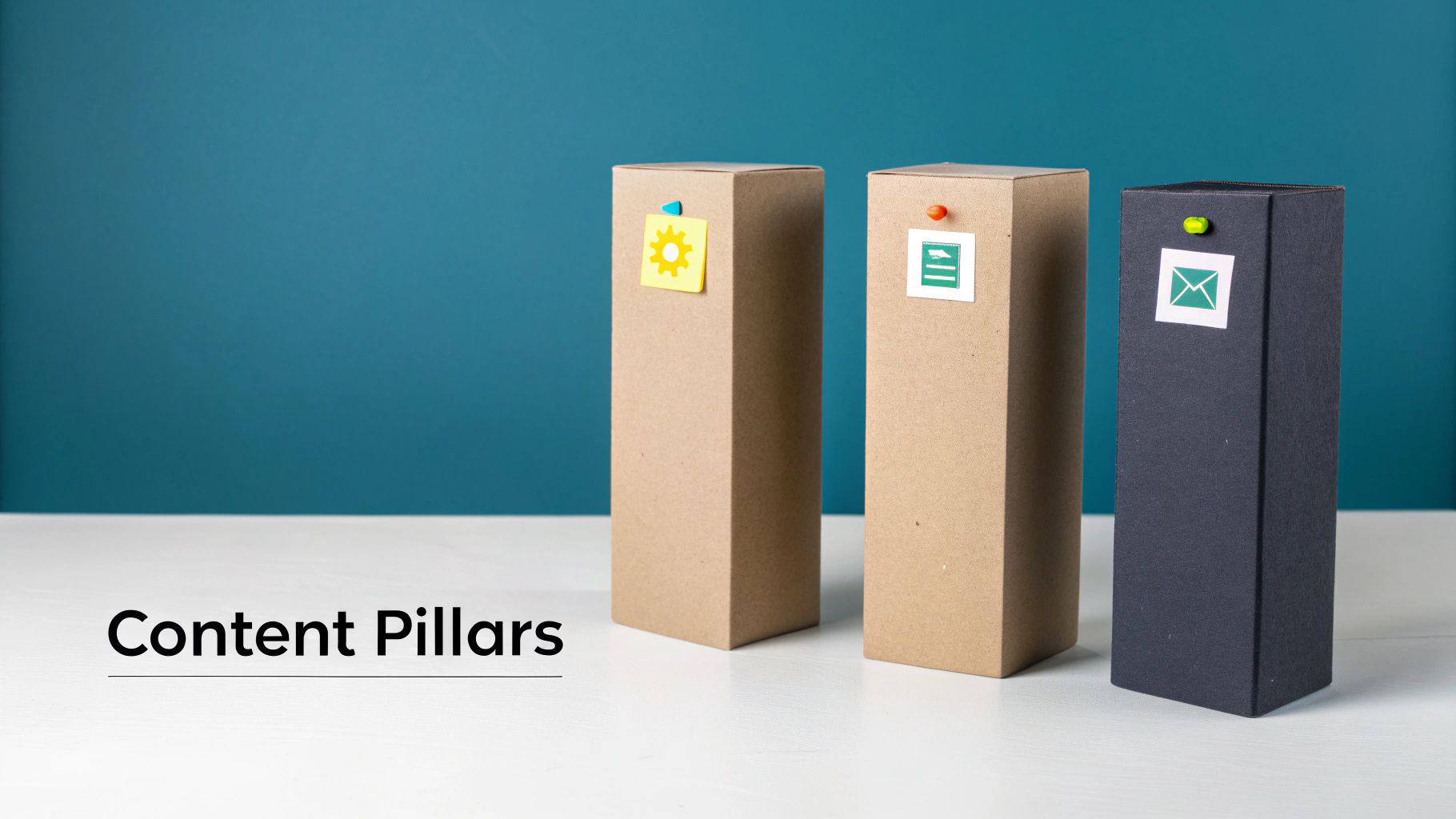
This method is ideal for professionals looking to build a specialised personal brand on LinkedIn or companies aiming for thought leadership. For instance, HubSpot organises its content around core pillars like Inbound Marketing, Sales, and Customer Service, ensuring all its output is focused and relevant. Similarly, Apple’s content consistently revolves around its pillars of Innovation, Design, and User Experience, reinforcing its core brand identity with every message.
How to Implement This Strategy
To implement this, start by identifying the main topics you want to be known for. These pillars should intersect your expertise, your audience’s needs, and your business objectives. Once defined, you can brainstorm subtopics that branch out from each core pillar, creating a rich well of content ideas.
- Define Your Pillars: Select 3-5 broad themes that represent your core expertise. For a sales professional, these could be “Lead Generation,” “Sales Negotiation,” and “Client Retention.”
- Create Subtopics: Under each pillar, develop 10-15 specific subtopics. For “Lead Generation,” this might include “LinkedIn prospecting,” “cold email outreach,” and “social selling techniques.”
- Balance Your Content: Allocate your content creation efforts across pillars. A good starting point is dedicating 40-60% of your content to your primary pillar, with the rest distributed among secondary themes to maintain variety.
- Review and Refine: Re-evaluate your content pillars and their performance on a quarterly basis. Use audience feedback and analytics to ensure they remain relevant and continue to resonate with your followers.
3. Data-Driven Content Strategy
A data-driven content strategy moves beyond guesswork, using analytics and audience insights to shape your content decisions. Instead of relying on intuition, this approach leverages hard data on audience behaviour, content performance, and market trends to guide planning and optimisation. This method turns your content creation into a scientific process, ensuring each piece is engineered for maximum impact and resonance with your target audience.
This strategy is foundational for tech giants like Netflix, which uses viewing data to greenlight productions, and Spotify, which curates personalised playlists based on listening habits. A data-driven approach allows you to systematically improve your content, making it one of the most reliable content planning strategies for achieving consistent growth and engagement on platforms like LinkedIn.
How to Implement This Strategy
To begin, focus on tracking metrics that reveal genuine engagement rather than just vanity numbers. Use LinkedIn Analytics or third-party tools to gather insights and establish a clear feedback loop with your audience to inform your content creation.
- Track Meaningful Metrics: Monitor shares, comments, and click-through rates, not just likes and views. These metrics indicate deeper engagement and content value.
- Conduct Performance Reviews: Set aside time each month to analyse what worked and what didn’t. Identify patterns in top-performing posts regarding topics, formats, and posting times.
- A/B Test Your Content: Experiment with different headlines, formats (e.g., text vs. video), and publishing times to see what resonates most with your audience. Use this data to refine your future content schedule.
For a comprehensive guide on tracking your success, learn more about how to measure content performance.
4. Audience Persona Development
Audience persona development is a core component of effective content planning strategies, involving the creation of detailed, semi-fictional representations of your ideal audience segments. These personas are built on data-driven research, covering demographics, behaviours, motivations, and goals. By developing these profiles, you can ensure your content resonates deeply, addressing specific challenges and speaking directly to the individuals you want to reach, transforming generic messaging into a personal conversation.
This strategy is vital for tailoring content that genuinely connects, a principle exemplified by HubSpot’s extensive use of buyer persona templates to guide their marketing efforts. Similarly, companies like Mailchimp use detailed audience segmentation to personalise communication at scale. Developing personas ensures every piece of content is crafted with a specific person in mind, making it more relevant, engaging, and effective.
How to Implement This Strategy
Begin by gathering data through surveys, customer interviews, and analytics. The goal is to move beyond assumptions and build profiles based on real-world information. Synthesise this research into 3-5 distinct personas that represent your key audience segments.
- Go Beyond Demographics: Include pain points, career goals, daily challenges, and preferred content formats. What keeps them up at night? What solutions are they actively seeking?
- Give Them a Name and Story: Assign a name, job title, and even a stock photo to make each persona more tangible and relatable for your team. Include direct quotes from customer interviews to capture their voice.
- Document and Share Widely: Create a formal document for each persona and share it across your entire organisation. This ensures everyone from sales to product development understands who they are serving, creating alignment in all customer-facing activities.
To build a strong foundation for this process, a thorough understanding of what is audience analysis is essential.
5. Streamline Production with Content Batching and Theme Days
Content batching is a powerful productivity strategy centred on creating similar types of content in dedicated blocks of time. Instead of switching between writing, designing, and filming daily, you group these tasks together. This approach dramatically increases efficiency by minimising context switching, maintaining creative momentum, and streamlining your production workflow for specific formats or themes.
This method is popularised by productivity experts like Tim Ferriss and widely used by content creators who need a high volume of quality output. For example, a social media manager might dedicate every Monday to writing all the captions for the week, or a food blogger might shoot photos for three different recipes in a single afternoon. This is one of the most effective content planning strategies for maintaining a consistent and high-quality presence without daily stress.
How to Implement This Strategy
To begin, block out specific times in your calendar dedicated to one type of content creation task. Prepare all necessary assets, outlines, and tools beforehand to ensure your batching session is focused and uninterrupted.
- Group Similar Tasks: Dedicate separate sessions for different activities. For instance, spend a two-hour block scripting all your videos, another for filming, and a third for editing.
- Establish Theme Days: Assign a specific content theme or format to a day of the week, such as ‘Motivation Mondays’ or ‘Tech Tip Thursdays’. This simplifies idea generation and creates a predictable structure for your audience.
- Build a Buffer: Aim to batch content 2-3 weeks in advance. This buffer provides flexibility, prevents last-minute rushes, and ensures you always have approved content ready to publish, which is a key part of an effective content creation workflow.
6. SEO-First Content Strategy
An SEO-first content strategy places search engine optimisation at the very beginning of the content planning process, rather than treating it as an afterthought. It involves in-depth keyword research, analysing search intent, and considering on-page technical factors before a single word is written. This approach ensures every piece of content is engineered to rank in search results, capture valuable organic traffic, and directly answer the questions your target audience is asking.
This method is fundamental for businesses aiming to generate sustainable inbound leads, as demonstrated by HubSpot’s powerful blogging engine and Backlinko’s detailed keyword research guides. By prioritising SEO, your content planning strategies shift from merely creating content to creating assets that build long-term authority and visibility.
How to Implement This Strategy
Begin by using an SEO tool like Ahrefs or SEMrush to identify relevant keywords your audience is searching for. From there, analyse the top-ranking pages to understand what type of content succeeds for those terms.
- Target High-Intent Keywords: Focus on keywords with a healthy search volume and manageable competition that signal a user is looking for solutions.
- Create Comprehensive Content: Develop content that is more thorough, insightful, and helpful than what currently ranks. This could mean adding more detail, unique data, or a fresh perspective.
- Optimise On-Page Elements: Ensure your target keyword is naturally integrated into the title, headings, URL, and meta description. Build a strong internal linking structure to guide both users and search engines through your site.
- Monitor and Refresh: Regularly track your keyword rankings. Be prepared to update and republish older content with new information to maintain its relevance and search position.
7. Story-Based and Narrative Content Strategy
A story-based framework is one of the most powerful content planning strategies, shifting your focus from simply broadcasting information to connecting emotionally with your audience. This method leverages narratives, case studies, and brand origin stories to make your message more memorable and shareable. Instead of just listing features or benefits, you embed them within a compelling story that resonates on a human level, building trust and fostering a genuine connection.
This approach is highly effective for building a strong personal brand or communicating complex company values, as demonstrated by Patagonia’s environmental advocacy stories and TOMS’ mission-driven marketing. By weaving narratives into your content, you transform abstract concepts into tangible, relatable experiences that capture attention and inspire action. It makes your content feel less like an advertisement and more like a conversation.
How to Implement This Strategy
Begin by identifying your core message and finding the human story within it. Think about the problems you solve, the transformations you enable, or the values you represent. Use a simple tool like Google Docs or even a physical notebook to outline your narratives before drafting the final content for platforms like LinkedIn.
- Use a Simple Framework: Structure your story with a clear beginning (the problem), middle (the journey or solution), and end (the transformation or result). The classic “Hero’s Journey” is an excellent model to follow.
- Feature Real People: Share genuine customer testimonials or employee spotlights. Authentic stories from real people are far more credible and impactful than generic marketing claims.
- Align with Brand Values: Ensure every story you tell reinforces your core brand identity and values. This creates a cohesive and authentic narrative that strengthens your overall brand message.
8. Repurposing and Content Atomization
Repurposing and content atomisation are powerful content planning strategies that maximise the value of every single piece you create. Instead of constantly producing new ideas, this approach involves strategically transforming one core piece of content, like a blog post or video, into numerous smaller formats. This extends its reach across different platforms and audiences, amplifying your message and generating a higher return on your initial time investment.
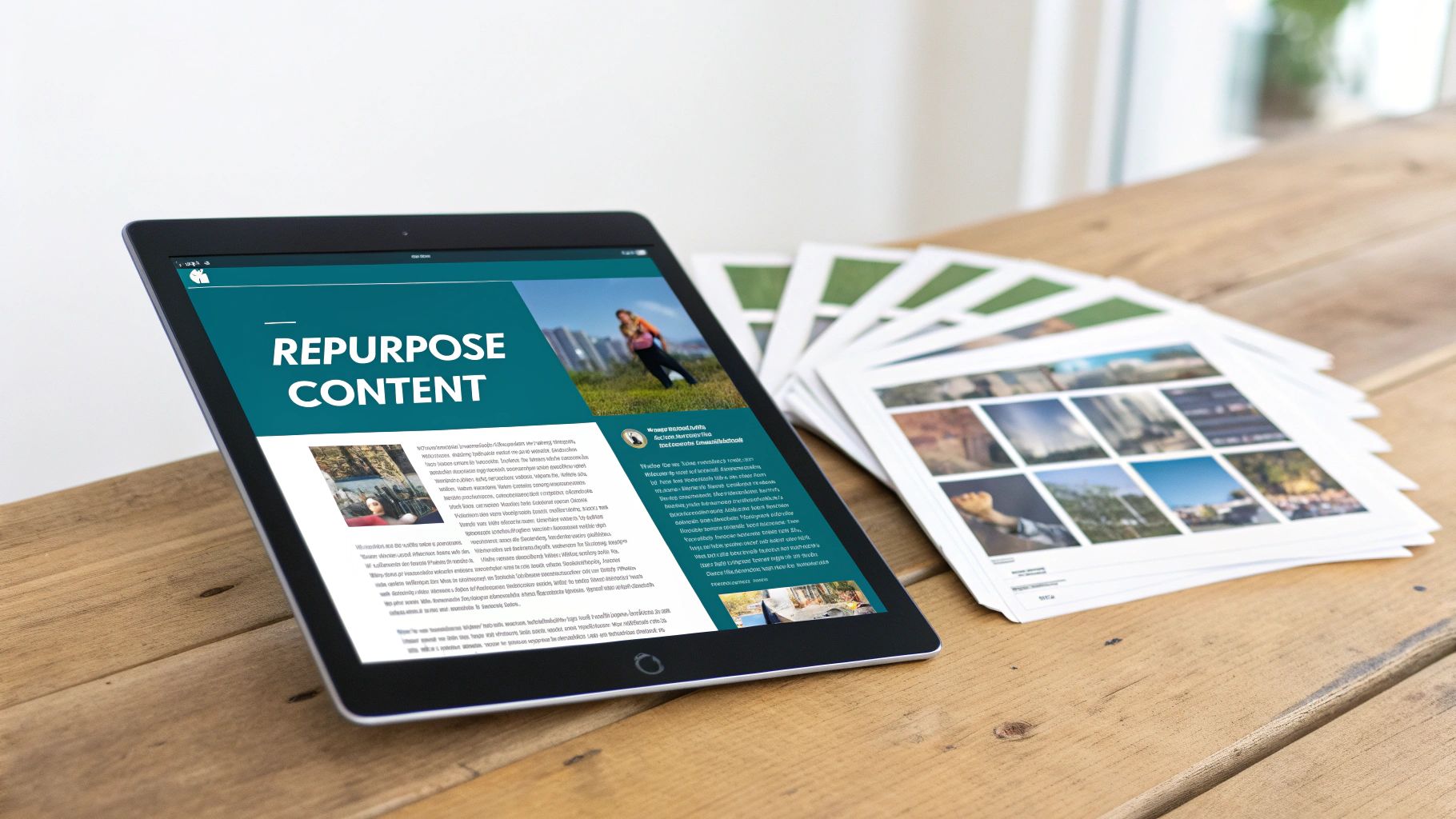
This method, popularised by figures like Gary Vaynerchuk and Pat Flynn, allows you to serve different audience preferences efficiently. For instance, a long-form LinkedIn article can be atomised into a series of text posts, an infographic, a short video clip, and even a segment in an email newsletter. This ensures your core insights are seen by the widest possible audience, regardless of how they prefer to consume content, and reinforces your expertise through consistent messaging.
How to Implement This Strategy
Begin by identifying a high-performing or comprehensive “pillar” piece of content. This could be a detailed guide, a webinar recording, or an in-depth interview. Then, plan how to break it down into smaller, platform-specific assets.
- Design for Modularity: When creating new pillar content, think about how it can be broken down from the start. Structure your videos with clear sections or write articles with distinct, quotable takeaways.
- Adapt for Each Platform: Don’t just copy and paste. Tailor the tone, format, and call-to-action for each platform. A professional insight on LinkedIn should be presented differently than a quick, engaging clip on TikTok or Instagram Reels.
- Create Conversion Templates: Develop simple templates to streamline the conversion process. For example, have a preset design for turning key statistics from a blog post into a visually appealing carousel post for LinkedIn.
9. Community-Centric and User-Generated Content Strategy
This strategy shifts the focus from brand-as-creator to audience-as-co-creator, transforming passive consumers into active participants. A community-centric approach encourages user-generated content (UGC), involves your audience in the content creation process, and fosters a deep sense of belonging. This method builds powerful social proof and turns followers into loyal brand advocates, making it one of the most authentic content planning strategies available.
This approach is crucial for brands aiming to build a genuine community and drive organic engagement, as famously demonstrated by GoPro’s user-submitted adventure videos and Glossier’s customer-led social campaigns. By positioning your audience at the centre of your content, you create a self-sustaining ecosystem of fresh, relatable material that resonates on a personal level.
How to Implement This Strategy
Begin by creating opportunities for your audience to share their experiences and content. The goal is to make participation easy, rewarding, and visible, thereby encouraging a continuous cycle of community engagement.
- Launch a Branded Hashtag: Create a unique, memorable hashtag for a specific campaign or for general brand mentions (e.g., #ShareACoke). Actively monitor, engage with, and reshare content using the hashtag.
- Feature Customer Stories: Regularly spotlight customer testimonials, case studies, or success stories. This not only provides valuable social proof but also recognises and celebrates members of your community.
- Run UGC Contests: Organise contests that invite users to submit photos, videos, or posts related to your brand. Offer valuable prizes and establish clear guidelines to ensure quality submissions that align with your brand’s image.
10. Seasonal and Event-Based Content Planning
Aligning your content with seasonal trends, holidays, and major industry events is a powerful content planning strategy that taps into existing audience conversations. This approach involves creating timely, relevant content that capitalises on the heightened interest surrounding specific times of the year, from New Year wellness trends to Black Friday promotions. By planning around these moments, you ensure your content is not just seen but is also highly relevant and resonant.
This method is essential for e-commerce brands launching holiday campaigns and for B2B professionals sharing insights around major industry conferences. It transforms your content from a monologue into a timely dialogue with your audience, positioning your brand as current and in-the-know. Integrating seasonal planning ensures you capture attention when your audience is most engaged.
How to Implement This Strategy
Begin by mapping out key dates for the year in your calendar, including national holidays, industry-specific events, and cultural moments relevant to your audience. Plan your content themes and asset creation at least two to three months in advance to avoid last-minute rushes.
- Create a Thematic Calendar: Dedicate specific content themes to major events. For example, tax season could be a period for financial advice content, while summer holidays could focus on work-life balance or travel tips.
- Prepare Assets in Batches: Produce your visuals, copy, and videos well before peak seasons. This allows you to focus on engagement and real-time interactions when the event is live, rather than scrambling to create content.
- Blend Planned and Reactive Content: While you should schedule your core seasonal posts, leave 20-30% of your calendar free. This flexible capacity allows you to jump on unexpected trending topics that emerge during the season, keeping your feed dynamic and authentic.
Content Planning Strategies: 10-Point Comparison
| Strategy | 🔄 Implementation complexity | ⚡ Resource & efficiency | ⭐ Expected outcomes | 📊 Ideal use cases | 💡 Key advantages / tips |
|---|---|---|---|---|---|
| Editorial Calendar Planning | Moderate — requires coordination and continuous updates | Moderate — team time and scheduling tools | High — consistent publishing and aligned campaigns | Ongoing multi-channel programs, product launches, editorial teams | Prevents last-minute work; include buffer time; review monthly |
| Content Pillars Strategy | Moderate — upfront research and framework creation | Low–Moderate — research and documentation effort | High — focused messaging and improved SEO via topic clustering | Brand positioning, long-term editorial consistency, SEO strategy | Define 3–5 pillars; document definitions; review quarterly |
| Data-Driven Content Strategy | High — analytics setup and ongoing analysis | High — analytics tools, data teams, testing resources | High — measurable ROI and continuous optimization | High-volume sites, experimentation, conversion optimization | Track meaningful metrics; use dashboards; avoid over-optimization |
| Audience Persona Development | Moderate — interviews, research synthesis | Moderate — customer research and CRM data | High — improved relevance and personalization | Targeted campaigns, onboarding, product messaging | Base personas on real data; update regularly; limit to 3–5 |
| Content Batching and Theme Days | Low — simple process but requires discipline | Very efficient — concentrated time blocks reduce overhead | High — boosts productivity and maintains quality within batches | Solo creators, small teams, repeatable formats (social, video) | Batch similar tasks; prepare assets in advance; keep a content buffer |
| SEO-First Content Strategy | Moderate–High — keyword & technical integration | Moderate — SEO tools and specialist time; slower pay-off | High — increased organic visibility and long-term traffic | Brands needing discoverability, evergreen content, blogs | Map keywords, build clusters, optimize internal links; monitor ranks |
| Story-Based / Narrative Content | Moderate — needs storytelling skill and longer production | Moderate — creative resources and longer production cycles | High — stronger engagement, memorability, brand differentiation | Brand campaigns, customer success showcases, fundraising | Use real customer stories; employ narrative arcs; keep authenticity |
| Repurposing & Content Atomization | Moderate — planning and format mapping | Very efficient — multiplies reach from one core asset | High — increased frequency and cross-platform reach | Teams with pillar content, limited production capacity | Create pillar content first; modularize assets; use templates |
| Community-Centric / UGC Strategy | Moderate–High — community management and moderation | Variable — less creator load but requires moderation effort | High — authentic engagement and brand advocacy | Consumer brands, social-first campaigns, community platforms | Launch clear guidelines and hashtags; recognize contributors; moderate actively |
| Seasonal & Event-Based Planning | Moderate — requires lead-time and coordination | Time-sensitive — advanced resource allocation; short shelf-life | Medium–High — timely traffic and promotional spikes | Retail, holidays, conferences, timely cultural moments | Plan 2–3 months ahead; mix evergreen with timely pieces; keep flexibility |
Turn Your Strategy into Action with Postline.ai
Navigating the dynamic landscape of LinkedIn requires more than just sporadic posts; it demands a deliberate, well-structured approach. Throughout this guide, we’ve explored ten powerful content planning strategies, each offering a unique framework to build your professional brand and engage your audience. From establishing foundational content pillars and organising your workflow with an editorial calendar, to leveraging the precision of a data-driven approach and the human connection of narrative storytelling, you now have a comprehensive toolkit at your disposal.
The true power, however, lies not in adopting a single strategy but in synthesising a hybrid model that aligns with your specific goals. You might combine the efficiency of content batching with the deep audience understanding gained from persona development. Or, you could amplify your reach by pairing an SEO-first strategy with the tactical reuse of high-performing assets through content atomization. The key is to move beyond theory and into consistent, organised execution.
From Blueprint to Published Post
Mastering these content planning strategies transforms your LinkedIn presence from a series of random updates into a coherent, value-driven narrative. When you plan effectively, you achieve three critical outcomes:
- Consistency: You eliminate the daily scramble for ideas, ensuring a steady stream of high-quality content that keeps you top-of-mind with your network.
- Relevance: By focusing on audience personas, community feedback, and data, your content resonates more deeply, addressing the real-world challenges and interests of your followers.
- Authority: A structured plan allows you to strategically cover your core topics, positioning you as a knowledgeable and reliable expert in your field.
Ultimately, a robust content plan is your roadmap to building meaningful professional relationships and achieving tangible business objectives on the platform. It is the architectural blueprint for your digital reputation.
Operationalise Your Content Engine
The most brilliant strategy is only as effective as its implementation. This is where a dedicated tool becomes indispensable, bridging the gap between planning and execution. Postline.ai is engineered to bring these advanced content planning strategies to life. Use its AI-powered features to brainstorm ideas that align with your content pillars and seasonal campaigns. Leverage the post generator to efficiently batch-create a month’s worth of content in a single session, and then use the intuitive scheduler to visualise and finalise your editorial calendar. By integrating a sophisticated planning framework with an intelligent execution platform, you transform content creation from a chore into a strategic advantage, ensuring every post serves a purpose and drives you closer to your goals.
Ready to turn your strategic vision into a powerful content reality? Explore how Postline.ai can streamline your entire workflow, from idea generation to scheduled publication. Start building a more impactful LinkedIn presence today by visiting Postline.ai.

Run every client pipeline in one place
Give each LinkedIn profile its own voice, calendar, approval flow, and analytics. Start in minutes.
Start free trial