Brand brand support build: Master LinkedIn Growth and Loyal Communities
Discover brand support build tactics to grow loyal LinkedIn communities and drive German business growth.
Building brand support is more than a marketing tactic; it’s about forging a real asset for your business. It means cultivating a loyal community that genuinely believes in your mission, champions your products, and offers the kind of honest feedback that fuels sustainable growth.
Why Brand Support on LinkedIn Is Your Biggest Untapped Opportunity

Let’s be honest: the days of one-way advertising are over. Pushing purely promotional content just doesn’t cut it anymore. Trust is the new currency, and you earn it through real conversations and consistent value, not just flashy campaigns.
For businesses in Germany, LinkedIn has become the main stage for this shift. It’s transformed from a simple digital CV folder into a thriving ecosystem where professional communities are built, nurtured, and grown.
A dedicated brand support build on LinkedIn goes way beyond chasing leads. The real goal is to create a supportive audience that becomes an integral part of your business’s world.
The Shift from Broadcasting to Community Building
Traditional marketing often feels like shouting into a void. You blast a message out and cross your fingers, hoping someone—anyone—is listening. The modern approach, especially on a platform like LinkedIn, is the complete opposite. It’s all about pulling people in with your expertise, authenticity, and a willingness to engage.
Here’s what that looks like in practice:
- Authentic Value: Your audience craves insights, not sales pitches. You build credibility by sharing educational content, taking them behind the scenes, and offering solutions to their real-world problems.
- Two-Way Conversations: The magic really happens in the comments. When you engage with replies, ask thoughtful questions, and encourage discussion, you turn passive followers into active members of your community.
- Long-Term Relationships: This isn’t about quick wins. It’s a strategic investment in building relationships that pay dividends in the form of partnerships, client referrals, and powerful brand advocacy. It’s the very core of what is social selling, where relationships always come before transactions.
The ultimate aim is to become the go-to resource in your industry. When someone in your network has a question related to your field, your name should be the very first one that pops into their head.
Capitalising on Digital Engagement in Germany
This move towards community-focused brand building couldn’t be more timely. German brands are leaning heavily on digital channels because, simply put, that’s where their audience spends their time.
With nearly 90% of Germany’s population now online, platforms like LinkedIn offer almost universal reach among professionals. We know from research that search engines and social media are the primary places German consumers discover new brands. This means a strong, credible voice on LinkedIn can shape brand perception long before a sales call is even a remote possibility.
In this environment, authentic expert posts and genuine thought leadership will always outperform static, boring ads. This is your chance to build a brand that’s not just visible, but truly resilient.
Mastering Your Foundation: Your Audience and Your Voice
Before you can build real brand support, you have to nail two things: knowing exactly who you’re talking to and what you want to say. This isn’t about casting a wide net and hoping for the best. It’s about forging a sharp spear. Genuine connection starts with deep understanding, getting past surface-level demographics to really grasp the professional challenges and goals of your audience.
Lots of great resources are out there on the fundamentals of defining your target audience, and that kind of research is your starting line.
Without this groundwork, you risk creating content that’s technically correct but completely sterile. You need to know what keeps your audience up at night and what a “win” looks like in their world.
Uncovering Audience Needs on LinkedIn
The good news is your audience is already on LinkedIn, talking about their problems and celebrating their successes. Your job is simply to listen—really listen. This goes way beyond just looking at job titles and company sizes in Germany.
Here’s how you can start digging deeper:
-
Analyse Industry Hashtags: Start following relevant German-language hashtags like
#digitalisierungor#fachkräftemangel. Pay attention to the conversations. What are the common questions popping up? What are the hot-button issues for professionals in your industry? - Study Competitor Comments: Your competitors’ comment sections are a goldmine. What are people asking? Where are they confused or disagreeing? Every one of those gaps is a massive opportunity for you to step in with clarity and value.
- Explore Relevant Groups: Join a few LinkedIn Groups focused on your industry within the DACH region. See which posts get the most likes and comments. That’s a direct signal of what your audience truly cares about.
Using a tool like this takes the guesswork out of audience research. Instead of assuming, you get data that shows you exactly what your community is hungry to learn about.
Defining an Authentic and Memorable Brand Voice
Once you have a firm grip on who your audience is, you need to decide how you’ll talk to them. A solid brand voice is consistent, recognisable, and, most importantly, authentic. It’s the personality behind your posts that makes people feel like they actually know you.
Your voice isn’t just about the words you choose; it’s about the perspective you offer and the values you represent. It’s what makes your content uniquely yours in a crowded feed.
A great way to start is by defining your core content pillars. What are the 3-5 key themes you’re genuinely passionate and knowledgeable about? Maybe it’s sustainable supply chains, leadership for hybrid teams, or the practical side of using AI in small businesses.
Your communication style should flow naturally from these pillars. Are you the analytical expert who brings the data? The passionate storyteller sharing personal lessons? Or the curious guide who poses thought-provoking questions? A well-defined voice makes sure every single post builds a cohesive, trustworthy brand identity. For a much deeper dive, check out our complete guide on creating memorable brand voice guidelines that will help you cut through the noise.
Developing a Content Engine That Builds Trust
With your foundation firmly in place, it’s time to build the engine that will actually drive your brand support. And that engine is your content. But let’s be clear: value trumps volume every single time. A frantic, inconsistent posting schedule pushing out mediocre content will do more damage than good. The goal isn’t to just post; it’s to create a sustainable rhythm with content that isn’t just seen, but felt and remembered.
To get there, you need a strategy built on distinct content pillars. These are the core themes you’ll keep coming back to, each one showing off a different facet of your brand’s personality and expertise. A balanced approach here is what keeps your feed engaging and stops you from sounding like a broken record.
Designing Your Core Content Pillars
Think of your pillars as the different types of conversations you want to have with your audience. Mixing them up is what keeps things fresh and serves the various needs of your community. It’s the difference between being a one-note speaker and a dynamic, interesting conversationalist.
For building genuine brand support, I’ve found a mix of these three pillars works wonders:
- Educational Insights: This is where you flex your expertise. Break down a complex industry topic into simple terms, offer a few actionable tips people can use today, or walk through a common challenge your audience is facing. This is how you become a credible, go-to resource.
- Behind-the-Scenes Stories: People connect with people, not logos. It’s that simple. Share a personal lesson you learned from a recent project, celebrate a team success, or even get a bit vulnerable about a challenge you overcame. This is the stuff that humanises your brand and builds some serious trust.
- Industry Analysis & Perspective: What’s happening in your world? Don’t just report the news; share your unique take on a recent trend, a big industry story, or a new report. This shows you’re not just in your industry—you’re a forward-thinker helping to shape it.
This whole process—from research to resonance—flows naturally when the foundation is right.
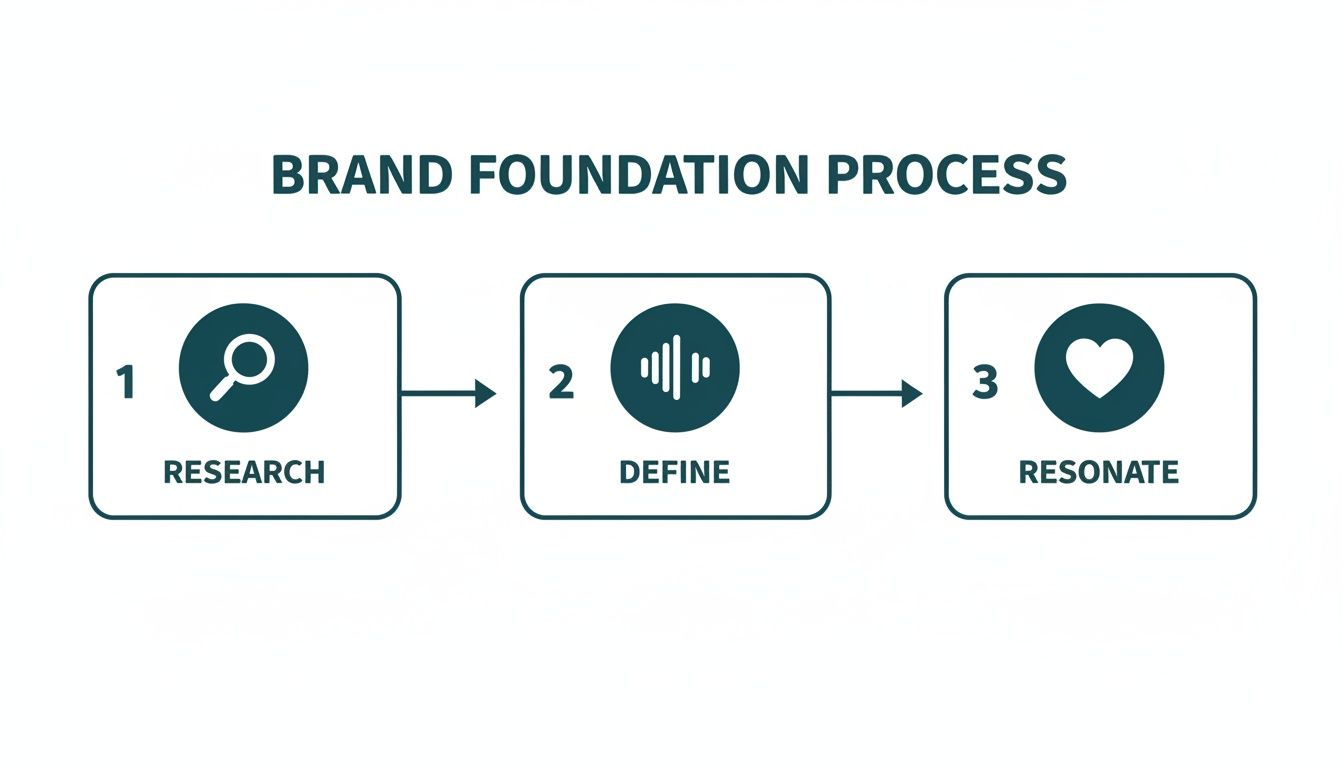
As you can see, resonant, trust-building content isn’t a happy accident. It’s the direct outcome of solid research and a clearly defined voice.
To help you get started, here’s a simple table breaking down how these pillars can look in practice on a platform like LinkedIn.
Essential LinkedIn Content Pillars for Building Brand Support
This table breaks down the key content types you need to create a balanced, engaging, and supportive feed for your brand.
| Content Pillar | Objective | Example Post Idea | Primary Metric |
|---|---|---|---|
| Educational Insights | Establish authority & provide tangible value | “Here are 3 common mistakes people make when [Topic] and how to fix them.” | Saves & Shares |
| Behind-the-Scenes | Humanise the brand & build emotional connection | A photo of the team celebrating a project launch with a story about a challenge overcome. | Comments & Reactions |
| Industry Perspective | Demonstrate foresight & spark high-level discussion | “Just read the latest Gartner report on [Trend]. Here’s the one thing everyone is missing…” | Comments & Reposts |
| Community Spotlight | Acknowledge & celebrate your audience | “Shoutout to [Customer/Follower] for their brilliant insight on [Topic] this week. Love this perspective!” | Engagement Rate |
Using a mix of these pillars will ensure your content calendar is both strategic and diverse, preventing audience fatigue and consistently building rapport.
Crafting Posts That Spark Conversation
Once your pillars are defined, it’s all about execution. Every single post needs to be crafted with intention, from the very first word to your final call-to-action. A great LinkedIn post isn’t just a block of text; it’s a carefully structured piece of communication designed to stop the scroll.
You need a compelling hook. Kick things off with a provocative question, a bold statement, or a relatable scenario that makes someone pause. Then, structure the body of your post with short paragraphs and plenty of white space. People scan online, so make it easy for them.
Finally, always end with a clear prompt for engagement. Don’t just ask for likes. Ask for opinions, experiences, or ideas to kickstart a real discussion. And to keep this all on track, creating a robust content calendar is non-negotiable for maintaining momentum.
Remember, the goal of each post isn’t just to broadcast information. It’s to start a conversation that strengthens your relationship with your audience, one comment at a time.
For those of us trying to scale this, a repeatable system is absolutely key. You can find detailed frameworks that turn this whole process into a well-oiled machine by exploring a modern content creation workflow built for consistency and quality. This is how you turn sporadic posting into a true trust-building engine.
Turning Followers Into Brand Advocates

It’s one thing to have an audience that scrolls past your content. That’s a start. But the real goal, where the magic happens in any brand support build, is turning those quiet followers into passionate, vocal advocates.
This is the shift from just broadcasting a message to actually building a community.
And you know who your most powerful, and often most overlooked, advocates are? The people already on your team. An employee advocacy programme sounds complicated, but it’s not. It’s simply about giving your own people the tools and confidence to share company news and their own industry insights.
Think about it. Their personal networks are full of connections your company page might never reach. Even better, a message from a real person is always going to feel more genuine and trustworthy than one from a corporate logo. That personal touch turns a simple share into a powerful endorsement.
Empowering Your Internal Champions
The secret to a great employee advocacy programme is to make it dead simple and genuinely rewarding. Your team members are experts in their own fields, and giving them a platform to share their thoughts helps build their professional brand just as much as it does the company’s.
A good first step is to create a simple hub with pre-approved content, key messages, and a few post ideas to get them started. The crucial part is encouraging them to add their own spin and personal commentary. You’re not trying to create an army of clones all saying the same thing; you’re equipping individual experts to start conversations in their own authentic voices.
Your team’s collective voice is exponentially more powerful than your brand’s voice alone. When they share, they’re not just distributing content; they’re vouching for the company’s culture, expertise, and values.
For B2B brands in the DACH region, this strategy is a massive force multiplier. When employees share company content, we’ve seen engagement jump by up to 8 times compared to posts from corporate pages alone. On top of that, localised, multilingual posts tailored for different European audiences can add another 18% boost to engagement. It’s a clear win. If you want to dive deeper into regional LinkedIn data, contentin.io has some fantastic insights.
Sparking Conversations and Collaborations
Beyond your internal team, your most active followers are your next wave of potential advocates. But building that kind of support means you have to be in the community, not just posting at it.
Meaningful engagement is so much more than a quick “thanks for the comment.”
- Ask Follow-Up Questions: Someone leaves a thoughtful comment? Don’t just like it—dig in. Ask them why they think that or how they reached that conclusion. This simple step turns a reply into a genuine discussion.
- Acknowledge and Amplify: When a follower shares your content or gives your brand a shout-out, return the favour publicly. It’s a small act of recognition that encourages others to do the same.
- Collaborate with Niche Peers: Find other respected voices in your industry, particularly in Germany, and engage with their content. This isn’t about competition; it’s about cross-pollination. It introduces you to new, relevant audiences and shows you’re a confident, collaborative player in your space.
Measuring What Truly Matters for Brand Support
So, how can you tell if all this effort is actually working? It’s easy to get caught up in likes and follower counts, but let’s be honest—those numbers don’t really tell you if you’re building genuine brand support. They’re vanity metrics. They look great on a report, but they don’t signal a healthy, engaged community.
To really get a feel for your impact, you need to dig deeper. Measuring what truly matters is how you prove your work is valuable and connect what you’re doing on LinkedIn directly to business results.
Moving Beyond Vanity Metrics
The first real step is to shift your focus from superficial stats to meaningful interactions. Real support isn’t just a passive ‘like’ as someone scrolls by. It’s active. You see it in the conversations, the shares, and the times people bring you up without being prompted. These are the tell-tale signs of a real community taking shape.
Here are the key performance indicators (KPIs) I always track to gauge real brand support:
- Comment-to-Like Ratio: A high number of thoughtful comments compared to likes is a golden indicator. It shows your content is actually making people think and sparking a real discussion.
- Inbound Connection Requests with Messages: When someone sends you a connection request and takes the time to write a personal message about your content, that’s powerful. It means you’ve made a genuine impression.
- Unsolicited Brand Mentions: This is a big one. Tracking when people mention you or your company in their own posts is a direct measure of your growing influence. It shows you’re becoming a go-to voice in your field.
The goal is to track the quality of engagement, not just the quantity. One heartfelt comment sharing a personal experience is worth a hundred mindless likes.
A Simple Framework for Tracking and Interpretation
You don’t need a fancy analytics suite to get started. Honestly, a simple spreadsheet does the job perfectly for tracking these KPIs week over week. Just set up your columns by metric and rows by date, and you’ll start spotting trends pretty quickly.
Take Germany, for example. LinkedIn is a massive platform for B2B professionals there, with around 21.0 million registered members as of early 2025. What’s even more impressive is its 16.7% user growth in just one year. That audience isn’t just big; it’s active and growing, giving you a huge pool of connections to measure and build. You can find out more about LinkedIn’s growth in Germany if you’re curious.
As you gather your own data, patterns will emerge. You’ll notice certain post formats consistently kick off more conversations, or that specific topics lead to more DMs and connection requests. Use these insights to fine-tune your content strategy. Double down on what’s working, and experiment with new angles to lift the areas that aren’t.
This constant loop—measure, interpret, refine—is what transforms good content into a powerful brand-building engine. If you want to dive even deeper, check out our complete guide on how to measure content performance for some more advanced techniques.
Common Questions About Building Your Brand on LinkedIn
Alright, let’s talk about some of the questions that always come up when you decide to get serious about building your brand on LinkedIn. It’s easy to overthink things, but getting a few key concepts straight from the start makes a world of difference.
We’ll clear up the common sticking points right now so you can move forward with confidence.
How Long Does It Take to Build Genuine Brand Support?
This is always the first question, and the only honest answer is: it’s a marathon, not a sprint. Anyone promising you overnight success is selling you something. While you can definitely see little wins—a jump in likes, a few more comments—within a few weeks of consistent posting, the real prize takes longer.
You’re looking at a good 3-6 months of steady, valuable contributions before you start seeing the results that truly move the needle. Think inbound leads, partnership opportunities popping up in your DMs, and a community that actually advocates for you. The secret isn’t intensity; it’s consistency. A steady drumbeat builds far more trust than loud, sporadic bursts of effort.
What Is the Biggest Mistake People Make?
Easy. They treat LinkedIn like a megaphone to shout about their company. I see it all the time. People either fall into the ‘selling’ camp, posting only about product updates and company wins, or they’re in the ‘lurking’ camp, too afraid to post anything that isn’t perfect. Both are dead ends.
The sweet spot is right in the middle. It’s about sharing what you know, offering help without expecting anything in return, asking good questions, and celebrating other people’s wins. It really boils down to giving more than you take.
If you focus on starting conversations and being genuinely helpful, you’re on the fastest track to building a loyal community. That kind of support is rock-solid.
Do I Need a Company Page or Is a Personal Profile Enough?
For what we’re talking about here—building authentic brand support—your personal profile is where the action is. It’s not even a fair fight. Why? Because people connect with other people, not with logos. Your profile is your space to share your unique perspective, tell your stories, and build real relationships, one person at a time.
Think of your company page as the official town square. It’s perfect for company-wide announcements, job openings, and polished brand content. But the real influence, the real connection, happens when the people inside the company—the founders, the subject matter experts, the leaders—build their own personal brands. That human-to-human approach creates a much deeper and more resilient kind of support for the company as a whole.
How Can AI Tools Help Without Sounding Robotic?
This is a perfectly valid concern. The last thing you want is for your voice to get lost in an AI-generated script. But the best tools aren’t there to replace you; they’re there to amplify you.
You bring the core idea, the personal anecdote, the unique insight—the stuff that only you can come up with. The AI then acts as your assistant. It can help you find a killer hook, polish your phrasing, and make sure the post is formatted in a way LinkedIn’s algorithm likes. It takes care of the grunt work.
Think of it less as an author and more as a brilliant editor and scheduler. It frees up your time and mental energy to focus on the heart of the message, making it possible to show up consistently with quality content that still sounds 100% like you.
Ready to build your brand on LinkedIn without the burnout? Postline.ai is your AI-powered assistant for writing, improving, and scheduling standout posts in minutes. Start creating better content faster today.

Run every client pipeline in one place
Give each LinkedIn profile its own voice, calendar, approval flow, and analytics. Start in minutes.
Start free trial