
12 Ai tools for digital marketers You Should Know
Discover the top 12 ai tools for digital marketers strategies and tips. Complete guide with actionable insights.

The digital marketing field has become incredibly complex, demanding more time and strategic effort than ever before. From content creation and search engine optimisation (SEO) to social media management and email campaigns, the list of tasks is endless. This is precisely the problem that ai tools for digital marketers are designed to solve: they automate repetitive work, generate creative ideas, and provide data-driven insights to help you work smarter, not harder.
This comprehensive resource is built to help you navigate the crowded market of AI-powered platforms. We move beyond generic feature lists to provide a practical breakdown of the top tools available today. Our goal is to help you identify which solutions will genuinely integrate into your workflow and deliver tangible results for your specific business needs, whether you are an entrepreneur, a sales professional, or leading a marketing team.
Inside this guide, you will find an in-depth analysis of each tool, covering:
- Key Features: What makes each platform stand out.
- Practical Use Cases: How to apply the tool to real-world marketing tasks.
- Pricing Structures: An honest look at the investment required.
- Implementation Tips: Guidance on getting started and integrating the tool into your existing processes.
We have included direct links and screenshots for every platform, from established industry giants like Semrush and HubSpot to specialised content generators like Jasper and Postline.ai. This structure is organised to make it easy for you to compare options and make an informed decision without wading through marketing jargon. Let’s explore the AI tools that can streamline your operations and elevate your marketing strategy.
1. Postline.ai
Best for: All-in-one LinkedIn content creation and scheduling.
Postline.ai stands out as a premier AI tool for digital marketers aiming to master LinkedIn. It operates as an intelligent co-writer, specifically engineered to transform raw ideas into polished, on-brand posts efficiently. This platform is far more than a simple text generator; it’s a comprehensive workflow solution that integrates ideation, research, writing, and scheduling into a single, cohesive interface. Its core strength lies in producing content that is not only high-quality but also authentically reflects your personal or brand voice.
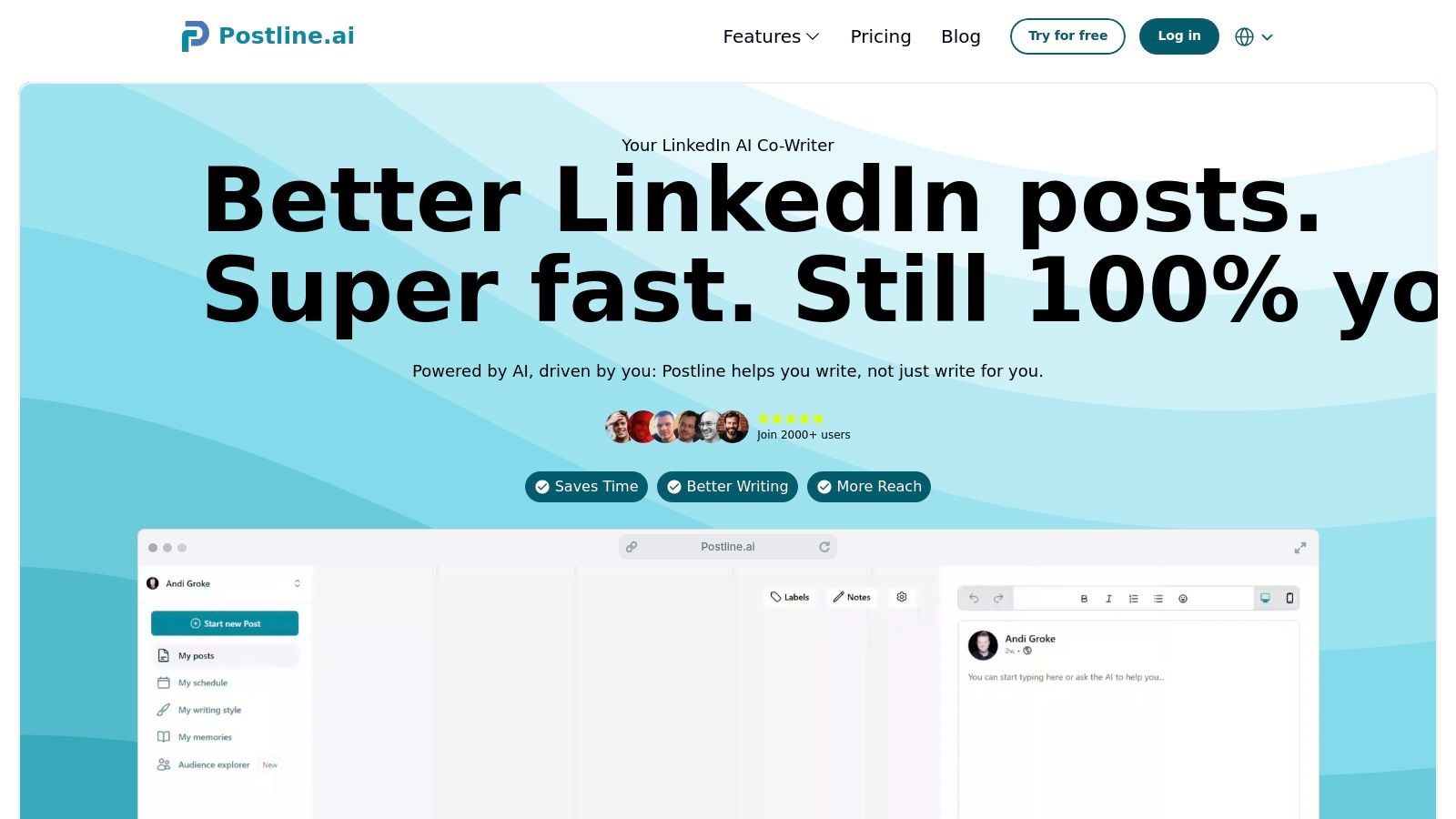
The platform’s sophisticated feature set addresses common pain points in content creation. For instance, its ability to perform autonomous real-time web research with source citations ensures your posts are timely, credible, and free from AI hallucinations. This makes it an indispensable asset for marketers who need to build authority with data-backed insights.
Standout Features & Use Cases
Postline.ai offers several powerful features that make it a robust choice among AI tools for digital marketers.
- Self-Learning Brand Voice: The AI continuously trains on your previously published content and editing history. This results in posts that genuinely capture your unique tone, style, and terminology, a crucial factor for building a personal brand on LinkedIn.
- Real-Time Research with Citations: Use this to create thought leadership content on emerging industry trends. The tool pulls current data from the web, provides source links for verification, and helps you craft posts that are both relevant and trustworthy.
- Ghostwriter Mode: This innovative feature allows you to convert a simple interview or voice note into a structured, well-written LinkedIn post. It’s ideal for busy executives or for content teams producing content on behalf of clients or leaders.
- Audience Explorer: Discover data-driven topic ideas your target audience is actively discussing. This eliminates guesswork and helps you create content that resonates, boosting engagement and reach.
Practical Implementation
For optimal results, start by allowing Postline.ai to analyse your existing LinkedIn posts to establish a baseline for your voice. When generating new content, use the built-in editor to refine the AI’s output; each edit further trains the model. The integrated scheduler allows you to build a consistent content calendar directly within the platform, streamlining your entire workflow.
| Feature | Best For |
|---|---|
| Brand Voice Memory | Maintaining brand consistency and authenticity. |
| Real-Time Research | Creating credible, data-driven thought leadership. |
| Ghostwriter Mode | Efficiently converting expert interviews into posts. |
| Integrated Scheduling | Streamlining the end-to-end content workflow. |
Pros:
- Writes in your authentic voice by learning from your style.
- Provides real-time, cited research for credible content.
- Offers an all-in-one workflow from ideation to scheduling.
- EU-based and GDPR-compliant with clear privacy policies.
Cons:
- Primarily focused on LinkedIn, not ideal for cross-platform scheduling.
- As an evolving platform, some advanced enterprise features may be limited.
Pricing: Postline.ai offers a 7-day free trial with no credit card required. Paid plans start at $9.90/month for the Pro plan (with a 50% launch discount).
Website: https://postline.ai
2. Semrush
Semrush is a comprehensive, all-in-one digital marketing suite, but its real power now lies in the deep integration of AI across its core functions. While renowned for its robust SEO, PPC, and competitive research tools, it has evolved into one of the essential AI tools for digital marketers by embedding intelligent assistance directly into workflows. This makes it ideal for teams wanting to unify their marketing data and content creation efforts within a single, powerful platform.
What sets Semrush apart is how its AI features augment its massive data sets. For example, the SEO Content Template and Writing Assistant don’t just give generic advice; they analyse the top-ranking competitors for your target keyword to generate data-driven briefs and real-time content optimisation suggestions. This fusion of market intelligence and AI guidance streamlines the entire content production pipeline, from ideation to performance tracking.
Key Features & Use Cases
- AI-Powered Content Briefs: Generate structured, SEO-optimised content briefs in minutes. The tool analyses SERPs to recommend target word count, semantic keywords, readability scores, and questions to answer.
- SEO Writing Assistant: This real-time editor scores your content on SEO, originality, tone of voice, and readability as you write, integrating directly with Google Docs and WordPress.
- Competitive Intelligence: Use its AI-enhanced tools to uncover competitors’ strategies, identify content gaps, and find new keyword opportunities with greater accuracy.
- Automated Reporting: AI-driven summaries and insights help distill complex performance data into actionable takeaways, saving significant analysis time.
Pricing and Implementation
Semrush operates on a tiered subscription model, starting with the “Pro” plan at approximately $129.95/month, scaling up to “Business” plans for larger agencies and enterprises. While the initial investment is higher than single-purpose tools, its value comes from consolidating multiple tool subscriptions. The interface can have a steep learning curve due to its sheer breadth of features, but its extensive knowledge base and customer support help new users get organised. For best results, start by focusing on one area, like the Content Marketing Toolkit, before expanding to other modules.
Website: https://www.semrush.com
3. Jasper
Jasper has evolved from a popular AI writing assistant into a comprehensive marketing copilot designed specifically for business teams. Its core strength lies in its ability to create a wide array of on-brand marketing assets, from ad copy and social media posts to full-length blog articles. This makes it one of the most powerful AI tools for digital marketers focused on maintaining brand consistency and orchestrating entire campaigns from a single, collaborative hub.
What truly distinguishes Jasper is its marketing-centric workflow and brand intelligence features. Unlike generic chatbots, Jasper’s Brand Voice and Knowledge Assets allow it to learn your company’s style, product catalogues, and key messaging. This ensures that every piece of content it generates is not just well-written but also perfectly aligned with your strategic goals, making it an invaluable tool for teams that need to scale content production without sacrificing brand integrity. It is particularly useful for overcoming creative hurdles and can be a great resource for finding ways to get rid of writer’s block.
Key Features & Use Cases
- Brand Voice & Knowledge Assets: Train the AI on your style guides, product information, and audience personas to ensure all generated content is consistently on-brand.
- Campaign Canvas: A versatile workspace where teams can brainstorm, create, and organise multiple assets for a single marketing campaign in one cohesive flow.
- Marketing-Specific Workflows: Utilise pre-built templates and “Agents” to automate common marketing tasks like creating ad variations, generating social media calendars, or repurposing content.
- Enterprise-Grade Controls: Offers advanced features for larger organisations, including API access, team management, and security governance to ensure safe and scalable deployment.
Pricing and Implementation
Jasper’s pricing is structured in tiers, with the most robust marketing features found in its “Pro” and “Business” plans. While it may be a more significant investment than tools for solo creators, its value is evident for teams needing collaborative workflows and brand governance. Implementation is straightforward, but users will get the most out of it by thoroughly setting up their Brand Voice and Knowledge Assets first. It’s worth noting that some deployments may use US-only data centres, a key consideration for certain international teams.
Website: https://www.jasper.ai
4. Copy.ai
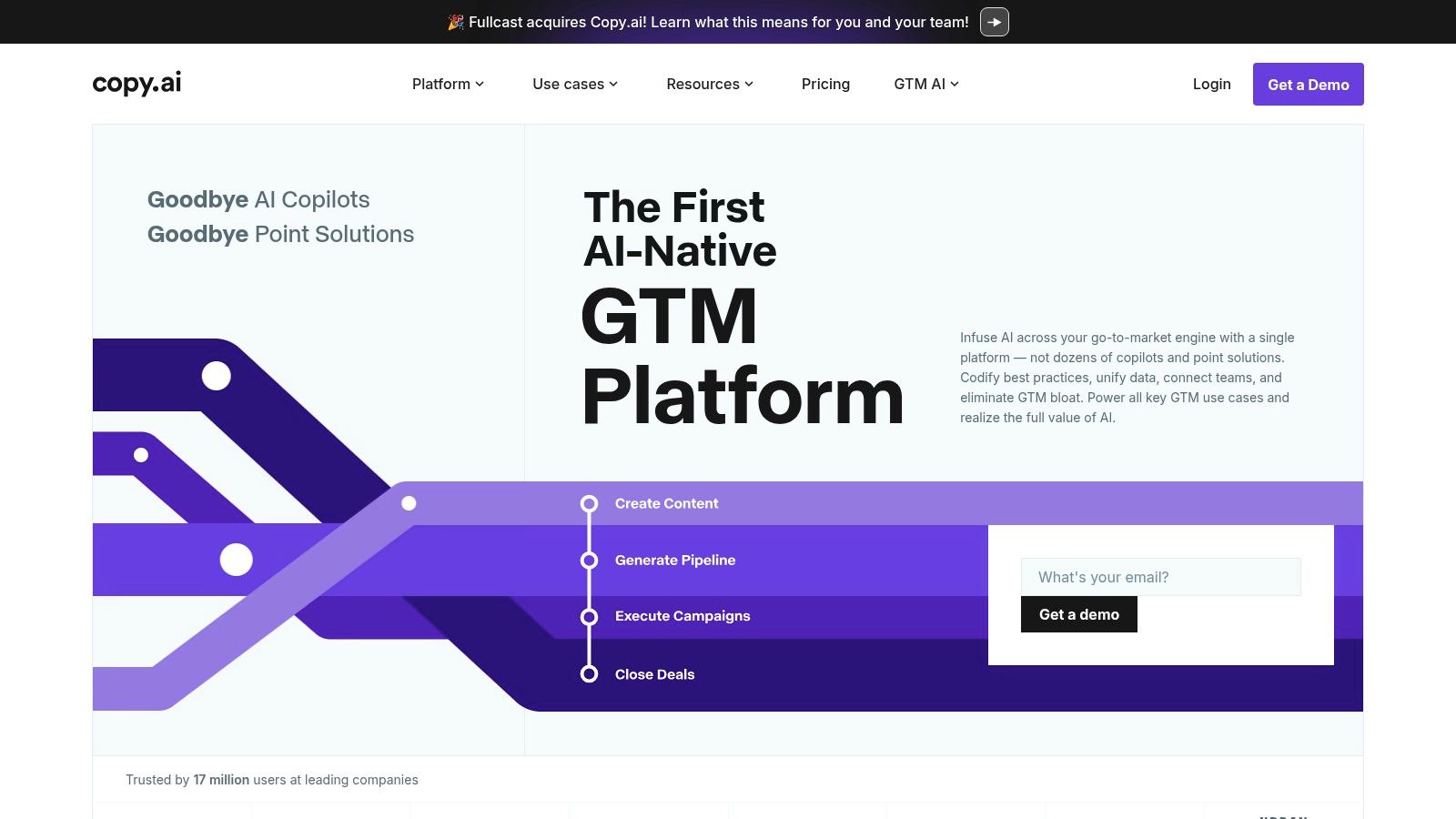
Copy.ai positions itself as an AI content generation and automation platform specifically designed for marketing teams that need to scale their output. It goes beyond simple text generation by introducing repeatable workflows and multi-model support, making it one of the most versatile AI tools for digital marketers focused on operational efficiency. This makes it ideal for businesses looking to standardise their content creation process across various channels, from social media updates to email campaigns.
What sets Copy.ai apart is its “Content Agent Studio,” which allows users to codify successful prompts and multi-step processes into reusable, shareable agents. Instead of starting from scratch each time, a marketer can create a specific agent for tasks like “Generate LinkedIn thought leadership post from webinar transcript” or “Draft a weekly promotional email.” This focus on automation and process standardisation helps maintain brand consistency and significantly accelerates content production for recurring tasks.
Key Features & Use Cases
- Content Agent Studio: Build custom, reusable AI agents to automate repeatable marketing workflows, such as generating social media calendars or repurposing blog content.
- Multi-Model Support: Access various leading AI models (like OpenAI’s GPT series, Anthropic’s Claude, and Google’s Gemini) within a single interface to choose the best engine for a specific task.
- Team-Focused Collaboration: Features like shared project folders, prompt libraries, and team-specific onboarding are designed to get an entire marketing department up and running quickly.
- Unlimited Chat Words: Eligible plans offer unlimited words in the chat interface, encouraging experimentation and extensive content iteration without worrying about credit limits.
Pricing and Implementation
Copy.ai offers a free plan with a word limit, while paid plans start at around $49/month for individuals. Team and Enterprise tiers are priced based on user seats and feature access. A key consideration is the pricing structure for workflows and automation, which operates on a credit system that can seem opaque at first. The higher-tier plans required to build custom agents are a significant investment compared to chat-only tools. For best results, new teams should leverage the guided onboarding to define one or two core, repeatable processes to turn into agents first, proving the ROI before scaling.
Website: https://www.copy.ai
5. Canva (Magic Studio)
Canva has evolved far beyond its origins as a simple design tool, cementing its place as one of the most accessible AI tools for digital marketers with the integration of its Magic Studio suite. While still the go-to platform for non-designers, Canva now uses AI to automate and accelerate the entire creative process. This makes it invaluable for marketing teams needing to produce a high volume of on-brand social media assets, advertisements, and presentations without deep design expertise.
What makes Canva’s Magic Studio stand out is its seamless integration into the familiar, user-friendly design interface. Instead of switching between separate AI image generators, copywriters, and video tools, marketers can generate, edit, and resize all within a single project. For instance, you can use Magic Write to brainstorm ad copy, Magic Media to generate a unique background image for it, and then Magic Switch to instantly resize the final creative for every social media platform, streamlining a previously time-consuming workflow. As one of the premier social media content creation tools, its efficiency is a significant advantage.
Key Features & Use Cases
- Magic Write & Magic Media: Generate on-brand marketing copy, unique images, and even short videos from simple text prompts directly within your design canvas.
- AI-Powered Editing: Use features like Magic Eraser to remove unwanted objects from photos, or leverage Bulk Create to automatically generate hundreds of design variations from a CSV file.
- Magic Switch: Instantly convert a design into a different format (e.g., a presentation into a blog post) or resize it for multiple platforms (e.g., an Instagram Post to a LinkedIn banner) with one click.
- Brand Voice Controls: Train Canva’s AI on your brand guidelines to ensure that all generated copy from Magic Write aligns with your company’s specific tone and style.
Pricing and Implementation
Canva offers a robust free tier, but the majority of Magic Studio features require a “Canva Pro” (from around £12.99/month per person) or “Canva for Teams” subscription. It’s crucial to check current team pricing, as this has changed recently. Some AI features operate on a credit system, with usage limits varying by plan. The platform is famously intuitive, requiring minimal onboarding. To maximise its potential, set up a Brand Kit with your logos, fonts, and colours first; this ensures all AI-generated and template-based designs remain consistent.
Website: https://www.canva.com/magic/
6. Hootsuite (with OwlyWriter AI)
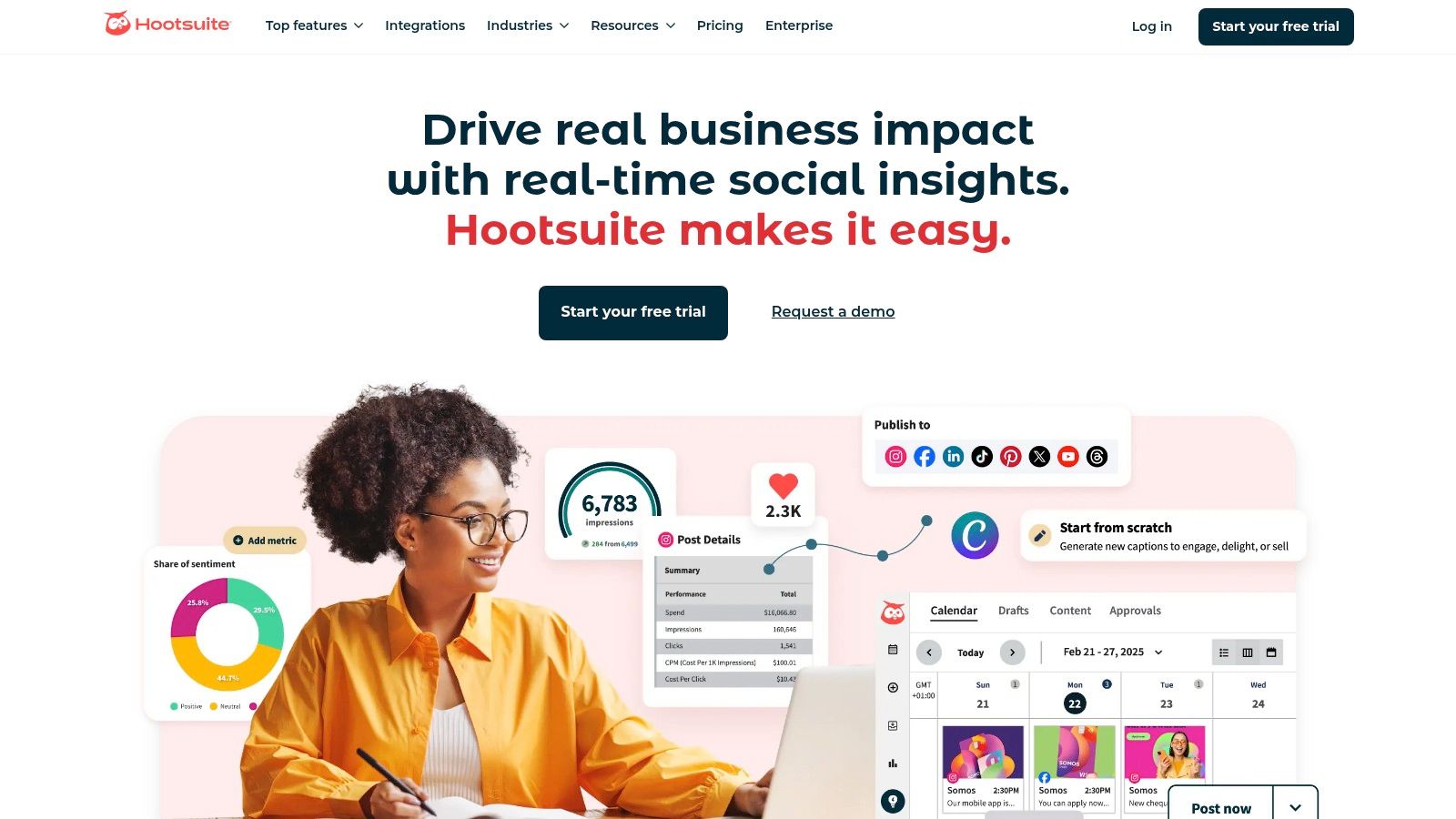
Hootsuite is a veteran in social media management, but its recent integration of OwlyWriter AI has transformed it into a powerful content creation hub. While its core strengths remain in scheduling, analytics, and team collaboration, the addition of AI directly within the post composer makes it one of the most practical AI tools for digital marketers focused on social media. It’s designed for marketing teams that need to streamline their entire social workflow, from ideation and creation to publishing and reporting, all within a unified and secure environment.
What differentiates Hootsuite is how OwlyWriter AI is embedded into its established, enterprise-ready platform. Instead of just generating generic text, the AI can create captions based on a specific goal (like educating or entertaining), repurpose content from a URL, or even generate post ideas from scratch. This seamless integration means users can move from content ideation to a fully scheduled post with team approval in minutes, combining creative AI assistance with robust governance and one of the best social media scheduling tools available.
Key Features & Use Cases
- OwlyWriter AI Content Creation: Instantly generate social media captions, post ideas, and relevant hashtags directly in the composer. Use it to rewrite top-performing posts or create content from a link.
- Social Listening & Sentiment Analysis: Go beyond scheduling by using AI to monitor brand mentions, track sentiment around key topics, and analyse competitor activity across social channels.
- Centralised Content Planning: Use the platform’s calendar to plan, draft, and schedule content across all major social networks, with AI assistance available at every step.
- Team Governance & Approval Flows: Ideal for agencies and larger teams, Hootsuite provides mature workflows for content review and approval, ensuring brand consistency and quality control.
Pricing and Implementation
Hootsuite offers several subscription tiers, starting with a “Professional” plan at around €99/month, designed for a single user. Team and Business plans scale up significantly in price but add more users, accounts, and advanced features. While the core AI features are integrated into paid plans, some advanced analytics and add-ons from the App Directory can incur extra costs. The platform is user-friendly, but maximising its value requires setting up listening streams and organising content calendars. Start by using OwlyWriter AI to fill gaps in your content schedule before exploring the deeper analytics and listening tools.
Website: https://www.hootsuite.com
7. HubSpot Content Hub (AI)
HubSpot has evolved far beyond its inbound marketing roots, transforming its Content Hub into a powerhouse CMS deeply integrated with AI. While many tools offer AI writing assistance, HubSpot’s strength lies in connecting that AI directly to its CRM. This makes it one of the most strategic AI tools for digital marketers who want to ensure their content is not just created efficiently but is also personalised, automated, and governed by rich customer data.
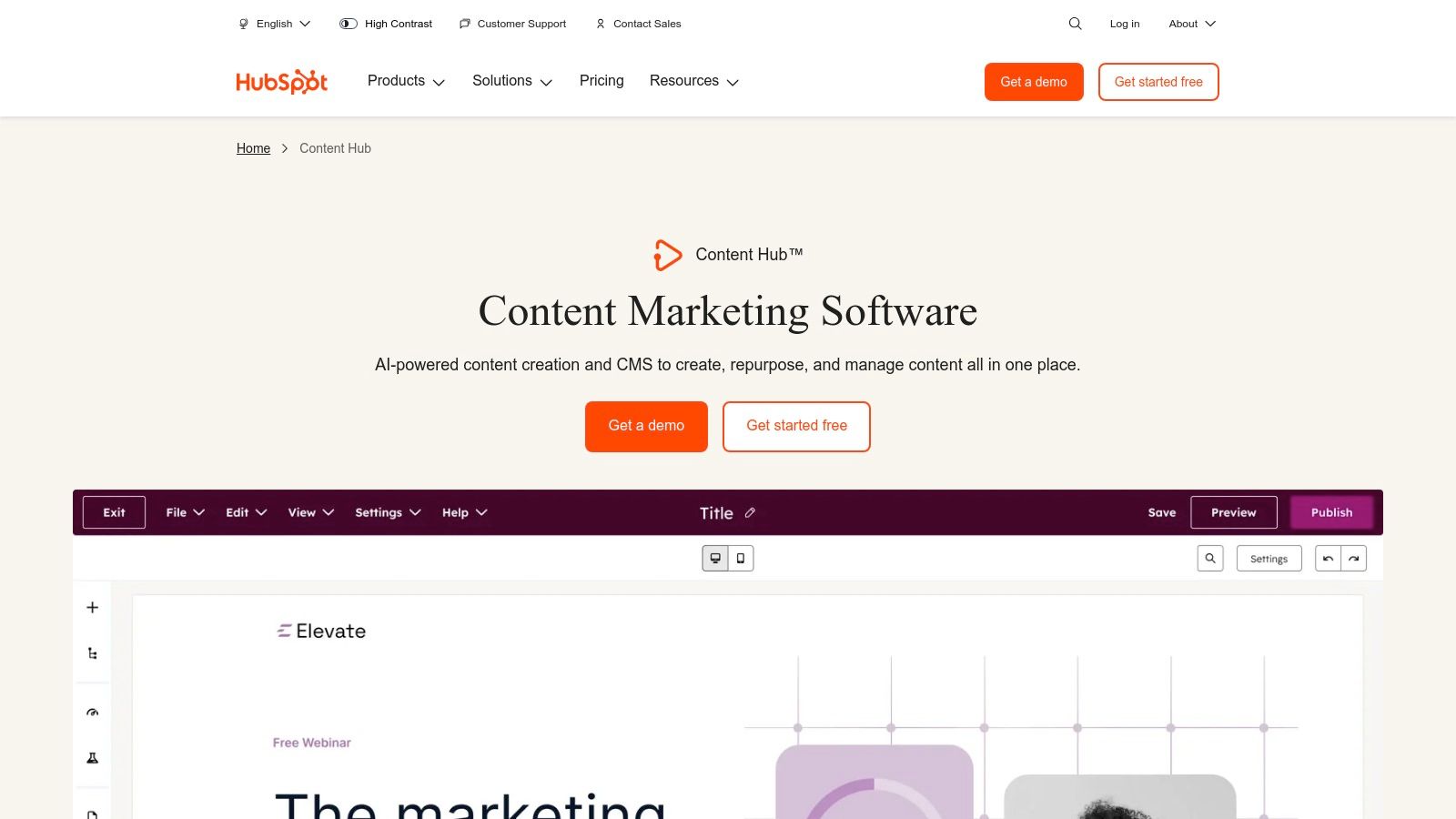
What sets HubSpot apart is this seamless fusion of content, AI, and CRM. Instead of generating content in a vacuum, marketers can leverage AI to write blog posts that reference specific customer segments, create smart content that adapts to viewer data, and build automation workflows triggered by content engagement. This tight linkage provides a level of governance and scalability that standalone AI writers cannot match, making it ideal for multi-team environments where brand consistency and data-driven personalisation are paramount.
Key Features & Use Cases
- AI Blog & Content Creation: Generate entire blog posts, outlines, or social media updates directly within the CMS. Use the AI to remix existing high-performing content for new channels.
- CRM-Driven Personalisation: Employ “Smart Content” rules to show different website content, CTAs, or forms to visitors based on their lifecycle stage or list membership in the HubSpot CRM.
- Integrated SEO Guidance: Receive real-time topic suggestions and SEO optimisations as you write, ensuring content is aligned with search intent without leaving the platform.
- Structured Content (HubDB): Use AI to help populate HubDB, HubSpot’s relational database tool, allowing you to manage and scale content like product listings or resource directories efficiently.
Pricing and Implementation
HubSpot’s AI features are primarily bundled within its Content Hub and Core Seat subscriptions, starting with the “Professional” tier at approximately €360/month (which includes multiple hubs). This makes the overall cost higher than standalone AI writing tools. The value proposition is not in cheap content creation but in the system-wide integration of AI with CRM, marketing automation, and analytics. Implementation is best for businesses already committed to the HubSpot ecosystem or those looking for a single platform to manage their entire customer journey.
8. Mailchimp (Intuit Assist, Creative Assistant)
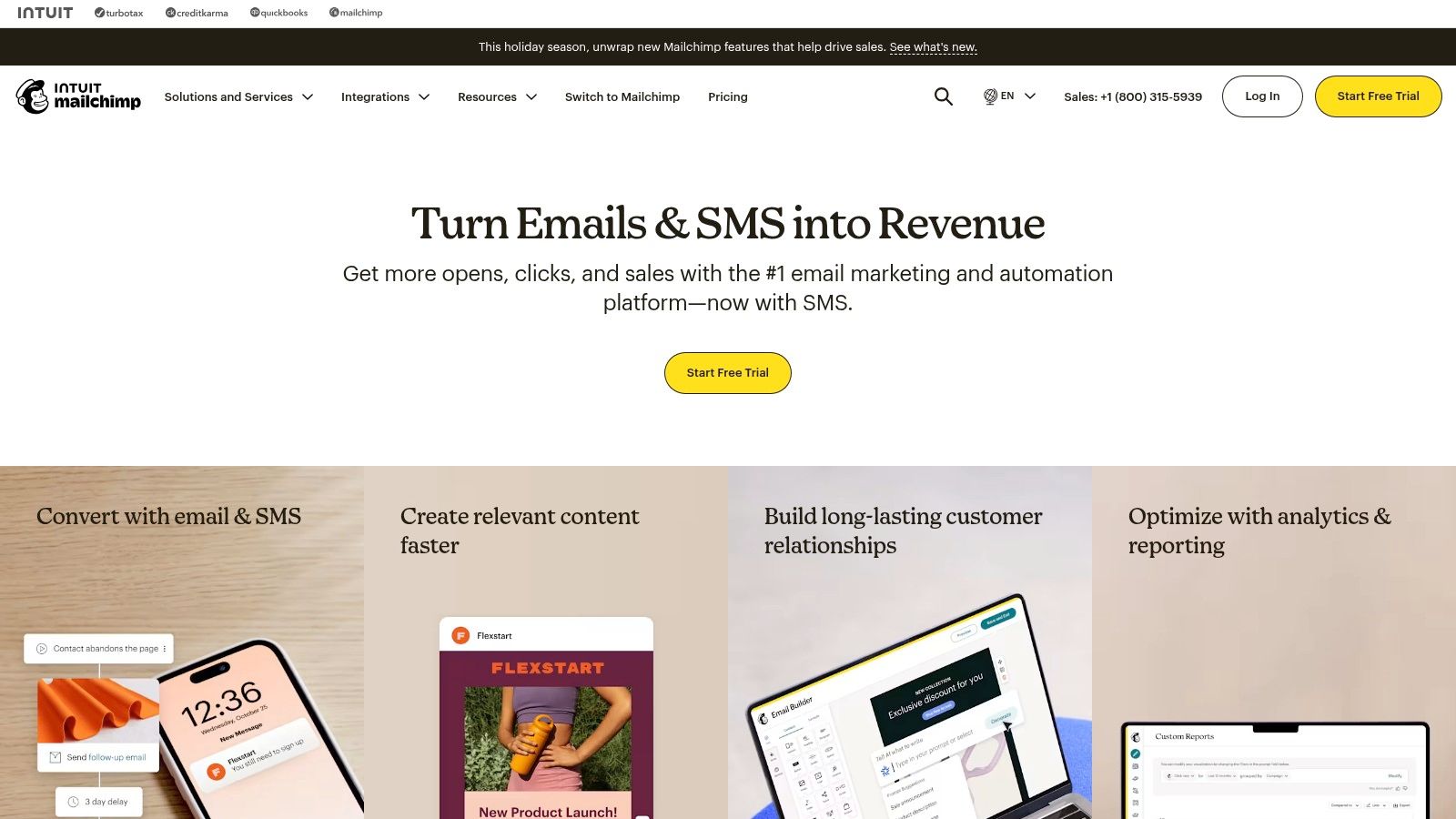
Mailchimp has evolved from a simple email newsletter service into a sophisticated marketing automation platform, now supercharged with practical AI features under the Intuit Assist umbrella. While its core strength remains in email marketing, its AI integration makes it one of the most accessible AI tools for digital marketers, particularly for small businesses and e-commerce brands. The focus is on simplifying and accelerating campaign creation without a steep learning curve.
What makes Mailchimp’s approach unique is its emphasis on brand consistency and ease of use. The Creative Assistant, for instance, can scan your website to automatically generate on-brand designs for emails and social posts, solving a major bottleneck for teams without dedicated designers. This fusion of brand intelligence with generative AI ensures that even automated content feels authentic and aligned with your visual identity, streamlining marketing efforts from start to finish.
Key Features & Use Cases
- Creative Assistant: Automatically generates on-brand, multi-channel designs by analysing your website’s colours, fonts, and logos. Ideal for quickly creating cohesive email headers and social media assets.
- AI-Assisted Content: Generate subject lines, email body copy, and headlines that are optimised for engagement based on industry best practices and your campaign goals.
- Predictive Segmentation: Use AI to identify customer segments with the highest lifetime value or likelihood to purchase, allowing for more targeted and effective campaigns.
- E-commerce Recommendations: For online stores, Mailchimp’s AI can suggest relevant products to include in emails, helping to increase order value and customer retention.
Pricing and Implementation
Mailchimp offers a free plan with basic features, but most of its significant AI tools, including predictive segmentation, are reserved for the “Standard” plan (starting around £17/month, based on contact count) and higher. Implementation is straightforward, especially for users with existing e-commerce integrations like Shopify or WooCommerce. To maximise its AI capabilities, ensure your website and product data are well-organised, as this directly feeds the intelligence of tools like the Creative Assistant and product recommenders.
Website: https://www.mailchimp.com
9. Surfer
Surfer is an AI-assisted content optimisation platform laser-focused on SEO. It excels at generating data-driven briefs and providing NLP-powered suggestions within its content editor to perfectly align articles with SERP expectations. Unlike all-in-one suites, Surfer is a specialist tool, making it one of the most effective AI tools for digital marketers who already have an established SEO workflow and need to scale their content production with precise, on-page guidance.
What sets Surfer apart is its actionable, real-time feedback loop. As a writer works within the Content Editor, the tool provides a live “Content Score” based on keyword density, structure, word count, and the inclusion of important terms and phrases derived from analysing top-ranking competitors. This gamified, data-first approach removes guesswork, empowering writers to create content that is algorithmically favoured from the first draft, streamlining the editing and optimisation process significantly.
Key Features & Use Cases
- AI Content Outlines & Briefs: Automatically generate comprehensive content briefs based on SERP analysis, including suggested headings, questions to answer, and key topics to cover.
- Content Editor: A real-time editor that scores your content against competitors, offering NLP-driven suggestions for keywords and phrases to improve relevance and ranking potential.
- Audit Tool: Analyse existing pages to identify content gaps and on-page SEO opportunities. It provides a clear, prioritised list of actions to improve the page’s score and performance.
- Keyword Research: Discover related keyword clusters and analyse SERP intent to ensure you are targeting the right terms for your audience and business goals.
Pricing and Implementation
Surfer offers several subscription tiers, with plans typically starting around $89/month for the “Essential” plan, scaling up to custom “Enterprise” solutions. While it isn’t a full analytics suite, its value is in its specialisation. To get the most from it, integrate it directly into your content creation workflow. Start by generating a brief for your next blog post, provide it to your writer, and have them use the Content Editor for drafting. This ensures SEO best practices are built in from the beginning, rather than applied as an afterthought.
Website: https://www.surferseo.com
10. Google Ads (Performance Max and AI tools)
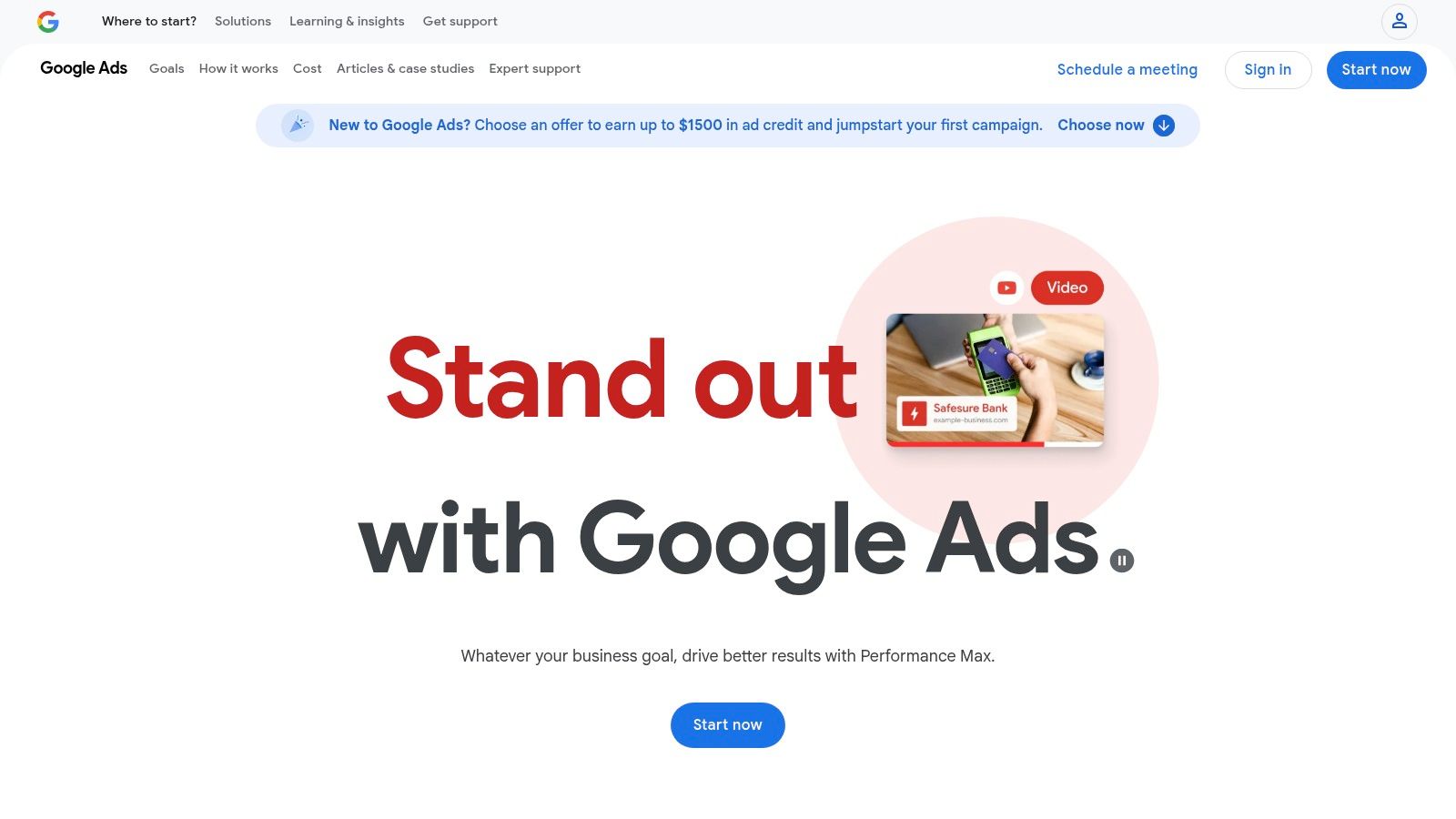
Google Ads has transformed from a manually-managed platform into one of the most powerful AI tools for digital marketers, primarily through its goal-based campaign types. Its Performance Max (PMax) campaigns leverage machine learning to automate bidding, targeting, and creative delivery across Google’s entire inventory, including YouTube, Display, Search, Discover, Gmail, and Maps. This makes it essential for marketers aiming to maximise conversions and reach at scale with minimal manual intervention.
What truly sets Google’s approach apart is its ability to process immense volumes of real-time signals to optimise performance towards specific business objectives. Rather than marketers manually adjusting bids and placements, the AI takes control, combining provided assets (text, images, videos) in countless permutations to find the highest-performing combinations for different audiences. This algorithmic approach simplifies campaign management and unlocks performance opportunities that would be impossible to identify manually.
Key Features & Use Cases
- Performance Max Campaigns: Use a single campaign to access all Google Ads inventory. Ideal for e-commerce, lead generation, and driving online sales with a focus on conversion goals.
- Smart Bidding: Automates bid strategies like Target CPA and Target ROAS to optimise for conversions or conversion value in every auction, using a wide range of contextual signals.
- Automated Creative Combinations: Supply a variety of headlines, descriptions, images, and videos, and Google’s AI will automatically test and serve the most effective ad combinations.
- Insights & Recommendations: The platform provides AI-driven insights on search trends, audience performance, and auction dynamics, offering actionable recommendations to improve campaign results. To further enhance your campaigns beyond built-in AI, discover the best Google Ads optimization tools available for 2025.
Pricing and Implementation
Google Ads operates on a pay-per-click (PPC) or pay-per-impression (PPM) model, where you set your own budget. There’s no subscription fee. Successful implementation of AI features like PMax demands high-quality inputs: robust conversion tracking must be in place, and a diverse set of creative assets is crucial for the algorithm to perform well. The main challenge is the “black box” nature; it offers less granular control than traditional campaigns, requiring marketers to trust the algorithm and focus on strategic inputs rather than manual tweaks.
Website: https://ads.google.com
11. OMR Reviews
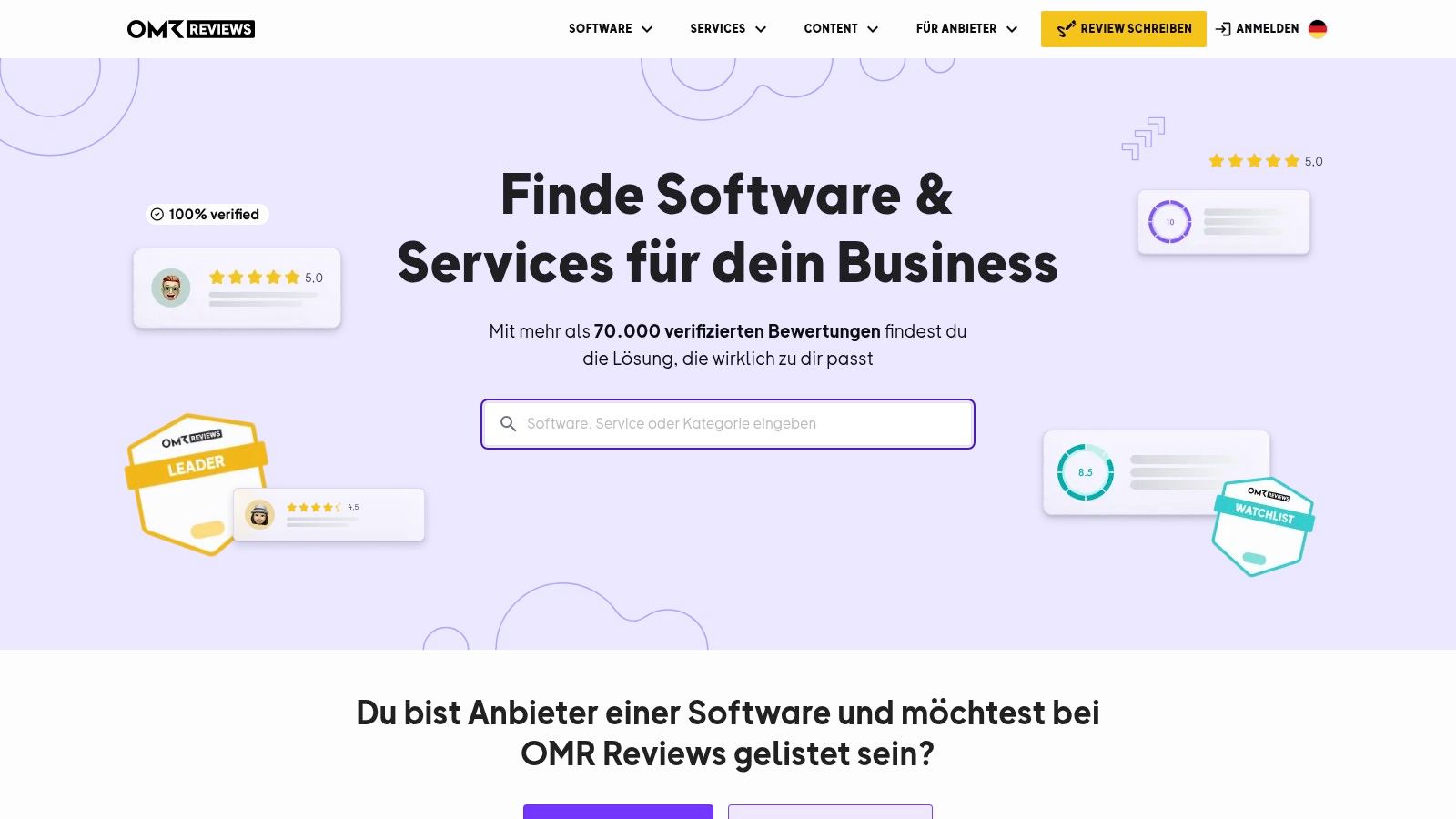
OMR Reviews is a powerful comparison platform focusing on business software, which has become an indispensable resource for marketers in the DACH region (Germany, Austria, Switzerland). While not an AI tool itself, its value lies in curating user reviews, buying guides, and expert shortlists specifically for the German-speaking market. This makes it one of the most practical research AI tools for digital marketers looking for localised insights, vendor support, and region-specific software availability.
What makes OMR Reviews unique is its cultural and linguistic context. Instead of generic global reviews, it aggregates feedback from DACH-based marketers, offering nuanced perspectives on how tools perform within local market conditions. This is crucial for evaluating features like language support, GDPR compliance, and integration with region-specific platforms, helping teams make better-informed purchasing decisions before committing to a vendor.
Key Features & Use Cases
- Regional Tool Curation: Discover and compare AI-driven marketing tools that are popular and well-supported within the German-speaking market.
- Aggregated User Reviews: Read authentic, detailed reviews from local marketers to understand the pros and cons of a tool from a regional perspective.
- Editorial Buying Guides: Access expert-written guides and shortlists, such as “KI im Marketing,” which provide concrete tool recommendations for specific marketing challenges.
- Informed Decision Making: Use the platform to shortlist potential solutions and compare them effectively. For instance, you can find detailed analyses of the best ChatGPT rank tracker tools to help make an informed decision for your marketing stack.
Pricing and Implementation
OMR Reviews is a free-to-use resource; you do not need an account to browse reviews and guides. Its purpose is to inform and guide your purchasing decisions, not to sell software directly. The platform links out to vendor websites where you can find specific pricing and sign up for trials. The primary limitation is its strong focus on the DACH market, which may not be as relevant for global teams. However, for marketers operating in this region, it is an unparalleled resource for vetting and selecting the right AI marketing software.
Website: https://omr.com/de/reviews
12. G2
G2 isn’t a single AI tool but an essential meta-resource for any marketer navigating the rapidly expanding landscape of AI solutions. It functions as a comprehensive software marketplace and review platform, making it a critical first stop for comparing and vetting the vast array of AI tools for digital marketers. Instead of providing a direct function, its value lies in aggregating user-generated reviews, data, and feature comparisons to help you make an informed purchasing decision.
What makes G2 uniquely powerful is its dynamic and up-to-date categorisation. It has moved beyond broad software labels to create specific, relevant categories like “AI Content Creation,” “Generative Engine Optimisation,” and “AI Sales Assistants.” This allows marketers to discover and directly compare competing platforms based on real-world user feedback, filtering results by company size, industry, and region to find the best fit for their specific needs.
Key Features & Use Cases
- Up-to-Date AI Categories: Easily discover and explore vendors in niche AI marketing areas, saving hours of manual research time.
- Grid® Reports: Visualise the market landscape with reports that plot tools based on user satisfaction and market presence, helping you quickly identify leaders and high-momentum products.
- Verified User Reviews: Access thousands of in-depth reviews that highlight practical pros, cons, and specific use cases, offering insights that go far beyond a vendor’s marketing copy.
- Feature & Pricing Comparison: Utilise side-by-side comparison tables to evaluate key features and pricing structures of shortlisted tools, streamlining the final selection process.
Pricing and Implementation
G2 is free to use for browsing, researching, and reading reviews. Deeper market intelligence, buyer-intent data, and certain comprehensive reports are part of their paid G2 Marketing Solutions offerings, which are aimed at software vendors rather than buyers. The user experience is straightforward, but the sheer volume of information can be overwhelming. For best results, start with a specific category in mind and use the filters heavily to narrow the options. Always read a mix of positive and negative reviews to get a balanced perspective before visiting vendor websites.
Website: https://www.g2.com
Comparative Overview: 12 AI Tools for Digital Marketers
| Tool | Core features | UX / Quality (★) | Value & Price (💰) | Target & Unique Selling Points (👥 / ✨) |
|---|---|---|---|---|
| Postline.ai 🏆 | AI post generator, live web research + citations, voice memory, scheduler & team collab | ★★★★☆ (90–95% human‑like) | 💰 Pro $9.90/mo / Business $19.90/mo (launch); 7‑day trial (no card) | 👥 Solo creators, marketers, teams • ✨ Autonomous research + true on‑voice LinkedIn workflow |
| Semrush | SEO, content briefs, competitive research, social & reporting | ★★★★☆ | 💰 $$$ (modular add‑ons) | 👥 SEO & marketing teams • ✨ Unified SEO + competitive insights |
| Jasper | Brand Voice, Canvas campaigns, knowledge assets & Agents | ★★★★☆ | 💰 $$$ (best at Pro/Business tiers) | 👥 Marketing teams & enterprises • ✨ Campaign orchestration & governance |
| Copy.ai | Multi‑model generation, Content Agent Studio, Chat (plan dependent) | ★★★☆☆ | 💰 $$–$$$ (agent plans pricier) | 👥 Teams scaling cross‑channel • ✨ Reusable workflow agents |
| Canva (Magic Studio) | Magic Write/Design/Media, templates, batch edits & resizing | ★★★★☆ | 💰 $–$$ (freemium; team seats vary) | 👥 Non‑designers, creators • ✨ Fast, on‑brand creative at scale |
| Hootsuite (OwlyWriter AI) | Scheduler, AI caption/image suggestions, listening & analytics | ★★★☆☆ | 💰 $$ (tiered; add‑ons extra) | 👥 Social managers & teams • ✨ Consolidated planning + approval flows |
| HubSpot Content Hub (AI) | AI writing/remix, SEO guidance, CRM‑linked workflows | ★★★★☆ | 💰 $$$$ (bundled into higher tiers) | 👥 Businesses needing CRM‑connected content • ✨ AI + CRM automation & governance |
| Mailchimp (Creative Assistant) | Creative Assistant, AI emails, e‑com recommendations & automations | ★★★★☆ | 💰 $–$$ (SMB friendly; some features on Standard+) | 👥 Small teams & e‑commerce • ✨ Quick on‑brand email + automation |
| Surfer | Content Editor (NLP), briefs, page audits & SERP analysis | ★★★★☆ | 💰 $$ (SEO‑focused) | 👥 SEO teams & writers • ✨ NLP‑driven on‑page optimization |
| Google Ads (Performance Max) | Performance Max, Smart Bidding, multi‑channel automation & insights | ★★★☆☆ | 💰 Pay‑per‑click (scalable spend) | 👥 Paid acquisition teams • ✨ Algorithmic cross‑channel campaign automation |
| OMR Reviews | Editorial guides, DACH user reviews, curated shortlists | ★★★☆☆ | 💰 Free (informational; links out) | 👥 DACH marketers • ✨ Region‑specific reviews & buying guides |
| G2 | User reviews, category grids, filters, buyer intent data | ★★★★☆ | 💰 Free to browse (some gated reports) | 👥 Buyers researching software • ✨ Large review database & comparative filters |
Final Thoughts
Navigating the expansive landscape of AI tools for digital marketers can feel like an overwhelming task. We have journeyed through a comprehensive list, from content creation powerhouses like Jasper and Copy.ai to all-in-one platforms like HubSpot and SEO specialists such as Semrush and Surfer. The key takeaway is clear: artificial intelligence is no longer a futuristic concept but a present-day, indispensable ally for achieving marketing excellence.
These tools are fundamentally reshaping workflows, automating repetitive tasks, and unlocking new levels of creativity and data-driven precision. Whether it is refining your social media strategy with Hootsuite’s OwlyWriter AI, optimising ad spend with Google’s Performance Max campaigns, or designing stunning visuals with Canva’s Magic Studio, the right AI integration can revolutionise your team’s efficiency and impact. The era of manual, time-consuming marketing processes is rapidly giving way to a more strategic, automated, and intelligent approach.
Selecting Your AI Marketing Stack
The critical next step is not to adopt every tool, but to strategically select the ones that align with your specific goals, team structure, and budget. A small business owner might prioritise an integrated solution like HubSpot, whereas a dedicated content team may find more value in combining specialised tools like Surfer for SEO and Jasper for long-form writing.
Before you commit, consider these crucial factors:
- Integration Capabilities: How well does the tool integrate with your existing marketing technology stack? Seamless integration prevents data silos and ensures a smooth workflow. A tool that connects to your CRM, analytics platform, and social media scheduler is inherently more valuable.
- Scalability: Will this tool grow with your business? Consider its pricing tiers, feature limitations, and ability to handle increasing volumes of data and user activity. A solution that seems perfect today might become a bottleneck tomorrow.
- Learning Curve: How intuitive is the platform? Evaluate the time and resources required to train your team. Look for tools with robust support, comprehensive tutorials, and an active user community.
- Data Privacy and Security: With AI, you are often entrusting sensitive company and customer data to a third-party platform. Thoroughly review their security protocols, data handling policies, and compliance with regulations like GDPR.
Embracing an AI-Augmented Future
Ultimately, the most effective AI tools for digital marketers are those that augment human expertise, not replace it. They handle the heavy lifting of data analysis, content generation, and task automation, freeing you and your team to focus on the elements that require a human touch: strategy, creativity, and building genuine customer relationships.
The true power of AI in marketing is realised when it becomes a collaborative partner. Use it to generate initial ideas, but rely on your industry knowledge to refine them. Leverage its analytical power to uncover trends, but use your intuition to interpret their meaning and devise a winning strategy. By thoughtfully integrating these powerful tools and maintaining a focus on strategic oversight, you can build a more efficient, impactful, and future-proof marketing operation that consistently delivers outstanding results.
Ready to supercharge your social media content creation? Postline.ai leverages advanced AI to help you generate engaging, brand-aligned posts for platforms like LinkedIn in seconds, taking the guesswork out of your content strategy. Discover a smarter way to manage your social presence and start creating better content faster at Postline.ai.

Run every client pipeline in one place
Give each LinkedIn profile its own voice, calendar, approval flow, and analytics. Start in minutes.
Start free trial