Mastering LinkedIn for Marketing Success
A complete guide to LinkedIn for marketing. Learn proven strategies for content, ads, analytics, and lead generation in the German B2B market.
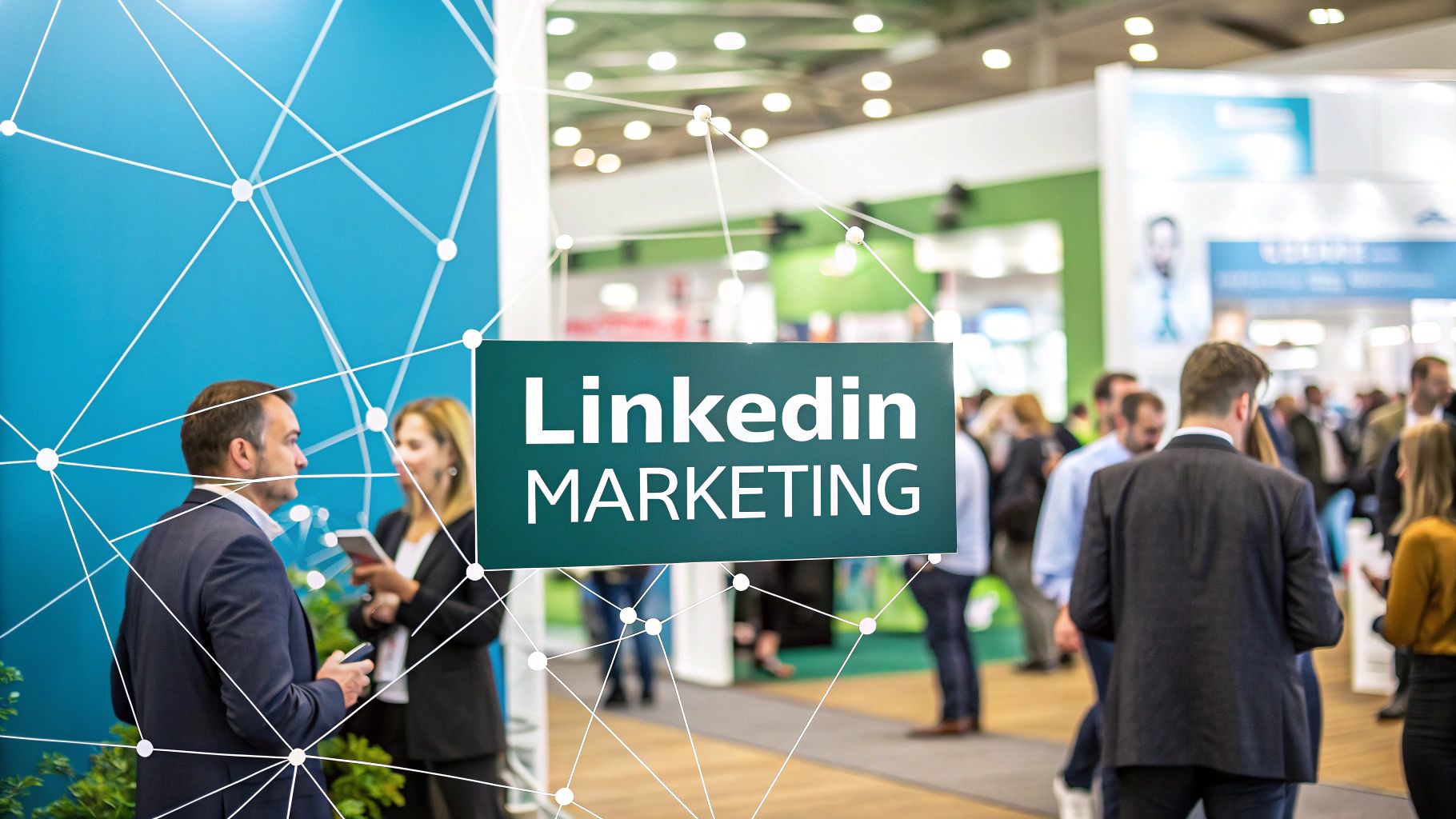
Using LinkedIn for marketing isn’t just about firing off a few company updates. It’s a completely different ball game. Think of it less like your typical social network and more like a massive, always-on digital trade fair where your ideal clients are actively looking for solutions.
Why LinkedIn Is Your B2B Marketing Powerhouse
First, let’s get one thing straight: LinkedIn isn’t Facebook or Instagram for suits. Those platforms are built around entertainment and personal life. LinkedIn is built from the ground up for one thing: professional interaction.
That distinction is everything. When people log into LinkedIn, they’re in a business mindset. They’re scrolling for industry news, expert insights, and answers to their professional headaches. This creates an environment where your marketing message doesn’t just get seen—it gets welcomed.
Trying to discuss complex B2B software in a space filled with holiday photos and cat videos? You could, but it’s like trying to shout over a rock concert. LinkedIn provides the right stage, the right audience, and the right context.
A Platform Built for Business Growth
The real magic of LinkedIn lies in its ability to connect you directly with the people holding the company credit card. On other platforms, you’re targeting broad interests and hoping for the best. On LinkedIn, you can dial in your targeting to specific job titles, industries, company sizes, and even professional skills.
It’s about making sure your efforts are never wasted on the wrong audience.
Here’s where it really shines:
- Building Authority: When you consistently share genuinely useful content, you stop being just another vendor and start becoming a trusted expert.
- Lead Generation: The platform is an absolute goldmine for finding and nurturing potential clients. We dive deep into this in our guide on LinkedIn B2B lead generation.
- Precision Targeting: Whether you’re posting organically or running ads, you can reach the exact professionals who need what you’re selling.
At its heart, marketing on LinkedIn is about building trust at scale. It’s a long-term play, an investment in relationships that ultimately leads to real business results, from brand recognition all the way to closed deals.
The German Market Opportunity
This professional focus is especially powerful in markets like Germany. The numbers speak for themselves. Let’s take a quick look at the user landscape to see what we’re working with.
LinkedIn Germany User Snapshot
| Metric | Figure |
|---|---|
| Total Users (Sept 2025) | 23.5 Million |
| Population Penetration | 29% |
| Largest Age Group | 25-34 |
| Users in Largest Group | 8.2 Million |
Source: NapoleonCat
As of September 2025, Germany is home to 23.5 million LinkedIn users, which is nearly 29% of the entire population. The single largest demographic is the 25 to 34 age group, with a staggering 8.2 million professionals. These are the current and next-generation decision-makers.
For any German business serious about growth, tapping into this concentrated audience of educated, ambitious professionals isn’t just an option—it’s essential.
Building Your Foundational Marketing Strategy
Jumping onto LinkedIn without a plan is like sailing without a map. You might drift around for a bit, but you’re not going to get anywhere meaningful. A powerful presence on the platform isn’t built on random posts and sporadic engagement; it’s the direct result of a solid marketing strategy where every single action is tied to a real business goal.
Think of it like building a house. You wouldn’t just start throwing up walls and hope for the best. You’d start with a blueprint that details the layout, the number of rooms, and the purpose of the structure. The same exact logic applies to using LinkedIn for marketing. You have to define what success looks like before you can even begin to build it.
This is what shifts you from just “being on LinkedIn” to actively using it as a serious tool for growth. It makes sure your time, energy, and resources are all pointed in the right direction.
Define Your Core Objectives
Before you even think about writing a post, you need to ask the most fundamental question: “What are we actually trying to achieve here?” Fuzzy goals like “getting more exposure” won’t cut it. Your objectives need to be specific, measurable, and plugged directly into your business’s bottom line. Getting crystal clear at this stage is absolutely non-negotiable.
Here are a few examples of what strong, concrete LinkedIn objectives look like:
- Generate Qualified Leads: Aim to bring in 20 new marketing-qualified leads (MQLs) each month from content downloads and direct messages.
- Increase Brand Visibility: Target a 30% bump in Company Page followers and a 50% increase in post impressions over the next quarter.
- Attract Top Talent: Drive 50 high-quality applications for open roles by showcasing your company culture and telling employee stories.
- Establish Thought Leadership: Land three podcast interviews or speaking gigs by consistently publishing expert analysis on industry trends.
Pick one or two primary goals to keep your efforts laser-focused. Trying to do everything at once is a surefire way to accomplish nothing at all. To really get into the weeds of planning, check out our complete guide to building a social media strategy for LinkedIn.
This map shows how LinkedIn acts as a central hub, connecting your activity to crucial business outcomes like building authority and generating leads.
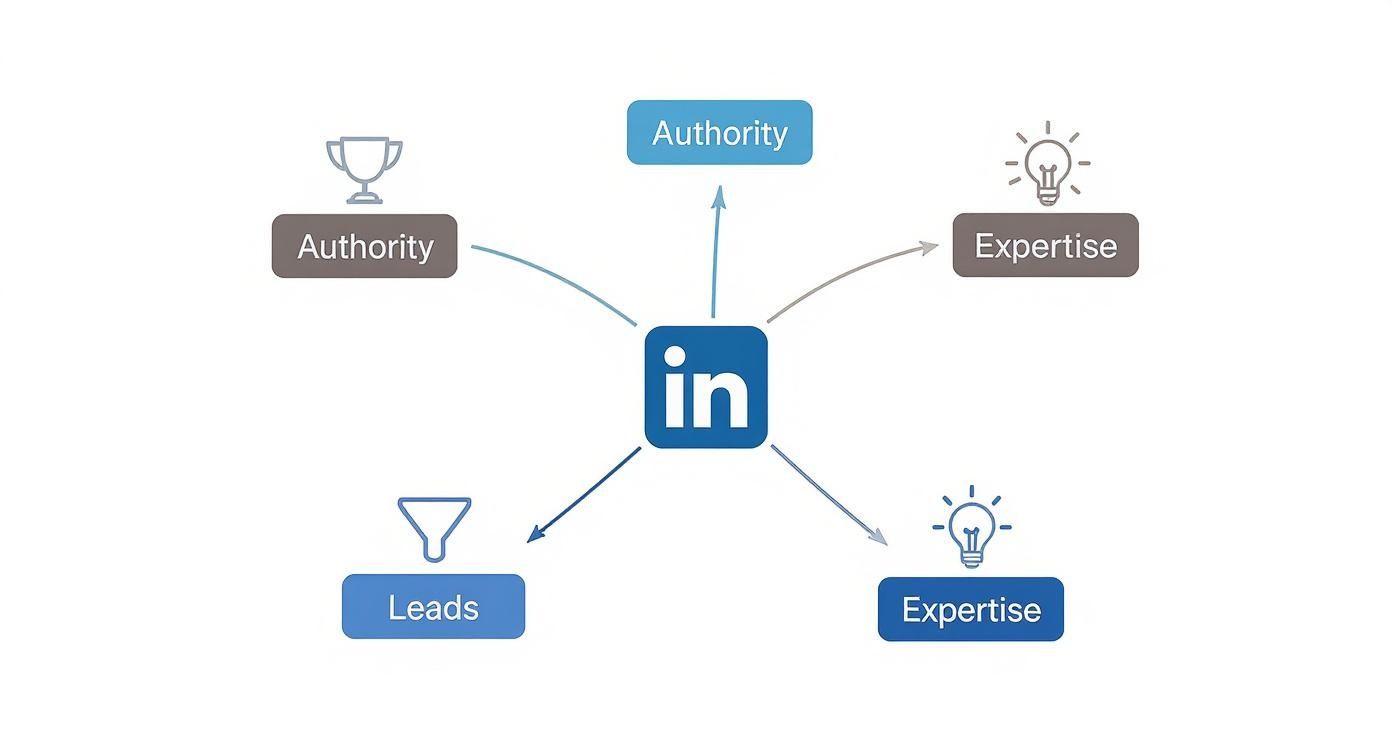
It’s a great reminder that LinkedIn isn’t just a single-function platform, but a powerful ecosystem for turning expertise into real commercial opportunities.
Create Your Ideal Buyer Persona
Once your goals are set, you need to know exactly who you’re talking to. A buyer persona is basically a detailed sketch of your perfect customer, and LinkedIn’s search filters are an absolute goldmine for building one. You can go way beyond basic demographics to truly understand your audience’s professional world.
A well-crafted buyer persona is your North Star. It ensures every piece of content, every connection request, and every ad campaign is aimed directly at the right people. It’s the difference between shouting into an empty room and having a genuinely productive conversation.
Start piecing together your persona by filtering for these key details right on LinkedIn:
- Job Title: Are you trying to reach the “Head of Marketing,” the “CEO,” or a “Software Engineer”?
- Industry: Do they operate in “Information Technology,” “Healthcare,” or “Financial Services”?
- Company Size: Is your ideal client at a small startup (1-10 employees) or a huge enterprise (10,000+ employees)?
- Location: Are you targeting a specific city, a region like the DACH market, or a global audience?
- Skills & Interests: What specific skills do they list on their profiles? What professional groups are they a part of?
Getting granular here will pay off massively down the line.
Analyse Your Competition
Finally, it’s time to do a little recon. A quick look at what your competitors are up to can give you incredible insight into what works—and what falls flat—in your industry.
You’re looking for answers to a few simple questions:
- What kind of content are they sharing? (e.g., videos, long-form articles, case studies)
- How often are they posting? (e.g., daily, a few times a week)
- What’s their engagement like? (e.g., plenty of likes, lots of comments, or crickets?)
- What’s their core message? (e.g., are they focused on innovation, reliability, or being the cheapest option?)
The goal here isn’t to copy them. It’s to spot the gaps and find your opening. If everyone else is just posting dry corporate updates, maybe there’s a huge opportunity for authentic, behind-the-scenes content. If their posts get likes but no one is commenting, you can swoop in with content designed to spark a real conversation. This prep work is what lays the foundation for everything to come.
Turning Profiles into Powerful Marketing Assets
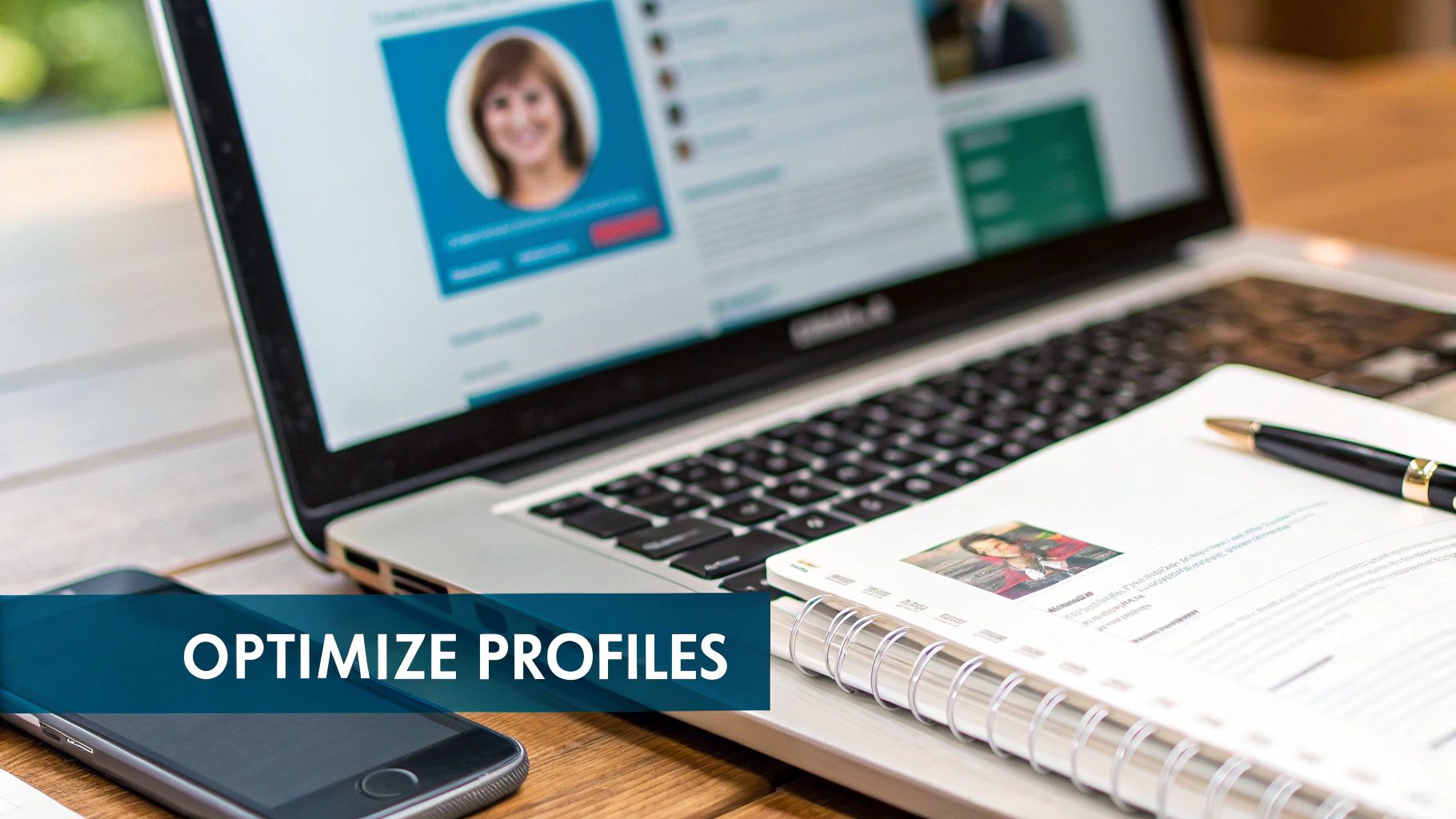
Think of your LinkedIn presence—both your Company Page and your team’s personal profiles—as your digital storefronts. A neglected profile is the equivalent of a shop with a dusty window and a broken sign. It tells potential customers you just don’t care. On the flip side, a sharp, optimised presence can attract, inform, and build immediate trust with the right people.
This is where your marketing strategy starts to come alive on the platform. Every single element, from your company’s banner image right down to an employee’s job description, is an opportunity. It’s a chance to show what your brand is all about and nudge visitors towards taking the next step. Let’s dig into how to turn these pages from static placeholders into genuine marketing powerhouses.
Optimising Your LinkedIn Company Page
Your Company Page is your brand’s official headquarters on LinkedIn. It needs to be a central hub of information, credibility, and resources for anyone curious about your business. Far too many companies set it up and forget it, but with a few key tweaks, it can become a serious lead-generation asset.
Your first job is to make a killer first impression. That starts with a crisp, high-quality logo and a compelling banner image that gets your value proposition across in seconds. Treat that banner like a free billboard—use it to show off a tagline, promote a webinar, or highlight your core mission.
Next, give the ‘About’ section the attention it deserves. This is prime real estate for SEO.
- Weave in Keywords Naturally: Use the exact terms your ideal clients would type into a search bar. Instead of “innovative software solutions,” try something specific like “B2B SaaS for finance teams.”
- Tell a Clear Story: Don’t just list what your product does. Explain who you help, the problems you solve for them, and what makes your approach special.
- Include a Call-to-Action (CTA): Finish your ‘About’ section by telling visitors what to do. Guide them to visit your website, download a white paper, or book a demo.
A well-structured Company Page does more than just sit there—it validates your business. When a potential lead looks you up after seeing an ad, a professional and informative page confirms you’re a serious player in your industry.
Transforming Personal Profiles into Brand Amplifiers
While the Company Page is your brand’s anchor, your employees’ personal profiles are its most powerful amplifiers. It’s a simple truth: people connect with and trust other people far more than they trust logos. Encouraging your team to build strong personal brands is one of the most effective moves you can make in LinkedIn for marketing.
This isn’t about pushing everyone to become a LinkedIn guru overnight. It’s about making sure their profiles professionally represent both their individual expertise and the company’s broader mission.
The Headline and Summary
The headline is the single most important bit of text on a personal profile. It follows a person everywhere on the platform—in comments, connection requests, and search results. It has to do more than just state a job title. A great headline communicates immediate value.
- Before: “Sales Manager at Tech Solutions GmbH”
- After: “Helping Mid-Sized Manufacturers Streamline Operations with Custom Tech Solutions”
The summary, or ‘About’ section, is where they get to tell their professional story. Encourage your team to write in the first person, share their passion for what they do, and explain the tangible results they deliver for clients. This is the perfect place to naturally work in keywords related to their skills and industry focus. If you’re looking for a deep dive, we’ve covered exactly how to build a personal brand on LinkedIn in another article.
Finally, the ‘Experience’ section shouldn’t just be a carbon copy of a job description. Each role should be framed around achievements, not just responsibilities. Using bullet points to highlight key accomplishments—like “Increased lead quality by 40%“ or “Managed a portfolio of €5M“—adds concrete credibility that builds instant trust with anyone viewing the profile.
Creating Content That Connects and Converts
If your strategy and profile are the foundations of your LinkedIn house, then content is the engine that keeps the lights on. It’s the fuel for your LinkedIn for marketing efforts, turning people who just browse your profile into genuinely engaged followers and, eventually, customers. Just broadcasting corporate news or sales pitches is a surefire way to get ignored. Professionals on LinkedIn are looking for real value, sharp insights, and actual solutions.
Think of every piece of content as a helpful conversation starter. Each post should aim to teach something, offer a fresh perspective, or make someone think. This shifts you from being just another company shouting into the digital void to a trusted voice your audience actually wants to hear from.
Developing Your Core Content Pillars
Posting randomly is a recipe for disaster. The best LinkedIn strategies are built on solid content pillars. These are the three to five core topics your brand is going to own, day in and day out. Your pillars should live at the sweet spot where your audience’s problems meet your business’s expertise.
Let’s say you’re a German SaaS company selling to finance departments. Your content pillars might look something like this:
- Digital Transformation in Finance: Talking about the latest trends, helpful tools, and how to automate tedious processes.
- Regulatory Compliance (BaFin): Sharing updates and practical advice for navigating Germany’s complex financial rules.
- Finance Team Productivity: Offering tips and frameworks to help finance teams get more done without burning out.
Sticking to these pillars makes your content predictable in the best way possible. Your followers know what to expect, which builds trust and keeps them coming back. It also makes your own life easier by simplifying content planning.
Choosing the Right Content Formats
LinkedIn gives you a whole box of tools to play with, and each format has its own superpower. Mixing things up keeps your feed from getting stale and helps you connect with people who consume content differently. A varied approach means your message will land, whether someone has 30 seconds to scroll or 10 minutes to read.
- Text-and-Image Posts: These are your daily drivers. They’re perfect for dropping a quick insight, asking a thought-provoking question, or highlighting a killer statistic. Just pair some sharp copy with a high-quality photo or a clean branded graphic.
- Short-Form Video (Under 90 seconds): Nothing grabs attention quite like video. Use it for quick tips, a peek behind the scenes, or a snappy summary of a longer blog post. Always add subtitles—most people watch with the sound off.
- LinkedIn Articles: When you really need to unpack a topic, an article is the way to go. This format is brilliant for in-depth how-to guides, detailed industry analysis, or a comprehensive case study. Plus, they get indexed by search engines, giving your content a much longer lifespan.
The most effective LinkedIn content strategy doesn’t rely on a single format. It uses a blend of quick, engaging updates and deeper, more authoritative pieces to build a well-rounded and credible brand presence.
Smart Content Distribution Tactics
Creating brilliant content is only half the job. The other half is making sure people actually see it. Your distribution strategy is all about getting your hard work in front of the right eyeballs at the right time.
The data shows that people are interacting more than ever. The average interaction rate for LinkedIn posts in Europe has jumped from 8.75 to 11.32 engagements per post. That’s a 22% increase, which tells us there’s a real hunger for quality professional content. And in a diverse business environment like Germany, it’s worth noting that multilingual posts have seen an 18% bump in engagement.
To get the most out of every post, try these tactics:
-
Use Hashtags Wisely: Don’t go overboard. Stick to 3-5 highly relevant hashtags. A good mix is a broad industry tag (like
#FinTech), a niche topic tag (#BaFinCompliance), and your own branded tag (#YourCompanyGrows). - Post at Optimal Times: For the German market, things usually get busy during work hours. The sweet spots are often mid-morning (9-11 AM) and just after lunch (1-2 PM). Experiment a bit to see when your audience is most active.
- Activate Employee Advocacy: Get your team involved! Encourage them to share and, more importantly, comment on company posts. A thoughtful comment from a team member can kickstart a conversation far better than a simple like can.
To make sure your links look sharp and professional when they’re shared, it’s worth getting to grips with Open Graph types. Setting these up properly ensures that any link to your website shows up with a clean title, description, and image. It’s a small detail that makes a big difference for brand consistency. You can learn the ropes by optimizing content for social sharing with Open Graph types.
Using LinkedIn Ads for Precision Targeting
While your organic content is busy building trust and community, sometimes you just need to hit the accelerator. That’s where LinkedIn Ads comes in. It’s the tool you need to get your message in front of the exact professionals you want to reach, right when it matters most. A truly effective LinkedIn for marketing plan almost always involves a smart blend of both organic and paid efforts.
Think of it this way: organic content is like building a solid reputation in your hometown. It takes time, consistency, and a lot of handshakes to become the go-to expert. Paid ads, on the other hand, are like booking a prime-time TV spot that only airs to households in your ideal postcode. It’s direct, it’s fast, and it’s incredibly precise.
The real magic of LinkedIn Ads is its targeting capability. You can go so far beyond basic demographics. We’re talking about targeting users based on their job title, industry, company size, specific skills, and even the professional groups they belong to. This laser-focus ensures your budget is spent reaching actual decision-makers, not just casting a wide, hopeful net.
Choosing the Right Ad Format
LinkedIn gives you a whole toolkit of ad formats, and each one is built for a different job. Picking the right one is absolutely critical for your campaign’s success. The question isn’t “which format is best?” but rather “which format best fits what I’m trying to achieve?”
Let’s break down the main players:
- Sponsored Content: These are the native ads you see right in the LinkedIn feed. They look just like a regular post but have a small “Promoted” tag. They are perfect for getting your best content seen, boosting brand awareness, or driving clicks to your website.
- Sponsored Messaging: This format delivers your message directly into a user’s LinkedIn inbox. It’s a very personal touch that works brilliantly for event invitations, product demo offers, or other personalised pitches. A word of caution: use it respectfully to avoid feeling spammy.
- Lead Gen Forms: A complete game-changer for B2B marketers. When someone clicks your ad, a form pops up that’s already pre-filled with their LinkedIn profile info. This super-smooth experience dramatically increases conversion rates for things like webinar sign-ups or white paper downloads.
The key is to match the format to your goal. Want broad visibility? Go with Sponsored Content. Need direct, personal engagement? Consider Sponsored Messaging. If your number one priority is filling your sales pipeline, Lead Gen Forms are your best friend.
To make things even clearer, I’ve put together a simple table comparing the most common ad types and what they’re best used for.
LinkedIn Ad Formats Comparison
This table breaks down the primary LinkedIn ad formats to help you choose the best option based on your specific campaign goals.
| Ad Format | Best For | Key Feature | | :— | :— | | Sponsored Content | Brand awareness & content promotion | Appears natively in the user’s feed | | Sponsored Messaging | Personalised invitations & offers | Delivers ads directly to the inbox | | Lead Gen Forms | Capturing high-quality leads | Pre-filled forms for easy conversion |
Choosing the right format from the get-go sets you up for success and prevents you from wasting your budget on a campaign that was never designed to meet your objective.
Setting Up a High-Performing Campaign
Launching a LinkedIn Ad campaign isn’t guesswork; it’s a methodical process. It all starts with a crystal-clear objective and ends with creative that stops people from scrolling. A winning ad is always a combination of sharp targeting and a message that truly connects with the audience.
First up, you’ll head into Campaign Manager and choose your objective. Are you trying to build brand awareness, drive website visits, or generate leads? This initial choice is crucial, as it determines which ad formats and bidding options are even available to you.
Next, you get to build your audience. This is where you really see the power of LinkedIn’s professional data. You can layer different targeting criteria to create an incredibly specific group of people. For instance, you could target “Marketing Directors” at “Software Companies” with 50-200 employees located in “Germany.” This level of precision is exactly what makes LinkedIn Ads so valuable for B2B marketing.
Finally, it’s time to craft your ad. The creative—your image or video—needs to be professional and eye-catching. Your ad copy has to be direct, speak to a specific pain point your audience has, and include a clear call-to-action (CTA). Tell them exactly what you want them to do next, whether it’s “Download the Guide,” “Register Now,” or “Request a Demo.”
Measuring Performance with LinkedIn Analytics
You can’t improve what you don’t measure. Seriously. A successful LinkedIn for marketing strategy is built on data-driven decisions, not just crossing your fingers and hoping something sticks. This is exactly where LinkedIn Analytics comes in—it’s the tool that turns your performance into clear, actionable insights.
Think of analytics as the dashboard in your car. It tells you your speed (engagement), how much fuel you’ve got left (budget), and whether the engine is running smoothly (ROI). Without it, you’re just driving blind.
This is the part where you stop just creating content and start truly understanding its impact. By keeping a close eye on the right numbers, you can figure out what genuinely resonates with your audience, tweak your approach on the fly, and finally prove the value of your hard work to stakeholders.
Identifying Key Performance Metrics
Let’s be clear: not all metrics are created equal. It’s easy to get caught up in chasing “vanity metrics” like a raw follower count, but those numbers can be seriously misleading. You need to focus on the figures that tie directly back to your actual business goals, whether for your organic posts or your paid campaigns.
These are the metrics that really matter:
- Engagement Rate: This is the percentage of people who saw your post and actually did something—liked, commented, or shared. It’s a fantastic indicator of how compelling your content is.
- Click-Through Rate (CTR): This tells you how many people saw your post or ad and were intrigued enough to click your link. A high CTR is a great sign that your copy and call-to-action are hitting the mark.
- Impressions and Reach: Impressions are the total number of times your content was shown, while reach is the number of unique people who saw it. These help you get a handle on your brand’s visibility.
- Lead Conversion Rates: For paid campaigns using Lead Gen Forms, this is the big one. It shows you exactly how many leads your campaign is pulling in, directly connecting your LinkedIn activity to business growth.
This screenshot shows where you can find visitor and follower analytics for your Company Page.
From this single view, you can immediately get a feel for audience growth and engagement trends over a set period. It’s the quickest way to spot what’s working and what isn’t.
Interpreting the Data to Refine Your Strategy
Collecting data is just step one. The real magic happens when you start interpreting it. See sky-high engagement on your video posts but a dismal CTR on your articles? That’s a huge clue that your audience craves visual content. Running a campaign with tons of impressions but a low lead conversion rate? Your targeting might be spot-on, but your offer probably isn’t compelling enough.
Analytics provides the feedback loop for continuous improvement. It transforms your marketing from a series of isolated tactics into an intelligent, evolving system that gets smarter with every post and campaign.
Use this data to answer some critical questions:
- Which of our content pillars are sparking the best conversations?
- What time of day do our posts get the most traction?
- Are our paid campaigns actually reaching the right job titles and industries?
- How are we tracking compared to last quarter?
Answering these helps you double down on what works and cut what doesn’t, squeezing every bit of value out of your investment.
Creating a Simple Reporting Framework
To show everyone the real value of your LinkedIn marketing, you need a straightforward way to report on your progress. For anyone who needs to wrangle large datasets, learning how to export data from LinkedIn Analytics to Excel can be a game-changer for deeper analysis and custom reports.
Keep your reports clean and concise, focusing only on the metrics tied to your main objectives. A simple monthly report might include a summary of follower growth, your top-performing posts by engagement rate, the number of website clicks you generated, and the total leads from your ad campaigns. This approach makes sure everyone, from your boss to the sales team, understands the direct business impact of your work on the platform.
Your Top LinkedIn Marketing Questions Answered
Getting started with LinkedIn marketing always stirs up a few questions. It’s totally normal. Nailing down the answers to these common sticking points can be the difference between a strategy that feels like a constant uphill battle and one that actually brings in results. Let’s clear up some of the most frequent questions so you can push forward with confidence.
One of the first things people ask is where to focus their energy: on a personal profile or a Company Page? The short answer? You need both. Think of your Company Page as your brand’s official headquarters; it’s non-negotiable, especially for running ads. But let’s be honest, people connect with people, not logos. The real magic—the engagement, the conversations, the relationship building—happens on personal profiles.
Your Company Page is the polished shopfront, but your team’s personal profiles are the experts inside, building trust and showing what they know. A killer strategy gets them working together.
So, your Company Page should be the go-to spot for official company news and branded content. Meanwhile, your key team members should be using their own profiles to share their unique insights, jump into relevant conversations, and build genuine connections.
How Often Should I Post on LinkedIn?
This one’s simple: consistency beats frequency, every single time. It’s much, much better to share two high-quality, genuinely helpful posts a week than to spam your network with five low-effort updates just to hit a quota. Trying to post constantly is a fast track to burnout and, worse, content that nobody cares about.
Start with a goal you can actually stick to, like posting two or three times per week. Concentrate on creating content that fits your core topics and provides real value to your audience. Once you’ve got a good rhythm going, you can think about posting more often, but only if you can keep the quality high. The aim is to become a trusted voice, not just another noisy account in the feed.
Is LinkedIn Premium Worth the Investment?
For most businesses just dipping their toes into LinkedIn marketing, the free version is more than enough to get the job done. It’s an incredibly powerful platform where you can build a network, publish content, and engage with your community without spending a single penny. Before you even think about upgrading, make sure you’ve squeezed every last drop of value out of the free features.
That said, LinkedIn Premium (specifically Sales Navigator) can be a game-changer if your main goal is proactive lead generation. It unlocks advanced search filters, lets you build and save lead lists, and gives you InMail credits to reach out to prospects directly. If you have a solid sales process that relies on targeted outreach, the investment can easily pay for itself. If not, stick with the free version and focus on building a strong organic presence first.
Ready to create standout LinkedIn content without all the guesswork? Postline.ai uses smart AI and real-time research to help you write and schedule brilliant posts in minutes. Learn more and get started for free at Postline.ai.

Run every client pipeline in one place
Give each LinkedIn profile its own voice, calendar, approval flow, and analytics. Start in minutes.
Start free trial