A Guide to LinkedIn Company Pages
Transform your LinkedIn company pages from a simple profile into a powerful growth engine. Learn to optimize, create content, and engage your audience.

Think of your personal LinkedIn profile. It’s your professional story—your CV, your skills, your career path, all rolled into one. A LinkedIn Company Page does the exact same job, but for your entire business. It’s your company’s official corporate portfolio on the world’s biggest professional stage.
This isn’t just another social media account to manage; it’s a strategic asset. It’s the digital handshake that confirms your business is real, active, and professional to a global audience of potential clients, partners, and future employees.
Why Your Business Needs a LinkedIn Company Page
Let’s be blunt: without a Company Page, your business is practically invisible where it counts. You’re missing out on a space where your competitors are connecting, your clients are researching, and your next star employee is looking for their next move.
A well-kept page becomes your central hub on the platform. It’s where you build the kind of authority and trust that leads to real, meaningful business relationships.
Establish Credibility and Brand Authority
In the professional world, perception is everything. A complete, active Company Page is a clear signal that your business is legitimate, stable, and a serious player in your industry. It’s your soapbox to share industry insights, celebrate company wins, and showcase your expertise.
Done right, you position your brand as a credible voice and a go-to resource. This digital footprint is often the very first impression a potential client has of you. A strong presence reinforces the professionalism they’re looking for and makes them far more likely to get in touch.
Attract Top Talent and Showcase Your Culture
A LinkedIn Company Page is one of the most powerful recruitment tools you have. It gives potential candidates a genuine peek behind the curtain into your company culture, your mission, and the people who drive your success. The best candidates aren’t just looking for a job; they’re researching employers, and your page can be the deciding factor that convinces them to hit “apply.”
Showcase team events, spotlight your employees, and share behind-the-scenes content. This turns your page from a static corporate brochure into a living, breathing showcase of your brand, attracting talent that truly fits your company’s values.
“A LinkedIn Company Page serves a dual purpose: it’s your brand’s official voice in the professional community and a magnet for the talent that will drive your future growth. Neglecting it is like leaving your most important storefront empty.”
The numbers don’t lie. As of early 2025, over 65 million companies have a LinkedIn page. In Germany alone, that figure is more than 1.2 million businesses, growing by about 15% year-on-year. This platform is a non-negotiable part of modern business strategy.
If you want to dig deeper into making your presence count, it’s worth exploring guides on how to market effectively on LinkedIn to understand the broader strategies at play.
Setting Up Your Page for Success
Creating your LinkedIn Company Page is the first real step to carving out your professional space online. Think of it like laying the foundation for a new headquarters; every detail matters, from the sign on the front door to the information on the welcome desk. Getting this right from the start makes sure your page looks polished and credible the moment people find you.
Before you even start, there are a couple of small hurdles. Make sure your personal LinkedIn profile has been around for at least seven days and you’ve made a few connections. You’ll also need a verified email address that uses your company’s domain. It’s just LinkedIn’s way of making sure real businesses are behind the pages.
The process itself is refreshingly simple. LinkedIn guides you through the essentials to get your page up and running.
The Initial Creation Process
Your journey kicks off on the “Create a LinkedIn Page” screen. You’ll need to pick the page type that best fits your organisation—whether you’re a small business just starting out, a massive enterprise, or even a school.
This is the screen where you’ll punch in your company’s core details. This form is basically the blueprint for your page. It asks for your company name, a unique public URL, and your website.
Don’t just gloss over the industry and company size fields, either. They might seem trivial, but these details are what help LinkedIn categorise your page properly. Get them right, and it becomes much easier for potential followers and clients in your sector to discover you through search.
Crafting Your Page Identity
With the basic structure in place, it’s time for the fun part: adding the visuals and story that bring your brand to life. This is where you turn a blank slate into a genuine destination for your audience.
Visual Branding Elements:
- Company Logo: This is your digital handshake. Use a high-quality, square logo, ideally 400 x 400 pixels. It needs to be clear and recognisable, even when it’s shrunk down to a tiny icon.
- Cover Image: Your cover image is your digital billboard. At 1128 x 191 pixels, it’s the perfect spot to show off your team, your product, or a slick graphic that speaks to your company’s mission or latest campaign.
These visuals are often the first thing a visitor sees, so they need to make an impact. A page with a default logo or a badly cropped banner just screams unprofessional. If you want to dig a bit deeper into the setup, our guide on how to create a business profile on LinkedIn has some extra pointers.
Telling Your Brand Story
Looks are important, but the words you use are what will really connect with your audience. You need to clearly explain who you are, what you do, and—most importantly—why it matters.
Your “About” section is your brand’s elevator pitch. It’s your chance to tell a compelling story that goes beyond a simple description of products or services. Use this space to convey your mission, vision, and the unique value you bring to your industry.
A great “About” section should be clear, concise, and packed with relevant keywords to help people find you. I find it helps to break the story down into a few key areas:
- Overview: Kick things off with a powerful summary. State plainly what problems you solve and who you solve them for.
- Specialities: Here, you can list up to 20 specific skills or services. Think of these as tags that help users find you when they’re searching for specific expertise.
- Location and Contact: Fill out every single bit of contact information accurately. It’s a simple step, but it builds a ton of trust and makes it dead easy for leads to get in touch.
Lastly, don’t forget to add a custom call-to-action (CTA) button. Whether it’s “Visit website,” “Learn more,” or “Contact us,” this button gives visitors a clear next step, turning them from passive browsers into active prospects.
Optimising Your Page for Visibility and Engagement
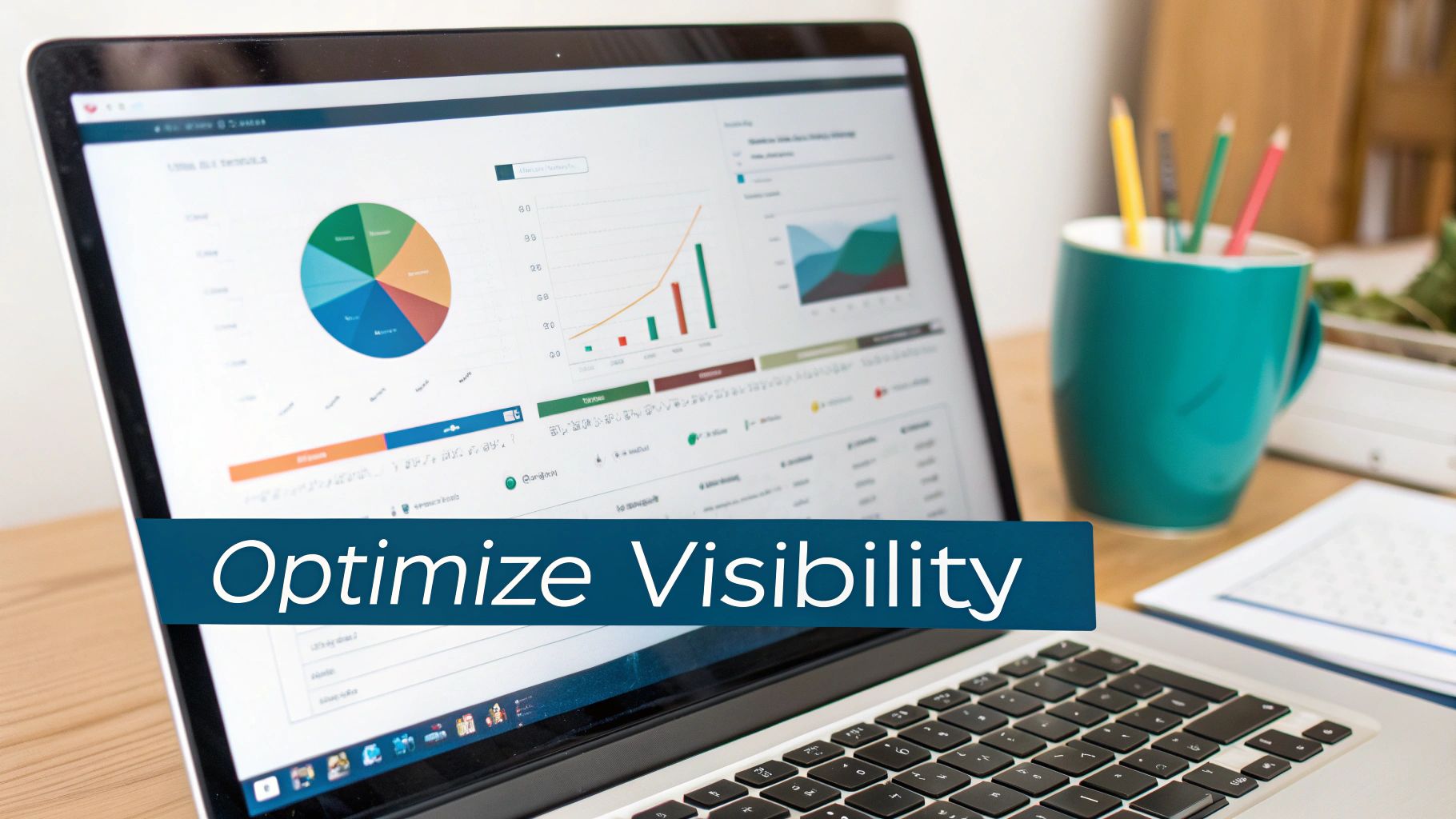
Getting your page live is just the first step. Now, it’s time to turn that digital footprint into a magnet for your ideal audience. Think of it like this: you’ve built a fantastic new shop, but it’s tucked away on a quiet side street. Optimisation is how you put up the bright, inviting signs and move it right onto the high street where everyone can see it.
This isn’t just about looking good; it’s a strategic process. By fine-tuning a few key elements, you transform your page from a static brochure into a powerful tool for discovery, significantly boosting its visibility in searches on both LinkedIn and Google.
Weaving Keywords into Your Page Identity
Search engines, including LinkedIn’s own algorithm, rely heavily on keywords to figure out what your page is all about. Sprinkling the right terms throughout your page is absolutely crucial for helping the right people find you when they’re searching for the exact solutions you offer.
Your tagline and “About” section are prime real estate for this. That short, punchy sentence right under your company name—the tagline—needs to instantly communicate what you do.
For example, a vague tagline like “Innovative Tech Solutions” doesn’t do you any favours. A much better, optimised version would be something like, “AI-Powered Content Creation for B2B Marketers.” It’s specific, clear, and packed with terms your target audience is actually typing into the search bar.
Your “About” section should do the same, but with more room to tell your story. Don’t just stuff it with keywords. Instead, use them naturally to describe your mission, your services, and the problems you solve. This approach works for both the algorithms and the human visitors you want to impress.
Activating Key Page Features
LinkedIn gives you a whole toolbox of features designed to drive action and engagement. Leaving them unused is like buying a power drill and keeping it in the box. One of the most important is the custom call-to-action (CTA) button.
This button sits right at the top of your page, giving visitors a clear, unmissable next step. You can pick from several options depending on what you want to achieve:
- Visit website: Perfect for funnelling traffic to your main site or blog.
- Sign up: A brilliant way to grow your email list or get people to try your product.
- Contact us: A direct line for service-based businesses to capture leads.
- Learn more: A great choice for sending people to a specific resource or product page.
Choosing the right CTA can directly shape how people interact with your brand, guiding them from just looking to actively getting involved.
By completing all page sections and using features like a custom CTA, LinkedIn Company Pages can see up to 30% more weekly views compared to incomplete pages. This simple step is a massive opportunity for increased visibility.
Creating Showcase Pages for Niche Audiences
What if your company serves completely different customer segments or offers distinct product lines? This is where Showcase Pages come in. Think of them as specialised extensions of your main page, each one dedicated to a specific brand, business unit, or initiative.
For instance, a large software company might create one Showcase Page for its enterprise CRM and a separate one for its small business accounting tool. This lets them tailor every piece of content—the messaging, the posts, the community engagement—to each unique audience without cluttering up the main company page.
Each Showcase Page has its own followers and content stream, acting as a mini-hub for a specific community. It’s an excellent way to target niche markets and build much deeper connections with particular customer groups.
Your Optimisation Checklist
To make sure you’ve covered all your bases, a simple checklist can be a lifesaver. It helps you methodically work through the essentials, guaranteeing your page is not just complete, but truly optimised to perform.
| Optimization Element | Purpose | Pro Tip |
|---|---|---|
| Profile & Cover Images | Create a strong, professional first impression. | Use high-resolution images that reflect your brand identity. Your cover image is a great spot for your company slogan. |
| Compelling Tagline | Instantly communicate your value proposition. | Include primary keywords and clearly state what you do and for whom. Keep it under 120 characters. |
| Keyword-Rich “About” Section | Detail your mission, values, and offerings for SEO. | Tell your brand’s story naturally. Use your top 3-5 keywords in the first paragraph. |
| Custom Call-to-Action (CTA) | Guide visitors to take the next desired action. | Align the CTA with your current marketing goal (e.g., “Visit website” for a new campaign launch). |
| Completed Page Sections | Provide comprehensive information and build trust. | Fill out every field: location, industry, company size, etc. Complete pages get 30% more views. |
| Featured Groups | Showcase community engagement and expertise. | Feature active, relevant industry groups to position your brand as a community leader. |
By systematically ticking off these items, you ensure your LinkedIn Company Page is built on a solid foundation, ready to attract followers and build authority. For an even deeper dive, these 8 LinkedIn Company Page Best Practices offer an excellent framework to follow.
Developing Your Content Strategy

Getting your page optimised is a great start, but it’s the content that truly brings your brand to life on LinkedIn. Think of your Company Page as a stage; your content is the performance that grabs—and holds—your audience’s attention. Without a plan, you’re just posting into the void and hoping something sticks.
A content strategy is your roadmap. It makes sure every single post has a purpose, speaks directly to the people you want to reach, and pushes you closer to your business goals. That might be building authority, generating leads, or attracting top talent. The real aim is to stop just talking about yourself and start becoming a go-to resource in your industry.
Establish Your Core Content Pillars
Before you even think about what to post tomorrow, you need to lock down your content pillars. These are the 3-5 core themes your brand will talk about over and over again. They’re like guard rails, keeping your content focused, relevant, and tied directly to what you’re an expert in.
To figure out your pillars, ask a few simple questions:
- What are we an expert in? This is your chance to show off your unique knowledge.
- What problems do our customers actually face? Your content needs to offer real solutions.
- What story does our brand want to tell? This is where your culture, mission, and values come in.
Let’s say you’re a B2B marketing agency. Your pillars could look something like this:
- Marketing Trends and Insights: Breaking down algorithm changes and sharing best practices.
- Client Success Stories: Showing off real-world results with compelling case studies.
- Actionable How-To Guides: Giving away practical tips on lead generation or social media growth.
- Company Culture and Team Spotlights: Highlighting the awesome people behind the work.
Pillars like these give you a balanced mix of content that educates your audience, proves your value, and builds a genuine human connection.
Choosing the Right Post Formats for Maximum Impact
Once you know what you want to talk about, you have to decide how you’re going to say it. Sticking to one format is a massive missed opportunity. A varied approach keeps your feed fresh and appeals to different preferences. Besides, LinkedIn’s algorithm tends to reward pages that use a mix of its native features.
Let’s break down the most effective formats:
- Text-Only Posts: The classic. These are perfect for sharing a quick insight, asking a thought-provoking question, or telling a powerful brand story.
- Image Posts: A strong visual is the ultimate scroll-stopper. Use high-quality photos to show off your team, pop a key statistic into a branded graphic, or announce a company milestone.
- Carousels (PDF Documents): These are absolute engagement magnets. Carousels let you break down complex topics into easy-to-digest, swipeable slides. They are brilliant for step-by-step guides or turning a blog post into bite-sized content.
- Video: Native video almost always performs well. Short, punchy clips (under 90 seconds) are fantastic for sharing expert tips, client testimonials, or a bit of behind-the-scenes footage.
- Polls: An incredibly simple way to kickstart a conversation and get instant feedback from your audience. Use them to ask about industry challenges or just to start a fun debate.
Key Takeaway: The format should always serve the content. A step-by-step tutorial is perfect for a carousel, but a heartfelt company announcement might land better as a simple text post with a great team photo. Don’t be afraid to experiment and see what your audience loves.
Building a Balanced Content Calendar
With your pillars and formats locked in, it’s time to pull it all together in a content calendar. This doesn’t have to be some overly complicated system; a simple spreadsheet is often all you need. A calendar gives you structure, keeps you consistent, and saves you from that daily “what on earth do I post today?” panic.
Here’s what a sample week could look like for our marketing agency example:
| Day | Content Pillar | Post Format | Example Content |
|---|---|---|---|
| Monday | Marketing Trends | Text Post | Sharing an opinion on a recent algorithm update and asking for others’ thoughts. |
| Tuesday | How-To Guides | Carousel | A 5-slide guide on “How to Write a Compelling Call-to-Action”. |
| Wednesday | Client Success | Video | A short testimonial video from a happy client discussing their results. |
| Thursday | Trends & Insights | Poll | “Which marketing channel are you investing in most this year?” |
| Friday | Company Culture | Image Post | A photo from a recent team-building event, celebrating the people behind the brand. |
This schedule creates a healthy mix of value, promotion, and culture. Consistency is everything here. Aiming for 3-5 high-quality posts per week is a solid target for most businesses. For a deeper dive into scheduling, check out our complete guide to creating a LinkedIn content strategy that actually works. This disciplined approach is what separates the top-performing pages from all the rest.
Growing and Engaging Your Audience

Putting great content out there is only half the job. The real magic happens when you turn those passive viewers into an active, engaged community.
It helps to think of your LinkedIn Company Page less like a billboard and more like a digital town square—a place where real conversations happen.
Posting regularly is the price of admission, but it’s the proactive engagement that truly sparks growth. The aim here is to build a vibrant hub where your followers feel seen, heard, and genuinely connected to your brand. This transforms your page from a static profile into a thriving professional community.
This takes a conscious shift in mindset. You’re not just publishing content; you’re actively building relationships with every single post.
Spark Conversations and Encourage Interaction
The easiest way to get people talking? Invite them to the conversation. Passive content gets passive results, so treat every post as a chance for your audience to weigh in with their own experiences and opinions.
Start by asking thoughtful, open-ended questions that demand more than a simple yes or no. For instance, instead of just announcing a new industry trend, ask your followers how that trend is actually affecting their day-to-day work. It’s a simple tweak that can massively boost your comment count.
Interactive polls are another fantastic tool. They’re incredibly low-effort for your audience to participate in and provide instant, visible results that can kickstart a proper debate in the comments.
The Power of Responding and Acknowledging
Engagement is a two-way street. It’s non-negotiable: when someone takes the time to comment on your post, you need to acknowledge it.
Responding to comments—even with a simple “Great point, thanks for sharing”—shows you’re listening and that you value their input. This simple act builds incredible loyalty and makes people far more likely to engage with you again. It proves there are real people behind the brand, creating a sense of community rather than just another corporate monologue.
Your reply section is a powerful community-building tool. A brand that actively participates in its own comment threads sees higher sustained engagement because it teaches the audience that their input matters.
Don’t just stop at a reply. Use their comments as a springboard for deeper conversation. Ask follow-up questions, tag other experts who might have a view, and keep the dialogue alive.
Turn Employees into Brand Advocates
Let’s be honest, your employees are your most powerful and authentic brand ambassadors. When they share and engage with your company’s content, their networks see it, which massively expands your reach to new, relevant audiences. This whole process is known as employee advocacy.
Encourage your team to get involved by making it dead simple for them. Here’s how:
- Notify them of new posts: Use your internal channels like Slack or Teams to give everyone a heads-up when important content goes live.
- Tag relevant team members: If a post highlights a specific project or individual’s work, tag them! It encourages a personal share.
- Celebrate employee achievements: Create “employee spotlight” posts that showcase individual successes. People are proud of their work and eager to share it.
This internal support system gives every post an immediate visibility boost and adds a credible, human voice to your brand’s messaging. For a deeper dive, our guide on how to grow LinkedIn followers has even more strategies you can put into action.
Use Hashtags and Mentions Strategically
To reach people beyond your existing followers, you need to get smart with hashtags and mentions. Think of hashtags as a filing system; they help users discover content on topics they’re already interested in.
As a rule of thumb, use a mix of 3-5 relevant hashtags per post:
- Broad industry tags (e.g., #DigitalMarketing)
- Niche-specific tags (e.g., #B2BLeadGeneration)
- Branded tags (e.g., #YourCompanyName)
On top of that, mentioning (@mention) other relevant companies or industry leaders in your posts is a great way to get on their radar. It can earn you a share and expose your content to their entire audience. Just make sure the mention is genuine and actually adds value to the conversation—nobody likes random, spammy tags.
Measuring Your Success with LinkedIn Analytics
What gets measured gets improved. You can post consistently day in and day out, but if you don’t understand how your content is landing, you’re essentially flying blind. This is where LinkedIn’s built-in analytics tab becomes your secret weapon, turning guesswork into a clear, data-driven strategy for your company page.
Think of it like the dashboard in your car. It gives you the critical info—speed, fuel, engine health—so you can make smart decisions to get where you’re going. In the same way, LinkedIn analytics tell you exactly what’s resonating with your audience, who you’re actually reaching, and how your page is growing over time.
Key Metrics to Monitor
LinkedIn throws a lot of data at you, but don’t get overwhelmed. You don’t need to track every single number. Focusing on a few key metrics will give you the most powerful insights into what’s working and where you can tweak your efforts.
Start by digging into these three core areas:
- Visitors: This tells you who is dropping by your page. You can see their job function, seniority level, and industry. This is your reality check—are you attracting the right kind of professionals?
- Followers: Look beyond the total count. What’s your follower growth rate? What are the demographics of your new followers? If you’re seeing consistent growth from people in your target industries, you know your content strategy is on the right track.
- Content Engagement: This is where the magic happens. Track your impressions (how many eyeballs saw your post), clicks, reactions, comments, and shares. High engagement is a massive signal that your content is hitting the mark.
Interpreting the Data to Refine Your Strategy
Data is just a pile of numbers until you give it meaning. The real skill is connecting those numbers back to your content and learning from what you see. For example, if you notice a video post got 50% more comments than your typical text-only updates, that’s a blinking neon sign telling you to create more video content.
Don’t just look at the numbers; look for the patterns behind them. Your top-performing posts are a direct line into your audience’s interests. Analyse what they have in common—was it the topic, the format, or the tone?
Use these insights to double down on what works. If posts about your company culture always get a great response, make them a regular part of your content calendar. On the flip side, if sharing links to external articles gets crickets, maybe it’s time to pull back on that type of content. This constant feedback loop is the key to levelling up the performance of your LinkedIn company pages.
For those who really want to get into the weeds and manage their data more effectively, you can export data from LinkedIn analytics to Excel. This lets you run more complex analyses and build reports, making it easier to prove your ROI and make even smarter decisions to grow your professional community.
Got Questions About LinkedIn Company Pages? We’ve Got Answers.
Running a LinkedIn Company Page inevitably throws a few curveballs your way. From wrestling with admin settings to figuring out why your posts aren’t getting any love, a few common questions pop up time and time again. Let’s clear the air on some of the most frequent ones.
One of the biggest head-scratchers is the difference between a Company Page and a Showcase Page. The easiest way to think about it is this: your main Company Page is your brand’s headquarters. It’s the mothership. A Showcase Page, however, is more like a pop-up shop dedicated to one specific thing, like a major product launch or a special initiative, aimed squarely at a niche audience.
Who’s Driving? Page Admins and Best Practices
Figuring out who holds the keys to your page is another classic hurdle. You need to control who can post for your brand to keep your message consistent and professional.
- How many admins can a page have? You can have as many as you need, but the golden rule is to always have at least two Super Admins. This simple step prevents you from getting locked out if one person heads for the exit.
- What’s the deal with the different admin roles? LinkedIn gives you options. A Super Admin has total control, while a Content Admin can only create and manage posts. Match the role to the person’s actual job to keep things tidy.
Here’s a pro tip: Make it a habit to audit your admin list every quarter. Removing people who no longer need access is a small but crucial security measure for protecting your brand’s voice on LinkedIn.
Bringing a Ghost Town Page Back to Life
So, your page feels like it’s collecting digital dust? Don’t worry, reviving a page with dismal engagement is a common challenge. It’s totally fixable with a bit of focus.
First, do some detective work. Look back at your old posts and see if anything, literally anything, did better than the rest. That’s your first clue to what your audience actually cares about.
Next, get consistent. Aim to post 3-5 times per week, and don’t just post the same old thing. Mix it up with carousels, polls, and questions to see what gets people talking. Finally, get your team involved. A few likes and comments from employees can give a post the initial push it needs to get seen.
Ready to create standout content for your LinkedIn page without all the guesswork? Postline.ai uses smart AI and real-time research to help you write and schedule posts that truly capture your voice and hook your audience. Stop staring at a blank screen and start turning your ideas into polished, high-performing content in minutes. Check out a smarter way to handle your LinkedIn presence at https://postline.ai.

Run every client pipeline in one place
Give each LinkedIn profile its own voice, calendar, approval flow, and analytics. Start in minutes.
Start free trial