
How to Find Your Target Audience a Guide for Germany
Learn how to find your target audience in the German market. This guide provides actionable methods to identify, research, and connect with your ideal customer.

Trying to market to everyone is a surefire way to connect with no one. This is especially true in a discerning market like Germany’s. To really find your footing, you have to move past broad assumptions and dig into data-backed research. The goal? To create customer profiles that reflect real needs and behaviours. This isn’t just a box-ticking exercise; it’s the bedrock of any marketing strategy that actually works.
Why Generic Marketing Falls Flat in Germany

In a market as digitally savvy as Germany, a one-size-fits-all strategy is doomed from the start. People here aren’t just numbers on a dashboard; they’re smart individuals who get hit with thousands of messages every single day. A generic approach simply doesn’t have the sharpness to cut through that noise and make a real impact.
This is where the real work begins. Shifting from a vague idea of “who our customer is” to a crystal-clear, data-supported persona isn’t just a nice-to-have—it’s essential. Think of it as the difference between shouting into a crowded stadium and having a meaningful one-on-one conversation. The first gets you ignored; the second builds relationships and drives real results.
The Power of Precise Profiling
The aim here is to get under the skin of your audience. That means answering some critical questions that go way beyond simple demographics:
- What are their professional goals and day-to-day headaches?
- Which online platforms do they actually trust for information?
- What specific pain points can your product or service genuinely solve for them?
- How do they really make buying decisions, whether for their business or themselves?
Answering these questions is what turns your marketing from a shot in the dark into a targeted, effective campaign. For a deeper dive on this, there’s a great resource on how to find your target audience that you can adapt for the German market.
When you invest time in detailed audience research, you make sure that every piece of content, every ad, and every product feature is built with a specific person in mind. That precision is what separates the brands that get forgotten from the ones that lead the market.
From Vague Ideas to Actionable Insights
So, how do you get these insights? With modern tools and a structured approach to research. They help you swap your assumptions for actionable profiles that resonate with actual people.
This foundational step is crucial for building a strong presence, whether you’re using AI to create compelling content or just planning your next campaign. For instance, once you’ve nailed down exactly who your audience is, platforms like Postline.ai are designed to help you connect with that specific group on LinkedIn.
Start with Your Existing Customer Data
Before you even think about finding new leads, take a look in your own backyard. Seriously. The most powerful clues about your ideal customer are probably sitting right there in your business records. Your current customer base isn’t just a list of sales—it’s a goldmine of real-world data telling you exactly who you should be talking to.
Forget simple purchase histories for a second. Who are your best customers? Dig into their demographics, what industry they’re in, and their job titles if you’re a B2B. What are the recurring headaches they bring up when they call support? Every one of these details is a brushstroke in the portrait of your ideal customer.
Uncover Clues in Your Sales and Support Data
Your sales and customer service teams are on the front lines every single day. Their inboxes and call logs are packed with raw, unfiltered insights into what people genuinely need and where they’re struggling. This is the good stuff.
Make it a habit to chat with these teams. A quick, regular catch-up is all it takes. Ask them: what are the most common questions you get? What’s the “aha!” moment for new customers? Most importantly, what specific language do people use to describe their problems? This kind of qualitative feedback is priceless for building an accurate audience profile. If you want to go deeper on this, check out our guide on how to identify your target audience.
The whole point is to build a hypothesis grounded in reality, not just wishful thinking. The feedback from your own teams is the most authentic “voice of the customer” you’re ever going to get.
Analyse Your Competitors’ Audience
A little bit of competitor snooping can tell you a lot about who’s already buying similar products in the German market. You don’t need a massive budget for this, either. Just start by paying attention to what they’re doing publicly.
- Who’s engaging with their LinkedIn content? Take a look at the job titles and companies of people commenting on and sharing their posts. That’s a direct signal of who finds their message compelling.
- What topics are they hammering on? Their content strategy is a dead giveaway for the audience they’re trying to attract. Make a note of the themes, formats, and pain points they constantly bring up.
- How are they positioning themselves? Pay attention to their tone. Is it super formal and corporate, or more casual and community-driven? This tells you a lot about the persona they’re targeting.
Doing this helps you map out the existing landscape and spot gaps you can swoop in and fill. It’s also vital to understand consumer behaviour in Germany specifically. For instance, data from GWI.com shows that up to 60% of German internet users use social media to find new products, and buying power can vary wildly from one region to another. Getting a handle on these digital habits is key. When you blend your own internal data with these external observations, you build a rock-solid foundation for figuring out who your ideal customer is—and where to find them.
Using Digital Tools to Sharpen Your Audience Profile
Gut feelings are a great place to start, but data is where the magic really happens. This is the point where you move from sketching out ideas to building a rock-solid, data-backed audience profile. Digital tools are your best friend here, adding factual layers to your persona instead of just relying on guesswork.
Social media platforms themselves are a goldmine. Their built-in analytics are packed with clues about demographics, interests, and online habits. For any B2B marketer, especially in a market like Germany, LinkedIn is the holy grail. You can dig into industry trends, see what company sizes are engaging, and pinpoint the job roles of people interacting with content like yours. It’s worth getting familiar with how to properly analyse your LinkedIn audience insights to really get an edge.
Tapping into Social and Web Analytics
LinkedIn isn’t the only place to look. Other platforms, and even your own website, hold pieces of the puzzle. The data you pull from these tools will either confirm your hunches or, just as valuably, show you where you’ve got it wrong.
- Meta Business Suite: This gives you a surprisingly deep look into your Facebook and Instagram followers. You can see age ranges, locations, and even other pages they follow, painting a much clearer picture of what they’re into.
- Google Analytics: Your website traffic is a direct line to your most interested prospects. The ‘Audience’ reports show you exactly who is visiting, where they’re coming from, and what content they’re spending time on. The search terms that brought them to you? Pure gold.
The trick is to find the patterns across all these sources. For those looking to automate some of this legwork, learning about web scraping for marketers can be a powerful way to build targeted lists without spending weeks doing it manually.
The image below breaks down the three main places you can start gathering these initial clues.
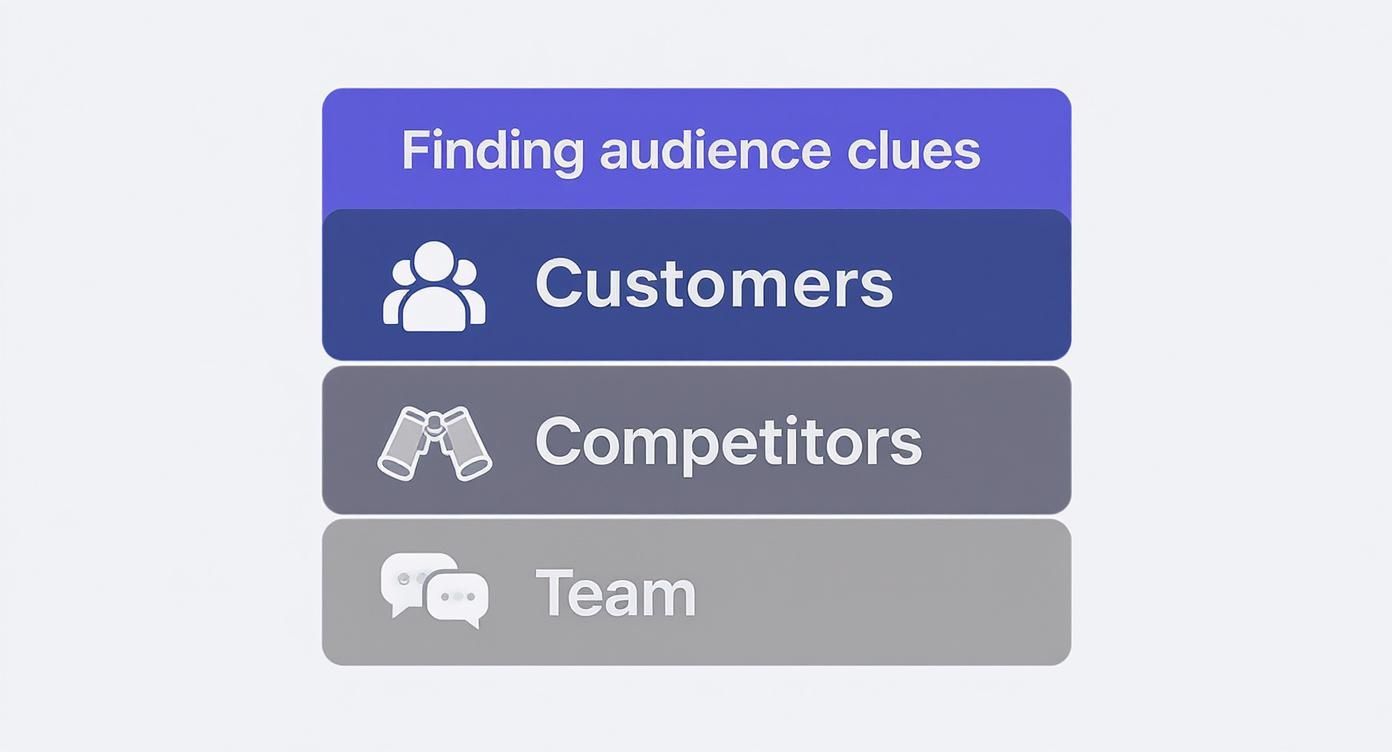
It really comes down to this: combine what you know internally with what you can observe externally. That’s how you create a complete picture to start from.
Leveraging German Digital Behaviour Data
To make a real impact in the German market, you have to understand the nuances of its digital landscape. We’re talking about a country with approximately 83.65 million internet users—that’s a huge pool of data you can use to slice and dice your audience by age, interests, and buying behaviour.
Take Meta’s advertising audience in Germany, for example. It includes around 37.6 million users aged 18 and over. But here’s the interesting part: 14.1 million of them are flagged as “Engaged Shoppers.” That’s a massive 37.5% of the platform’s audience. Knowing that single statistic can completely change how you allocate ad spend, helping you focus on people who are actually ready to buy.
Your goal is to translate raw data into a multi-layered story about your ideal customer. Every data point, from the search terms they use on Google to the professional groups they join on LinkedIn, adds another chapter to that story.
By using these digital tools methodically, you’re not just guessing anymore. You’re building a case with evidence. This data-first approach doesn’t just help you find your target audience; it gives you the exact insights you need to create content that genuinely connects with them.
Before diving deeper, it’s helpful to see how these research methods stack up against each other. Each has its strengths and weaknesses, and knowing them helps you choose the right tool for the job.
Audience Research Methods Comparison
This table compares different methods for gathering audience data, highlighting their primary use case, advantages, and potential limitations.
| Method | Primary Use Case | Pros | Cons |
|---|---|---|---|
| Social Media Analytics | Understanding demographics, interests, and engagement patterns of current followers. | Rich, real-time data; reveals content preferences and active times. | Limited to users already on the platform; may not represent the entire market. |
| Website Analytics (e.g., Google Analytics) | Analysing on-site behaviour, traffic sources, and conversion paths. | Direct insight into user intent; tracks what content performs best. | Doesn’t provide psychographic details; requires traffic to be effective. |
| Surveys & Interviews | Gathering qualitative feedback, pain points, and motivations directly from the source. | Deep, nuanced insights; uncovers the “why” behind the data. | Time-consuming; can be expensive; sample size may be small. |
| Competitor Analysis | Identifying gaps in the market and understanding what works for others in your niche. | Quick way to benchmark; reveals competitor audience and content strategy. | Provides a rearview look; can lead to imitation instead of innovation. |
Choosing the right mix of these methods is key. Social and web analytics give you the “what,” while surveys and direct conversations give you the “why.” Together, they create a powerful combination for building a truly accurate and effective audience profile.
How to Build Actionable Customer Personas

All that rich data you’ve gathered is just raw material. Now it’s time to shape it into something tangible—a human story you can actually use every single day. This is where we build a customer persona, a detailed, semi-fictional profile of your ideal customer.
This isn’t about listing dry demographics. A genuinely useful persona brings your target audience to life. You give them a name, a job title, and real-world headaches. When you get this right, it stops being a document that collects digital dust and becomes the north star for all your marketing decisions.
Weaving a Compelling Narrative
Think of yourself as a biographer for a moment. Your goal is to create a profile so clear that your entire team feels like they know this person. This story should be built around a few core pillars that make the persona practical and actionable for everyone, from your content creators to your product developers.
Let’s make this real. Here are two distinct examples from the German market.
-
B2B Persona (Berlin Tech): Meet “Jonas,” a 34-year-old Head of Engineering at a fast-growing FinTech startup in Berlin. His main goal? To scale his team without sacrificing code quality. His biggest daily challenge is juggling recruitment, managing project backlogs, and putting out fires. He spends his limited online time scrolling his LinkedIn feed for industry news and listening to tech podcasts on his commute.
-
B2C Persona (Munich Fashion): Now meet “Lena,” a 28-year-old marketing manager in Munich who is passionate about sustainability. She wants to build a wardrobe of high-quality, ethically made clothing but struggles to find brands that are both stylish and transparent about their supply chain. She discovers new brands on Instagram and relies heavily on influencer recommendations and detailed product reviews before buying anything.
These quick snapshots tell you more than raw data ever could. You instantly understand Jonas’s professional pressures and Lena’s personal values. You know where they hang out online and what kind of information they’re searching for. This deeper story is central to effective marketing. If you want to dig into the principles behind this, our guide on what is audience analysis offers a comprehensive look.
An effective persona is a practical tool, not an abstract exercise. It should give you immediate clarity on the exact problems you need to solve and the precise language you should use to connect with your audience.
From Profile to Practical Tool
With a clear persona in hand, the question “how to find your target audience” shifts to “how to speak to your target audience.” Every single piece of content you create should be filtered through the lens of your persona. Would Jonas find this LinkedIn post valuable between meetings? Would Lena stop her scroll to read this Instagram story?
This focused approach is what turns marketing from a guessing game into a repeatable science. You’re no longer creating content for a faceless crowd. You’re crafting a specific message for Jonas or Lena, designed to hit on their unique needs and motivations. That clarity is what drives engagement, builds trust, and ultimately, grows your business.
Using German Socio-Economic Trends for Smarter Targeting
Truly smart targeting goes way beyond just looking at clicks and website visits. If you want to get ahead, you need to grasp the bigger picture—and that means understanding the major socio-economic shifts happening in Germany right now.
Think of it as adding a macro lens to your micro-level data. By looking at these long-term market movements, you can build a more resilient strategy that anticipates where your audience is heading, rather than just reacting to where they’ve been.
Demographic Shifts and New Opportunities
Let’s start with Germany’s population dynamics, which offer some crucial clues. For years, the country has faced a natural population decline. Since 1972, birth rates have been low. What’s balanced this out? Immigration.
Immigration has not only filled the gap but has also been a huge contributor to the labour force, especially in the 2010s. This ongoing shift is a game-changer. Any solid strategy for how to find your target audience today has to account for ethnically diverse segments and younger immigrant populations.
Then there’s Germany’s booming tourism sector, which brings in another highly dynamic audience. Projections show the country is on track to hit a record €57 billion in spending from international visitors in 2025. That’s a massive group of transient consumers you can target based on their location and interests while they’re in the country. You can dig deeper into these German economic and travel trends to see the full picture.
When you layer these broad demographic trends over your digital data, you stop just identifying an audience. You start understanding the cultural and economic forces that truly shape their needs and behaviours.
The Influence of Sustainability on Choices
Beyond demographics, there’s a powerful cultural current reshaping habits all across Germany: sustainability. This isn’t just some niche interest anymore; it’s a core value that dictates purchasing decisions in nearly every sector, from fashion and food to tech and travel.
Weaving this trend into your personas can unlock completely new angles for your marketing.
- Product Messaging: Start highlighting things like eco-friendly materials, ethical production, or how energy-efficient your products are.
- Content Strategy: Create content that actually educates your audience on sustainable practices within your industry. Don’t just sell; teach.
- Partnerships: Team up with brands or influencers who are already known for their commitment to environmental responsibility.
If you ignore this shift, you’re overlooking a primary motivator for a huge—and growing—part of your potential customer base. This kind of deeper cultural insight is what takes a good audience profile and makes it a great one.
Got Questions About Audience Research? We’ve Got Answers
As you start digging into who your audience really is, a few questions always seem to pop up. Let’s tackle them head-on. Getting these sorted out early will save you a ton of headaches and make sure your research actually leads somewhere useful.
How Often Should I Update My Personas?
Think of your customer personas less like a stone tablet and more like a living, breathing document. Markets change, people change, and your business changes. A good habit is to give them a proper review and refresh at least once a year.
That said, sometimes you need to act faster. Certain events should be an immediate trigger for a persona check-up:
- You’ve launched a major new product or service.
- A serious new competitor just showed up on your turf.
- You’re seeing a big shift in customer feedback or how people engage with your content.
- There’s a major economic or cultural swing happening that affects your industry.
Keeping your personas up-to-date is how you make sure your marketing doesn’t sound like it’s stuck in the past. You need to speak to who your customers are right now.
What’s the Real Difference Between a Target Market and a Target Audience?
People throw these terms around like they’re the same thing, but they’re not. Nailing the difference is key to getting your messaging sharp and effective.
Your target market is the big picture—the entire group of consumers you could potentially sell to. Your target audience is the laser-focused slice of that market you’re talking to with a specific campaign or piece of content.
Let’s make it real. Imagine a German software company. Their target market might be “small-to-medium manufacturing companies in the DACH region.” That’s a huge pool of potential customers.
But for their next LinkedIn campaign, their target audience could be “Production Managers and Operations Directors at automotive parts suppliers with 50-250 employees.” See how specific that is? Now they can create content that speaks directly to the challenges and goals of those exact people.
Your market is who could buy. Your audience is who you are speaking to today.
What are the Big Mistakes I Should Avoid?
Knowing what to do is half the battle. Knowing what not to do can save your entire strategy. I’ve seen businesses make the same few fumbles time and time again during the research phase.
The biggest one? Relying on guesswork. Building a persona based on what you think your audience is like, without backing it up with hard data, is a fast track to failure. You need analytics, surveys, and real customer conversations to validate your ideas.
Another classic mistake is going way too broad. Trying to be everything to everyone means you’ll end up being nothing to anyone. Don’t be afraid to get specific. It might feel like you’re shrinking your potential, but you’re actually strengthening your connection with the people who matter most.
And finally, the most common pitfall of all: creating a persona and then letting it gather dust. Your persona isn’t a homework assignment you finish and forget. It should be a tool you use every single day to guide your content, your ads, and even how you develop your products. If it’s just a file sitting in a forgotten folder, it’s not doing its job.
Ready to put these insights to work? Postline.ai is built to help you craft compelling LinkedIn content that resonates deeply with your perfectly defined audience. Start writing smarter, not harder.

Run every client pipeline in one place
Give each LinkedIn profile its own voice, calendar, approval flow, and analytics. Start in minutes.
Start free trial